Wyoming and the Texas Ranching System
Adapted from Michael Cassity’s Wyoming Will be Your New Home
The system of ranching that emerged in Wyoming Territory in the 1870s and 1880s was exactly that: a system. The practice of ranching had its own logic and routines, and developed physical features on the ground to support its practices. Taken together, these things represented a coherent whole and the system was always evolving. Like emigrant trails, which were never static, frozen-in-time routes, its operations shifted over time and left signs of those changes on the ground. But the system that prevailed in Wyoming Territory was in fact the Texas system of ranching, with its own distinct origins and development before it ever arrived here.
Origins of the Texas ranching system
Cattle raising took on particular elements as it evolved over several hundred years, migrating in a complex course from the Greater Antilles through the Carolinas and into the coastal areas of Texas. Along the way it also picked up distinctive cultural influences from the Tamaulipas area of Mexico. In Texas it became a full-fledged variant of its own—not at all the only system for raising livestock, not at all inevitable in its expansion, and not necessarily suited to other places and climates.
Unlike the slow evolution of the system in centuries before it came to Texas, the form of ranching that emerged in Wyoming in the 1880s can be traced directly and immediately to its incubation in the Texas lowlands—with probably no change at all when transported more than a thousand miles to the northwest. Historian Terry Jordan has identified not only the functional elements of the Texas system of ranching, but also their origins. Once implemented in Wyoming, the Texas system of ranching encountered an environment very much at odds with the one that produced the practices:
The . . . Texas system of ranching clearly displayed the cultural inputs of both Carolina and Tamaulipas. From both sources came the essential trait of the Texas system: the subtropical practice of allowing cattle to care for themselves year-round in stationary pastures on the free range, without supplementary feeding or protection. Through such self-maintenance, the herds should not merely survive, but reach a grass-fattened maturity, ready for market. The humid subtropical prairies, canebrakes, and salt marshes of coastal Texas and Louisiana were even better suited to this careless system than had been the Andalusian marshes, yielding a still more profound neglect of the livestock.1
Much of the Texas system of ranching was simply a particular way of raising cattle, but it excluded certain aspects of the original system that went beyond functional necessity. Although some of the system could be traced to Mexico, the culture surrounding the Texas system nurtured an abiding antipathy to many aspects of that culture, including an explicit rejection of the practice of raising sheep alongside cattle and even a prejudice against Mexicans themselves. It is a small wonder, given that hostility, that as much of the Mexico-based vocabulary and skill sets endured as well as they did in the migration to Wyoming. Among the contributions from Mexico that survived this cultural hegira were the horse skills and horse equipment that had emerged in Tamaulipas and the horse-related terminology; new words and concepts entered the ranching lexicon and ultimately the Western vocabulary: lariat, corral, remuda, cavvy, and others.2
The other stream of evolution came from the Carolinas, and that stream has often been neglected in the analysis of ranching. Jordan identifies components that ultimately go back to Jamaica but then migrated to the Carolinas, to Texas, and then to Wyoming:
- Vocabulary including dogie, pen, cowboy
- The use of “poor-white” herders
- “The custom of only two roundups, held in the spring and fall”
- The routine practice of calf castration
- The practice of bulldogging (animal wrestling)
- Absentee entrepreneurs investing in open-range cattle operations
- Production for beef, rather than just for hides and tallow
- Marketing by long overland drives “of grass-fattened cull steers”
- Brands based on block letters and numerals
Of course, the fundamental contribution of the Carolinas was the principle at the core of the whole system, as Jordan says, “the pervasive neglect of livestock in Texas, including the practice of stationary pasturing, without any attempt to reserve special winter ranges.”3 And this “pervasive neglect” was, in fact, the defining feature of the range cattle industry of the northern plains and was the dominant practice in Wyoming Territory.
The Texas ranching system in the Wyoming Territory
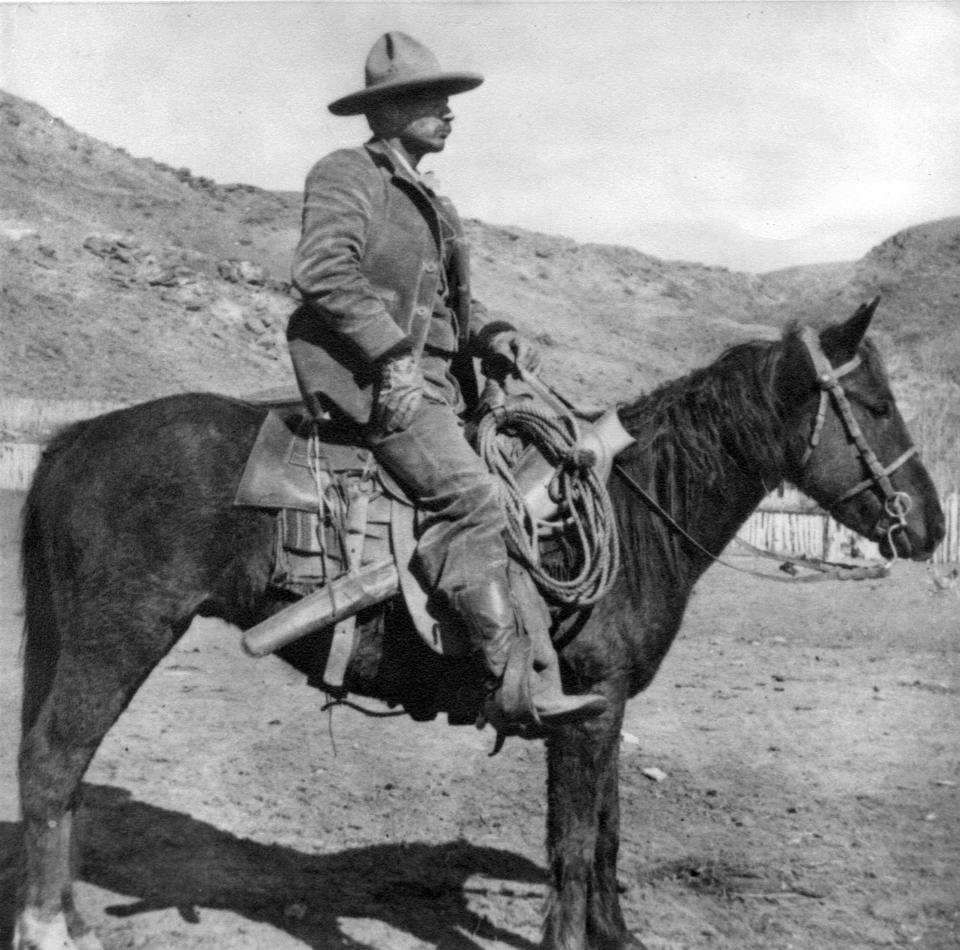
Based on a land system where the public domain was undivided and unfenced, the cattle were simply “turned loose,” in the language of the day, to roam and range where they would, unimpeded by fences, unseparated from the cattle of other ranches, unwatched by constant herders, unfed during the winters, and untended except at the semi-annual roundups. Senator John Kendrick, who had trailed and branded his share of cattle as young man, recalled, “Under the original order, no provision whatsoever was made for any kind of cattle. They were simply branded and turned loose and left to take their chances and survive or perish according to the conditions, such as the amount of feed, the weather and the strength and vitality of the animal.”4
In that system in Wyoming, the range that cattle would graze was enormous. Barnett J. Swan, for example, recalled that his “range seemed to include all of Albany County and the greater part of Laramie County.”5 Both Albany and Laramie counties were at the time substantially larger than they are today, meaning that the Swan range was all the more incomprehensibly vast. The Goose Egg cattle of the Searights, headquartered west of what’s now Casper, ranged from the Bridger Trail on the west, to Powder River on the north, Coal Creek on the east, and the North Platte River on the south.6
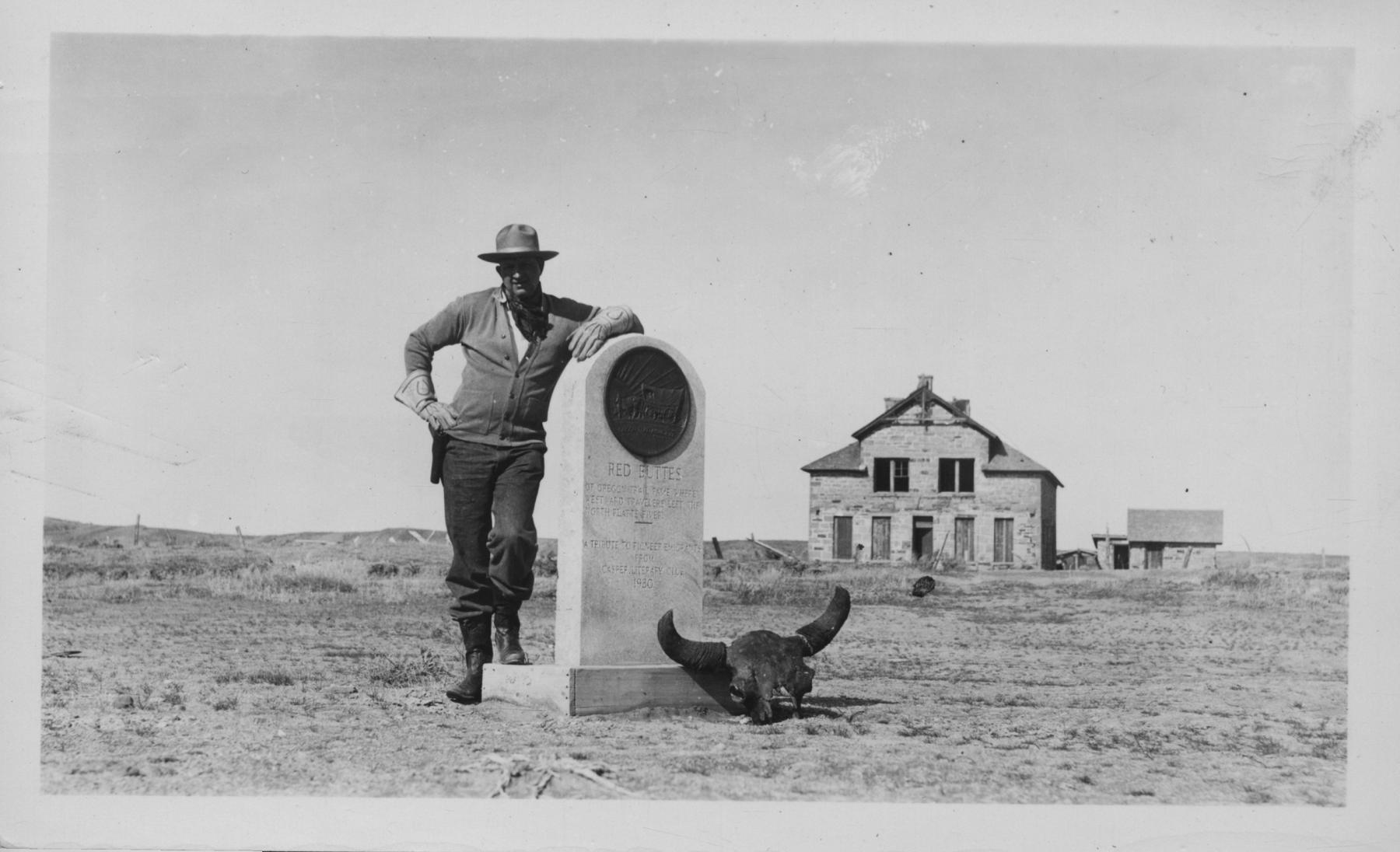
Speaking of the Powder River Basin, M. de Ricqles, an early cattle operator, recalled, “it was steer country and thousands upon thousands of Texas, Arizona and New Mexico 2-year-old steers were turned loose there to run [outside] for two or more years and were marketed largely at Chicago as fat range cattle.”7 The truth was, there was no limit to how far the cattle might range. One person recalled that the 101 Ranch near Moorcroft had its cattle spread all over the basin, “and roundup crews frequently found their stock scattered as far as from Edgemont, South Dakota to Sheridan, Wyoming,” or about 240 miles.8
The roundup
Rather than a permanent, central location, the roundup camps would be constantly in motion, starting high in the drainages and working their way down, so evidence of these big roundups could be scattered over a broad area.
There was some variation on the roundup. One rancher in the southwest part of the state applied an organizational system apparently adapted either from the sheep industry or from the Midwest system of producing cattle. In the late 1870s, Judge William Carter, by all accounts the most prominent entrepreneur and stockman in that part of the state, built what was called a “herd house” eight miles south of Fort Bridger on Smith’s Fork. It included a house built of lumber from Carter’s own sawmills that even had split shingles; it contained a bunking area for the cowboys, a bedroom for the cook and a large kitchen and store room.
Instead of open-range roundups, herds were gathered in the corrals at the herd house in the autumn and then driven through the chutes: “Each animal was put through the chute and its owner identified it according to the brand. If the cows claimed a small calf, it was branded in the chute, with the same brand of its mother. To eliminate counting one animal twice, the bushy part of each tail was cut off while in the chute. Each rancher counted his own cattle and kept account of the number. In this manner all the ranchers had their cattle branded, counted, and separated in one procedure.”9 This arrangement added an element of industrial organization to cattle ranching that seems not to have spread beyond the southwest part of the state, although Carter did subsequently build another herd house thirty miles south of Fort Bridger on Henry’s Fork.
As large as the roundups were, the range was still vast and the herds huge, so the spring roundup could easily take two or three months. The roundup was the hub of the ranching practice in an enterprise based on the neglect and lack of attention to the cattle the rest of the time. In fact, the roundup stands out in striking contrast to the rest of the business: It was about the only part that was carefully organized, monitored, and attended. Other parts of ranching were left to luck, were calculated by guesswork, and depended on hopeful assumptions.
The book counts
That casual approach extended even to the account books and ledgers of the operations. As fundamental an element as knowing how many cattle a rancher owned and grazed was highly indefinite. This was understandable, since the livestock were highly mobile and in these large numbers were not easily gathered in a single location and counted seasonally. Moreover, those same livestock reproduced and added to their numbers, but they also died or strayed, or were sold, stolen or consumed. Like the population of a major metropolis, the actual census changed by the hour or minute. Maintaining a careful tally of the numbers of cattle, given the size of the herds, was probably an impossible task anyway. On the open range, perhaps the only way to obtain an accurate tally was to re-brand all the livestock, itself a daunting task, and even that would stay accurate for only a short time.
Yet everywhere those numbers abound. The decennial U.S. census took count of the livestock, although the accuracy of those counts should not be assumed with great confidence; ordinarily the census takers would simply ask the people they interviewed how many head of cattle they owned. The method is eminently fair; the answers, however, were subject to season, knowledge, mood and motivation—each of which could vary dramatically.
The numbers gathered by tax assessors were perhaps no more reliable, given the built-in tendency of the owner to be careful not to overstate the amount of property to be taxed. In his study The Longhorns, Texas historian J. Frank Dobie even suggested that this vagueness about the numbers in herds was almost institutionalized, a part of the job description of the owner; perhaps it was even another integral element of the Texas system of cattle ranching:
“The cowman was constitutionally conservative. One that did not, in rendering livestock for taxes, give himself the benefit of the doubt was as rare as a white cow with a black face. The average cowman had two sets of figures: one ‘for taxable purposes,’ and one for the privacy of his head. A stranger with any sense of propriety would no more ask a ranchman how many cattle he owned than he would ask an outlaw how many men he had killed or what his name was before he came to Texas … Never were there such people for keeping their own business to themselves, and they lived such independent, uncomplicated lives that there was no necessity for putting down their assets in black and white.”10
Yet often, at least in Wyoming, and at least among the largest of the ranchers, they did put the figures down in black and white. The more fundamental problem was that these operators, while knowing the uncertainties of the counts, acted as if those numbers were accurate.
The critical device was what was called “book count.” Owners kept track of their herds in their ledgers (or in their heads), making periodic adjustments to allow for deaths, births, and other losses and gains, using additions and subtractions that seemed right given the severity of the winter or the lushness of the grass. They looked precise. But they were far from reflecting the reality on the range. At best they were guesses; at worst they were intentionally deceptive.
This numerical fuzziness opened a crack of vulnerability into the system that exposed all involved— livestock, ranchers, investors, cowboys, and others—to potential calamity. The fissures, at least in retrospect, are clear. An accurate knowledge of the number of cattle in the herds was important in keeping the livestock within the carrying capacity of the range—and any time herds were shipped or sold. As Maurice Frink wrote in his 1950s study of the range cattle industry of the 1880s, “Early methods of enumeration were varied and loose. The actual numbers of cattle on the range were often far different from the figures on ranch records. Nevertheless, many large-scale transactions were made on the basis of book count or range delivery, without an accurate check. This was one of the pitfalls into which many an overly-eager investor fell.”11
And it was the dominant practice. W. E. Guthrie recalled that the practice of relying on book count was “a well established custom” when he arrived in Wyoming in 1878. In retrospect, Guthrie observed, “That business men should so far lose sight of ordinary business methods as to buy and sell cattle ‘without counting a cow,’ with no way of ascertaining how many cattle they were paying for except the seller’s ‘tally books,’ is almost beyond belief.”12
Probably most people recognized that there was some variation between book count and reality. In 1883, the purchasing agent for the huge Swan Land & Cattle Company fatalistically reported, “. . . If the numbers on the range are within 2,000 or 3,000 of the book count, I consider the whole purchase a very fortunate one . . .”13
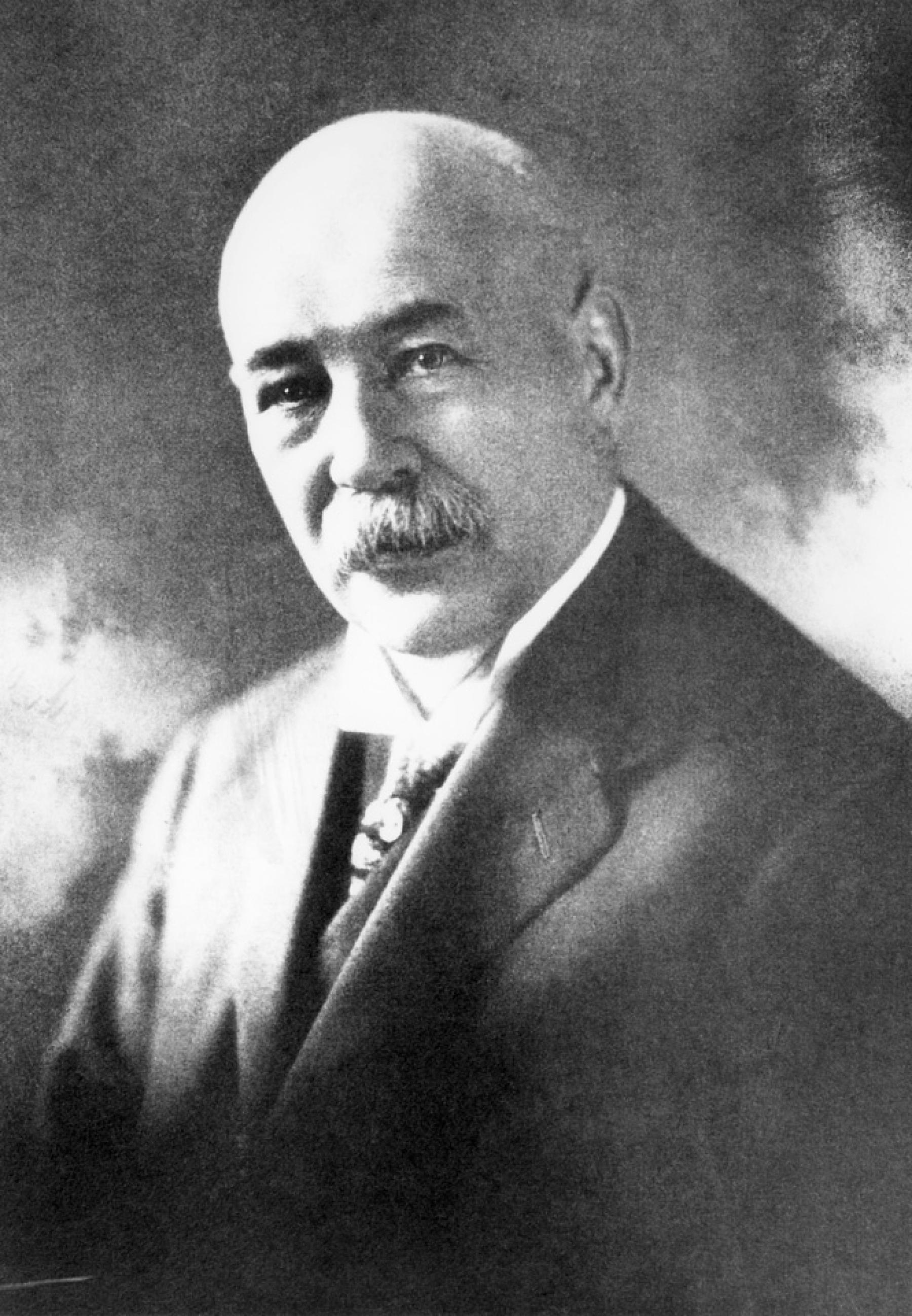
Others assumed a wider disparity. John Clay, whose job it was to verify numbers of cattle to be purchased by some Scottish companies, wrote in his autobiography, “everybody in the ranch business knew that all the herds of cattle were notoriously short, many of them having 50 per cent less in the actual numbers than the book count.”14 That knowledge, however, did not prevent John Clay himself from approving a purchase of a ranch (and cattle) where, as it turned out, the herd was seriously under the book count and under what Clay had calculated; the case went to court and ultimately the party that Clay represented was awarded damages for the missing cattle.15
Corporations
The numbers are thus impossible to use with any confidence of accuracy. Still, the industry flourished in the late 1870s and early 1880s. It was by many reckonings the most attractive investment possible in the West. It drew capital not just from the United States but from Europe as well. There had been a frenzy of investing in cattle in the 1870s; that frenzy gained new strength in the early 1880s. As E. E. Dale wrote in 1930, “Great as had been the growth of the cattle industry on the great plains in the decade before 1880, . . .[d]uring the next few years an enormous volume of capital was to be poured into the industry.”16
The boom took on several dimensions. One was a trend toward consolidation. Not only were new ranches being started, ranches that had been started a few years before were now being incorporated, bought out, or otherwise consolidated into fewer and fewer hands.
Incorporation was still a far from common form of business organization, especially in ranching. Lewis Atherton witnessed a change, however, in his 1961 study, The Cattle Kings: “In general, individuals or simple partnerships constituted the most prevalent form of business organization in the early history of the cattle kingdom. Then came an influx of outside capital, with a tendency for partnerships to become more complex and corporate organization a common device.”17 The first recorded incorporation of ranch operations in Wyoming came in 1879 when four companies came into existence, including the incorporation of Pratt and Ferris, the Big Horn Live Stock Association, the Evanston Stock Growing Association, and the Scandinavian Live Stock Association.18 In 1880, a total of eight ranching operations incorporated in the vast area of Wyoming, Colorado, Montana and New Mexico—where the plains cattle industry was growing rapidly. The next year, nine cattle companies incorporated in Wyoming alone, followed by seven in 1882, twenty-four in 1883, another twenty-four in 1884, and twenty-three in 1885.19 An important transformation was underway.
Representative of this process was the Converse Cattle Company, organized in December 1881. Capitalized at over a half-million dollars, the company was founded by A. R. Converse, H. S. Manville, and James Peck, along with others, and quickly began to expand by buying out other ranches. Within a month of its incorporation, the Cheyenne newspaper was able to report, “The Converse Cattle Company has absorbed another large herd. On Monday last, Clinton Graham sold his herd in the Lance creek country to this company . . .”20
The Converse company continued to acquire additional herds, like that of Charles Wulfjen in 1882 and that of future governor and U.S. senator John B. Kendrick, who worked for Wulfjen (his future father-in-law) but who also had his own herd. And the company also purchased still more herds. Within a few years, this ranch would change its name to the OW Ranch and would endure as one of the largest ranches in Wyoming, with Kendrick himself ultimately purchasing and running the operation.21
The Converse Cattle Company was not an isolated instance. If it was unusual, it was mainly so because some of its principals of the company were in fact living in the Territory and involved in the cattle business. There were others like it, too. The Cheyenne Daily Leader noted in 1882, “The sale of the Post & Warren spur brand to Reel & Rosendale is a representative of this season’s numerous large transactions.”22 And when Thomas Swan purchased Charles Hecht’s Hat Creek herd, this too was largely a local transaction.
But companies organized in the East were even more aggressive in their acquisition of Wyoming cattle operations. The Bay State Cattle Company, a New England syndicate, acquired multiple Wyoming properties, including the Creighton Ranch, adding it to a mammoth collection of properties in western Nebraska. The plan of the Bay State Company— which also leased railroad lands from the Union Pacific and operated another ranch in Wyoming— was “to control enough range to run cattle all across Western Nebraska to the Big Horn Basin in Wyoming,”23 according to Nebraska historian Nellie Yost. But there were others, too, like the Milwaukee and Wyoming Investment Company, and the Frontier Land & Cattle Company, incorporated in Wyoming in 1884, with offices in Chicago and London.
The pattern seemed to be present everywhere. In 1885, Joseph Nimmo reported, “a single cattle company in Wyoming advertises the ownership of ninety different brands, each one of which formerly represented a herd constituting a separate property.”24 On Poison Spider Creek, west of future Casper, Orin Waid, according to Lewis Atherton, “told an interviewer in the middle 1880’s that he knew of only two men in addition to himself in Wyoming who were continuing to operate as individuals. All the rest were in companies of one sort or another.”25
In 1882 the Cheyenne Daily Leader carried an article from the Drovers’ Journal observing, “Slowly but surely are the choice range locations being bought up by the whales of the western cattle business, who are fencing the small fry away from the best water supplies. Every week or so some startlingly large sale is reported to one or more of the gigantic livestock corporations which are operating in the ranching regions.”26 The next year the same newspaper reported the growing alarm in Wyoming over this development: “In Wyoming, men of moderate means who are in the cattle raising business, or who contemplate entering upon it, look with concern upon the actions of the great companies which are buying the large herds of the territory. What, they say, will be the result of the practical monopoly of the business by the companies? What chance can a poor man have for success in ranging cattle with the vast herds?”27 The next month, as the press reported more and more take-overs, the concern had grown: “It will not be long before all the cattle which roam over the prairies of the West will be owned by great corporations. The price of beef will then be whatever the caprice of the monopolists may want to make it.”28
The British
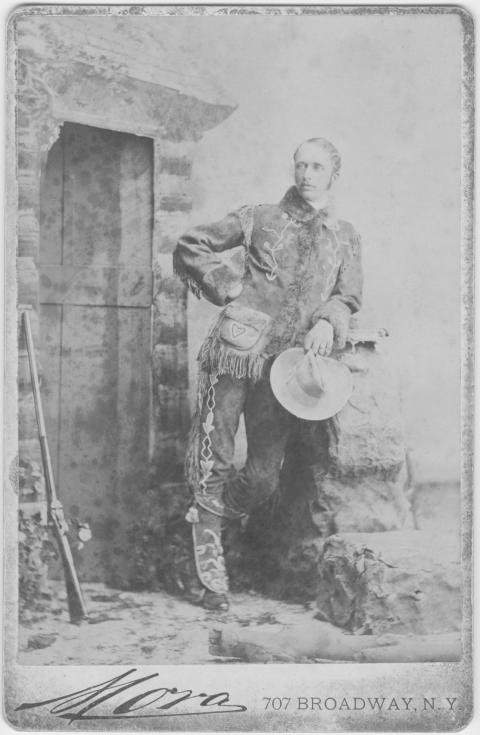
The frenzy of investment in the cattle industry in Wyoming attracted interest far and wide, including in Europe. For reasons having to do with the allure of range life and the business potential it offered, or perhaps with the lack of opportunities in England and Scotland for the “second sons,” as they were routinely left out of family fortunes and estates, or with any other circumstances, an increasing number of the English gentry found their dreams focusing on the wide open prairies of Wyoming and other states and territories of the West. As early as 1878 Richard and Moreton Frewen settled in what soon would become Johnson County, below where the forks of Powder River joined. There they built their ranch, acquiring the 76 brand (and others) and making it their own. They may have owned a very small parcel where the elaborate ranch headquarters was located, although even that is uncertain, but they accumulated one of the largest herds of cattle in Wyoming. Those cattle grazed throughout the Powder River Basin, and perhaps beyond.
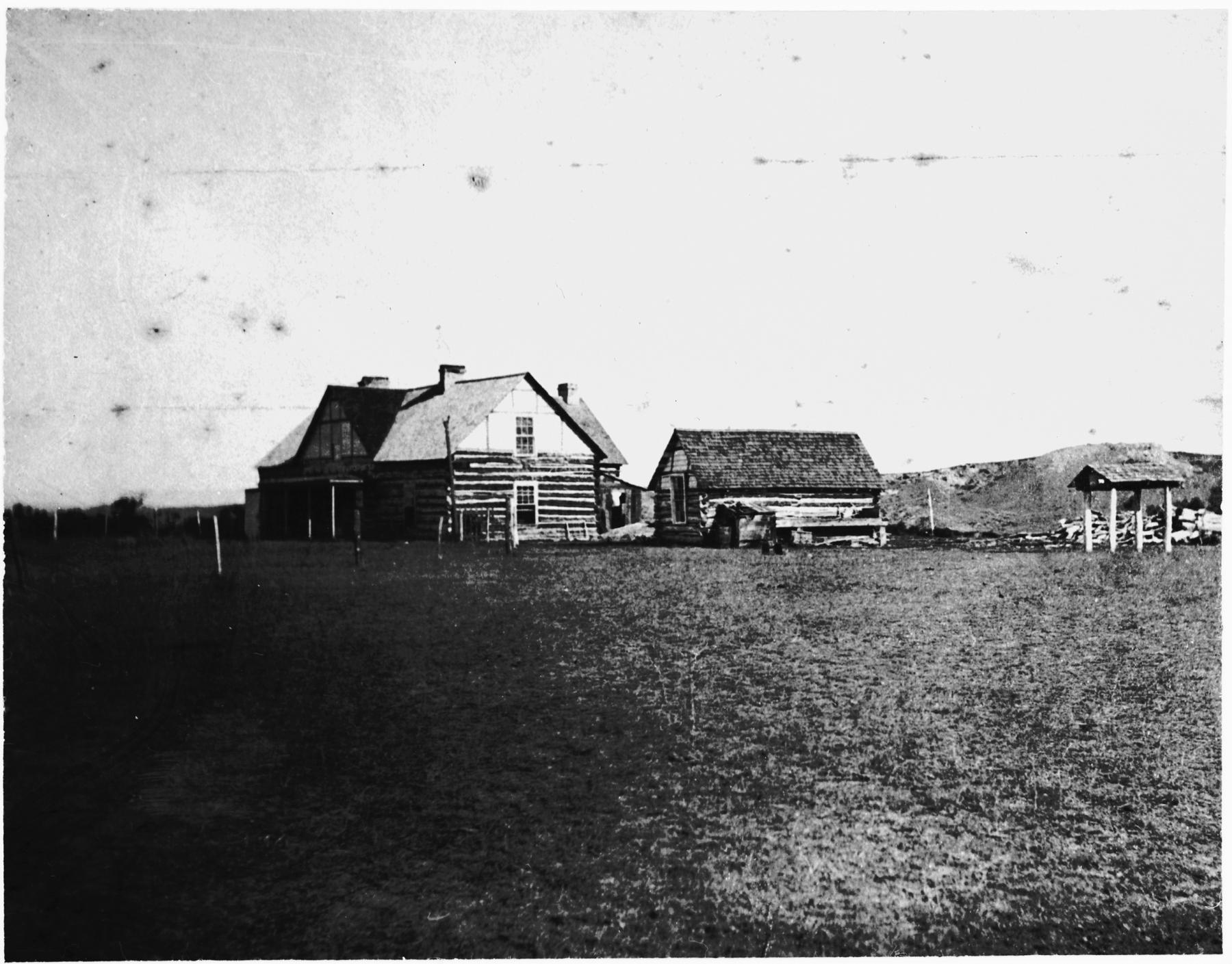
Others followed the Frewens. From the Laramie Plains to the Big Horn Basin, English ranches began to crop up. These people, after a short period of seasoning in the U.S., appeared to their countrymen to be fountains of knowledge about the cattle industry. The British government sent two members of Parliament to the West in 1880 to investigate the beckoning investment opportunities.29 Their report was glowing, and British bankers joined the frenzy.
This was not a quiet or subtle process. One report noted in 1883, “there are quite a number of Englishmen stopping in Cheyenne with the view of making investments and next year there will be many changes made in the present ownership of stock and ranch property.”30 Companies like the Anglo-American Cattle Co., Ltd., of London, and the Powder River Cattle Company, Limited, became common fixtures in Wyoming. Actually the Powder River Cattle Company (not to be confused with the Colorado-based Powder River Live Stock Company) had been started by the Frewens in 1882. The company purchased and supplanted their 76 Ranch, but also brought more investors into the company, while retaining Moreton Frewen as manager.
The Frewen Ranch was vast and its herds immense, with estimates varying from 45,000 to 80,000.31 To many, it represents the English presence in the cattle industry of Wyoming territory.
But these ranches, often expansive and sprawling, sometimes tucked away, were seemingly everywhere. In 1883, Ezra Flemming sold the four ranches that made up the substantial Dutton Ranch at the base of the Medicine Bow Mountains to Alfred Sartoris of London; this would subsequently grow and become the Douglas – Willan – Sartoris ranch.32 The next year, William Johnson, in Sweetwater County, reported to the Laramie Boomerang that he had “sold his herd of cattle to English parties.”33 In the Big Horn Basin, Charles Lindsay notes the arrival of British capital at several ranches that became large and prominent, including Captain Henry Belknap with two ranch sites southwest of future Cody, and the Hoodoo, “owned by Ashworth and Johnson, two Englishmen” on the south side of the Stinking Water [later renamed the Shoshone River], the Big Horn Cattle Company “representing English capital” in the Ten Sleep area; he also notes, “Five of the larger outfits represented English capital, and frequently the owners, after a period, returned to England.”34
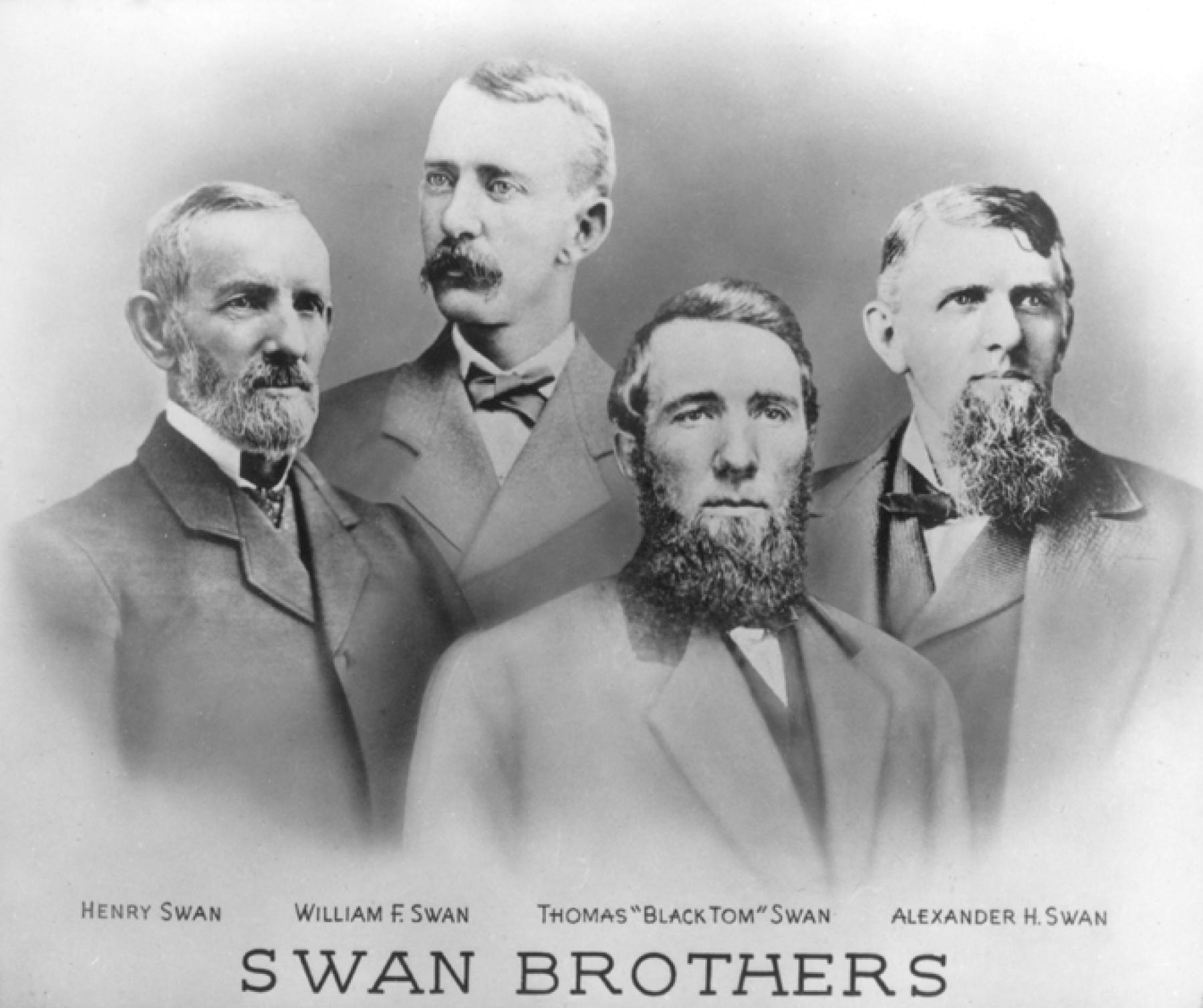
The largest ranch in Wyoming Territory was Scottish. Alexander Swan started ranching in partnership with his brothers Thomas and Henry and a nephew, Will, in 1873; this was the Swan Brothers Cattle Company. The company split in 1880 and Alexander and Thomas purchased the interest of Henry and Will, who started their own ranch, the Ell Seven (L7). Alexander Swan then formed partnerships with other ranches and in 1883 a new company, the Swan Land and Cattle Company, Limited, was formed in Edinburgh and acquired the ranches and cattle that belonged to the Swan and Frank Live Stock Company, the National Cattle Company, and the Swan, Frank and Anthony Cattle Company.
Alexander Swan, who had been president of the Wyoming Stock Growers Association, would be kept on as manager. The Swan Ranch—or combination of ranches— had always been huge, but now it was incredibly big. The range for its cattle generally extended from Ogallala, Nebraska to Fort Fred Steele and from the Union Pacific Railroad to the North Platte River. This one company thus maintained a herd of more than 113,000 cattle, possibly approaching 125,000 head.35 The Swan Ranch in 1884 purchased a half million acres from the Union Pacific, and the company proudly reported to its owners in Scotland: “It can readily be seen . . . how very admirably situated that land is, extending in a belt of 20 miles in width for 80 miles along the Union Pacific Railroad. We here hold in perpetuity upwards of half a million acres in alternate sections, for which we obtain a freehold title, while we, besides, control, and have the unquestioned grazing of the alternate Government sections, with the certainty that we shall obtain the first chance of these when they come to be dealt with, either by purchase or lease.”36
The result was that the English and Scottish cattle companies were widely viewed as dominating the Wyoming cattle industry. One form or another of the statement that “Most of the big outfits, of that time, were owned by Eastern or English companies”37 can be found in almost every discussion of ranching in the eastern one-half of Wyoming Territory. Sometimes the calculation was more precise: Jack Flagg estimated that two-thirds of the 181,000 cattle at the 1884 Powder River roundup were English owned.38 The perception was widespread: the cattle industry that had grown so dramatically in territorial years, that had expanded out from its original toeholds in the southwest and southeast corners of the territory, that had reached into virtually every drainage in the state, that literally included more cattle than could be counted, was largely controlled by fewer and fewer people, a good number of whom had never stepped on a blade of Wyoming grass or breathed Wyoming air, and some of whom who knew only vaguely what part of the North American continent their investment walked around on.
Such was the world of cattle ranching in Wyoming Territory by the middle of the 1880s. In the short span of a decade and a half, the territory had been transformed completely, from an area that some considered a wasteland and desert and others regarded as a barrier, to a locus for dreams of investors as a place they would not have to visit or even know well to reap the rewards from, and those rewards promised to be great and to keep growing.
This was thus not just a system of ranching, and not just a system of colonialism, but a system of building the future, of organizing and extracting the resources of Wyoming, of occupying the land, and of making money on it all. That system, however, as it turned out, was built on a series of assumptions about the people and climate and resources of Wyoming that, like their ledgers, did not always square with reality.
[Editor’s Note: Special thanks to the author and to the Wyoming State Historic Preservation Office for making this article available and to the Wyoming Cultural Trust Fund for its ongoing support for this project. Michael Cassity’s historical monograph, Wyoming Will Be Your New Home, from which this article is adapted and excerpted, is one of many historic contexts published by the Wyoming State Historic Preservation Office. These documents are meant to offer a broad background against which historic developments can be better understood as the agency works to preserve properties and places important to an understanding of Wyoming’s past. The contexts also, however, are based on sound research and are full of well-told, vivid stories. With this in mind, WyoHistory.org has begun a collaboration with the SHPO office to bring more of this history to a wider readership. The Cultural Trust has provided the funds to make this collaboration possible. We offer our thanks to all.]
Illustrations
The photo of John B. Kendrick on horseback is from the collections of the Trail End Historic Site in Sheridan. Used with permission and thanks.
The photo of the Goose Egg ranch house is number NCA 01.v.1992.01 WyCaC in the Alfred J. Mokler papers, Casper College Western History Center. Used with permission and thanks. The man in front is possibly local history buff Robert Ellison, president of the Midwest Refinery in Casper in the 1920s, but this is unconfirmed.
From Wyoming State Archives, the photo of John Clay is from the Thorp Collection, negative number P69-25/195; the photo of the Swan brothers is SUB NEG 12823. Both are used with permission and thanks.
The photos of Moreton Frewen, negative ah204977, and Frewens’ Castle, negative ah003409, are from the American Heritage Center at the University of Wyoming. Used with permission and thanks.
Endnotes
1. Jordan, North American Cattle-Ranching Frontiers, 210.
2. Jordan, North American Cattle-Ranching Frontiers, 210–211.
3. Jordan, North American Cattle-Ranching Frontiers, 213.
4. John B. Kendrick, “Range Cattle Date back to Texas Trail,” typescript, WPA Collections, subject file 399.
5. Barnett J. Swan, “The Round-Up as I Remember It,” typescript, 1941, WPA Collections, subject file 1156.
6. “M. J. Gothberg, Pioneer Range Rider and Rancher,” typescript, WPA Collections, subject file 755.
7. Douglas Budget, February 6, 1936.
8. Margaret Dillinger Bowden. 1916: Wyoming, Here We Come! (Gillette, Wyoming: privately printed by James H. Bowden and Jessie Outka, 2002), 37.
9. Bill Casto, “The Herd House,” typescript in WPA Collections, subject file 1352.
10. J. Frank Dobie, The Longhorns (Austin: University of Texas Press, 1980), 364–365.
11. Frink, “When Grass Was King,” 24. It is easy to overlook how rampant the sales were, and how carelessly they were made. In 1882 the Cheyenne Daily Leader quoted the Laramie Boomerang: “A Cheyenne man who don’t pretend to know a maverick from a mandamus has made a neat little margin of $15,000 this summer in small transactions and hasn’t seen a cow yet that he has bought and sold. Cheyenne is wild over the market and Sixteenth Street is a young Wall Street. Millions are talked of as lightly as nickels.” Cheyenne Daily Leader, July 28, 1882.
12. W. E. Guthrie, “The Open Range Cattle Business in Wyoming,” Annals of Wyoming, 5 (July 1933[?]): 26–31.
13. Prentice is quoted in Frink, “When Grass Was King,” 24.
14. John Clay, My Life on the Range (Chicago: privately printed, 1924), 206.
15. Davilla Bright, “Foreigners and Foreign Capital in the Cattle Industry of the United States,” M.A. Thesis, University of Oklahoma (1935), 55 –56.
16. Dale, The Range Cattle Industry, 90.
17. Atherton, The Cattle Kings, 199.
18. Frink, “When Grass Was King,” 69.
19. Frink, “When Grass Was King,” 73.
20. “The Organization of another Large and Powerful Cattle Co.,” Cheyenne Daily Leader, December 22, 1881; “A Big Transfer,” Cheyenne Daily Leader, January 17, 1882; “Another Large Sale,” Cheyenne Daily Leader, January 19, 1882.
21. See especially, Eugene T. Carroll, “John B. Kendrick, Cowpoke to Senator, 1879–1917,” Annals of Wyoming, 54 (Spring 1982): 52.
22. Cheyenne Daily Leader, July 28, 1882.
23. Nellie Irene Snyder Yost, The Call of the Range: The Story of the Nebraska Stock Growers Association (Denver: Sage Books, 1966), 129.
24. Nimmo, Report in Regard to the Range and Ranch Cattle Business of the United States, 21.
25. Atherton, The Cattle Kings, 199.
26. Cheyenne Daily Leader, February 7, 1882.
27. Cheyenne Daily Leader, April 5, 1883.
28. Cheyenne Daily Leader, May 12, 1883; the Cheyenne newspaper appears to have been quoting an unidentified article in the Denver.
29. Dale, The Range Cattle Industry, 94.
30. Cheyenne Daily Leader, October 18, 1883.
31. Smith, The War on Powder River: The History of an Insurrection, 17.
32. “Heavy Transfer,” Cheyenne State Leader, August 18, 1883.
33. Cheyenne Daily Leader, April 25, 1884.
34. Lindsay, “The Big Horn Basin,” 99–105.
35. Frink, “When Grass Was King,” 24, 66. See also Maurice Frink, Cow Country Cavalcade: Eighty Years of the Wyoming Stock Growers Association (Denver: Old West Publishing Co., 1954), 50–51.
36. Edinburgh Courant, July 18, 1884, quoted by W. Turrentine Jackson, “British Interests in the Range Cattle Industry,” in Frink, Jackson, and Spring, When Grass Was King, 205.
37. Glenys Wilkinson, “T.N. Mathews and other Cattlemen of Campbell County,” p. 3, subject file 883, WPA Collections.
38. Smith, The War on Powder River, 18.
Sources
Newspapers
Most of these are available from https://wyomingnewspapers.org.
Douglas Budget, February 6, 1936
Cheyenne Sun, April 10, 1884.
Cheyenne Daily Leader, December 22, 1881; January 17, 1882; January 19, 1882; July 28, 1882; February 7, 1882; April 5, 1883; May 12, 1883; October 18, 1883; April 25, 1884.
Edinburgh Courant, July 18, 1884
Articles, Books and Archives
Atherton, Lewis. The Cattle Kings, Lincoln: The University of Nebraska Press, 1961. 199.
Bowden, Margaret Dillinger. 1916: Wyoming, Here We Come! Gillette, Wyoming: privately printed by James H. Bowden and Jessie Outka, 2002. 37.
Bright, Davilla. “Foreigners and Foreign Capital in the Cattle Industry of the United States,” M.A. Thesis, University of Oklahoma (1935), 55 –56.
Carroll, Eugene T. “John B. Kendrick, Cowpoke to Senator, 1879–1917,” Annals of Wyoming, 54 (Spring 1982): 52.
Cassity, Michael. Wyoming Will Be Your New Home: Ranching, Farming and Homesteading in Wyoming, 1860-1960. Cheyenne: Wyoming State Historic Preservation Office, 2011, 40-51.x
Clay, John. My Life on the Range. (Chicago: privately printed, 1924), 206.
Dale, Edward Everett. The Range Cattle Industry. Norman: University of Oklahoma Press, 1930, 90.
Dobie, J. Frank. The Longhorns (Austin: University of Texas Press, 1980), 364–365.
Frink, Maurice. “When Grass Was King.” In When Grass Was King: Contributions to the Western Range Cattle Industry, edited by Maurice Frink, W. Turrentine Jackson and Agnes Wright Spring. Boulder: University of Colorado Press, 1956. 24, 66, 69, 73, 205
Frink, Maurice. Cow Country Cavalcade: Eighty Years of the Wyoming Stock Growers Association. Denver: Old West Publishing Co., 1954, 50–51.
Guthrie, W. E. “The Open Range Cattle Business in Wyoming,” Annals of Wyoming, 5 (July 1933[?]): 26–31.
Kendrick, John B. “Range Cattle Date back to Texas Trail,” typescript, Wyoming Works Progress Administration, Federal Writers’ Project Collection, Wyoming State Archives. (hereafter WPA Collections), subject file 399.
Jordan, Terry G. North American Cattle-Ranching Frontiers, 210-213.
Lindsay, Charles. “The Big Horn Basin,” University Studies of the University of Nebraska. XXVIII-XXIX (1932): 99–105.
“M. J. Gothberg, Pioneer Range Rider and Rancher,” typescript, WPA Collections, subject file 755.
Nimmo, Report in Regard to the Range and Ranch Cattle Business of the United States, Washington, D.C.: Government Printing Office, 1885, 21.
Spring, Agnes Wright. “‘A Genius for Handling Cattle’: John W. Iliff.” In When Grass Was King: Contributions to the Western Range Cattle Industry, edited by Maurice Frink, W. Turrentine Jackson and Agnes Wright Spring. Boulder, Colorado: University of Colorado Press,1956.
Smith, The War on Powder River. Lincoln: University of Nebraska Press, 1966. 17-18.
Swan, Barnett J. “The Round-Up as I Remember It,” typescript, 1941, WPA Collections, subject file 1156.
Wilkinson, Glenys. “T. N. Mathews and other Cattlemen of Campbell County,” p. 3, WPA Collections, subject file 883.
Yost, Nellie Irene Snyder. The Call of the Range: The Story of the Nebraska Stock Growers Association. Denver: Sage Books, 1966, 129.