The New Deal and Wyoming Agriculture, Part 1: Drought, Depression and Despair
The changes launched by the New Deal are often viewed as a watershed in Wyoming history and, indeed, in American history. During that time, the Franklin Roosevelt administration embarked on an agenda that included restructuring institutions, practices, and relationships in many parts of society and the economy. That included the farms and ranches of Wyoming—and even the continuing practice of homesteading.
About five months after the disastrous stock market crash of October 1929, the Wyoming Extension Service issued its forecast for agriculture for 1930. In that report, the service indicated that the year just past had been a weak one for farm and ranch products, hampered from the start by a severe winter. That meant 1930 would probably be a little better, reasoning from the modest signs of market recovery then visible. On the other hand, the report also noted that purchasing power of consumers had been “somewhat reduced below 1929,” and that therefore “farmers need to follow a rather conservative production policy.”1 The economists could not predict how much the economy would fall in the next several years. If they had foreseen the dramatic plunge of employment and purchasing power ahead, there is no way to tell what they might have advised Wyoming’s farmers and ranchers to do as they went about their operations.
As bad as circumstances were for Wyoming and for the nation generally in 1929, they got dramatically worse in the next four years, and recovery would be slow in coming. The two driving forces in that decline were a vicious combination of social and natural events. First, the banking system of the nation, already seriously weakened, thinned of many small, rural banks, virtually collapsed. With deposits in banks—large and small—being invested, directly or indirectly, through loans to brokers in securities in a seemingly-ever rising, endlessly upswinging market, and with rules for such investments only lightly restraining them, the banks were increasingly vulnerable, their soundness resting precariously on continued confidence in the booming stock market. The stock market crash that began October 24, 1929, vaporized any reason for that faith.

In a contagion that quickly spread from bank to bank, from city to city, from state to state, depositors in banks, alarmed that their bank would not have sufficient funds to cover their checks and to pay them their savings when they asked for them, rushed to withdraw their funds. But the banks, already weakened by the diminished value of their assets, did not have funds to pay everyone. So, as one bank and then another failed, it confirmed popular suspicions and more banks began to topple. The banking panic that followed—and that would continue through 1933—dwarfed the banking crisis of the 1920s, though in truth it was a continuation of the same process.
In those four years, more than one-third of the commercial banks in the nation suspended operations in three separate waves (more than 4,000 in the first two months of 1933 alone). The money supply in the nation also dropped by more than a third. Net national product fell by one-half.2 The entire nation was now clearly in a depression—the Great Depression. Even when the Franklin Roosevelt administration took office in 1933, the banking crisis continued as Roosevelt closed all banks for a week in a banking “holiday” designed to allow inspectors to investigate the banks and reopen the solvent institutions in an attempt to lend confidence to the system. Still, some did not reopen, especially the smaller and more vulnerable rural banks
Collapsing Markets
There were two consequences for Wyoming’s farmers and ranchers. One was the banking crisis itself as it spread into the state. T. A. Larson’s computations indicate that at least fourteen banks failed in 1932 and 1933, and more after that.3 Fourteen or more failures represented a quarter to a third of Wyoming’s operating banks—serious enough, but the indirect impact would prove even larger.
The collapse of the stock market wiped out the assets of businesses, consumers, and governments alike, either through bank closures and their inability to pay, or through the loss of value as markets became glutted with securities. The spiral was relentlessly downward: businesses closed, employment fell, spending collapsed, and the economy ground to a slower and slower pace. By 1933 around a fourth of the labor force in the United States was out of work and unable to find a job.
In February 1933, the Wyoming Extension Service estimated that industrial activity stood at just sixty percent of its 1923–1925 level, and factory payrolls at a mere forty percent.4 The Extension Service economists hoped the corner had been turned—that the nadir had come in the summer of 1932—but they cautioned that recovery would be slow and limited: “[I]n view of the fact, however, that a large portion of the reserve purchasing power of the consumers has been exhausted, their savings depleted, and an accumulation of indebtedness built up during the last three years of the depression, improvement is not likely to reflect higher prices of agricultural products before the latter half of 1933, and then only in moderate proportions.”5 The lack of consumer purchasing was killing Wyoming farmers and ranchers. When workers in the city were unable to purchase the meat, grains, and produce they needed for their families, farm families were also unable to provide for their own needs.
Drought
The collapse of purchasing power across the nation combined in the early 1930s with a force of nature—one that literally dried up the lands that farmers and ranchers depended on. The years between 1931 and 1936 were dry years—very dry years. Statistical measures of drought are deceptive since drought itself is a dynamic feature, a cumulative phenomenon. The same objective amount of precipitation in the first year of a drought cycle will have less of a negative effect on crops and livestock than it would the following year, when there is less moisture in the ground and in the streams; the need for moisture grows greater each year of a drought cycle: it takes more and more to grow less and less. Moreover, weather cycles in Wyoming can differ dramatically from drainage to drainage, separated by mountains, so that statistical averages over the state or even over a section of the state wind up skewed in often invisible ways. This much, however, can be said: the drought cycle from 1931 to 1936 affected the entire state, and the drought—or “drouth” as it was then called—became progressively worse, with only intermittent relief in some areas.
Pockets here and there were sometimes spared the worst effects while other places suffered even more than average. The state government and the railroads designated counties as either “drought areas” or the more severe “emergency drought areas.” That designation entitled ranchers in those counties to emergency freight rates on feed and return livestock shipments. The emergency drought areas included Campbell, Converse, Crook, Goshen, Johnson, Laramie, Niobrara, Platte, Sheridan, Sweetwater, Uinta, and Weston counties; the worst conditions were concentrated in the eastern part of the state and in the Red Desert. The regular drought areas—designated “secondary drought areas”—probably offered little consolation to the farmers and ranchers who lived there, and included Albany, Big Horn, Carbon, Fremont, Lincoln, Natrona, Park, Sublette, Teton, and Washakie. Hot Springs County was the only county in the state not designated as a drought area, and it was hardly an oasis.
Generally, the years of 1933, 1934, and 1936 are considered the most severe in the 1930s drought cycle, a drought serious enough that those who lived through it still remembered streams drying up decades later. The Wyoming State Climate Office notes that even the major statewide drought beginning in the spring of 2000, “considered by many to be the most severe in collective memory,” prompted some older residents to recall the dry streams of the 1930s and 1950s.”6
Streams did, in fact, dry up during the 1930s. Leslie E. Sommer, a rancher in the Sybille country (the area around Sybille Creek in Albany and Platte counties), wrote in 1941, “1934 was a terrible year for the cattlemen. In the Sybille Country there was no water nor feed. Wells that had never been known to dry up, were dry. Even the Main Sybille Creek was dry except for stagnant pools of water, had rotting [words missing]. Meadows were sere and brown, with alfalfa roots sticking up bare of soil where the winds had blown the soil away. Fresh branded, under-nourished cattle were picked at by magpies, sometimes until they died.”7
Reports of the effects of the drought generally reflect the worst conditions, and while those conditions did not prevail universally, they nonetheless convey the severity of the problem. For example, in 1936, the northern part of Campbell County was described as appearing to be “as smooth as cement” and one report indicated, “the southern part of the county, although not hit as hard yet, is beginning to show signs of the severe dry weather. Many residents report the drying up of wells and water holes.”8 In 1934, Lorena Hickok—a prominent journalist then serving as a field investigator for the Federal Emergency Relief Administration—was sent across the West to report firsthand on Depression conditions. From eastern Wyoming, she reported to her supervisor: “I saw range that looked as though it had been gone over with a safety razor.”9
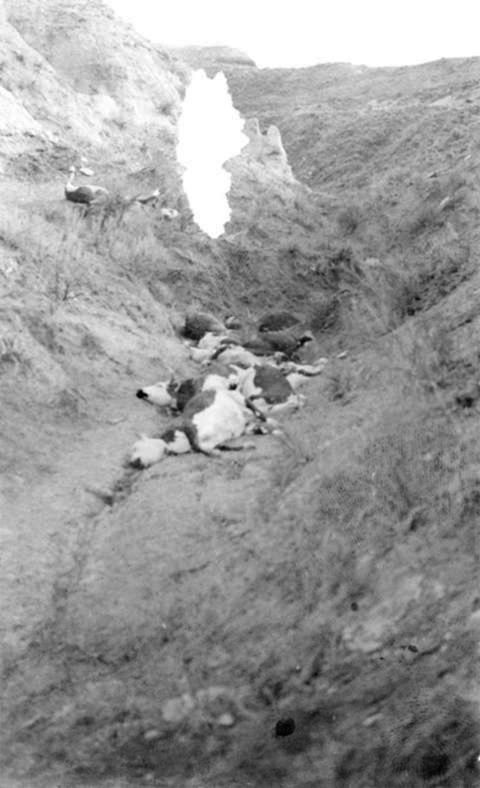
Consequences of the drought varied, but there were two general problems. The first fell on ranchers. With pasture reduced on both deeded land and public land, ranchers had to purchase hay for feed during summer as well as winter. Water presented a different problem—it could not be bought, so new wells were dug. In July 1934, The New York Times reported that fifty emergency water wells had been completed or were under construction in Wyoming in an effort to supply livestock.10 Without water, ranchers were forced to sell livestock even when animals were underweight and poorly nourished—and a market flooded with cattle drove prices down further with each additional head.
Farmers working irrigated land faced the second problem. Even the reliable flows from distant mountain sources began to fail. Charles Fowler was a boy on his family’s fifty-six acre irrigated farm near Torrington. He recalled of the drought, “For a farmer who depended on irrigation, drought meant that he might be denied water to irrigate at a critical time in the growth cycle of his crops.” And that was what happened to his family when “the Hill Irrigation Ditch was directed to close down. The closure was for weeks, not for a few days.” He continued, with considerable understatement, “Having your water cut off in mid-summer for the rest of the season is an event that gets one’s attention.”11 By January 1935, the condition of Wyoming's range had fallen to eighty-three percent of normal—and it appears to have declined further over the following year, despite the mild winter of 1935–1936 and the moisture it brought.12
Some ranchers in 1934 shipped their livestock to better grazing elsewhere, sometimes taking advantage of reduced railroad rates for drought districts, generally set at eight-five percent of normal. But even that reduction helped only those ranchers who had enough stock to make shipping worthwhile, the means to pay freight costs, a destination range available, and the ability to manage livestock out of state. In 1936, as drought returned after the winter respite, the Padlock Ranch shipped cattle from the area around Midwest, Wyoming to Gillette, from where they were transported by train to Nebraska. Gillette’s News-Record reported, “Every train that leaves the local yards is made up of a great number of stock cars loaded with cattle, horses and sheep consigned to market or to pasture in localities that have not suffered from drouth and insects.”13 Three weeks later, the News-Record related that shipments of cattle out of Gillette “have been heavier than for many years over the same July period, due to the extreme drouth conditions.”14 By November 1936, an estimated four hundred cars of cattle had been shipped out of northeast Wyoming.15
Shipping cattle to other ranges was an option only for those with the means to do it—and those most distressed were precisely the least able. They had few alternatives. One was simply to walk away. A report from Gillette in 1936 described the situation plainly: “With no rain recorded for over four weeks and none in sight, conditions have almost reached the point of hopelessness. Stock is being shipped from the county and many farmers have deserted their places to seek new locations.”16 How many actually abandoned their land cannot be determined, nor is it clear how many moved to town for work while retaining ownership of their property, how many turned their deed over to the mortgage holder and stayed on as tenants, or how many moved onto farms that others had left behind. The statistics, however, tell a surprising story: in the first half of the 1930s, the total number of farms in Wyoming actually increased. In 1930 there were 16,011 farms and ranches in the state; by 1935 that number had risen to 17,487, the highest in Wyoming history. Sixteen counties showed growth, and even those that declined fell only slightly over those five years.17 The combination of Depression and drought, remarkable as it seems, did not produce an immediate depopulation of the countryside.
To the hard times and the drought was added another calamity, one of almost biblical proportions. Joe Watt—a rancher in the Moorcroft and Gillette area and co-founder of the Triangle T Ranch—described the grasshoppers in 1934 “so thick that on a hot afternoon they would gather on sagebrush and the north side of fence posts until the surface was completely covered.” The infestation slackened in 1935 but returned with a vengeance in 1936. Watt wrote that “the grasshoppers hatched out the latter part of May, eating what green feed had started,” and they were followed that same summer by Mormon crickets: “They advanced like an army. The ground was completely covered in their march. I can remember moving a herd of cattle, and, when we met the crickets, spending some time forcing the cattle and saddle horses to cross them. The crickets moved in a straight line. When they came to the house they crawled up the side and over the top. The house was completely covered with them.” The crickets, however, “did little damage to feed, as the ground was bare by that time, there was little they could hurt.”18 Ed Langelier at Big Horn described an even more voracious assault: “the Mormon crickets moved in and they finished what the grasshoppers hadn’t eaten and then even ate the bark off of trees and they ate the paint off of houses.”19
The Small Farmers’ Advantages
Amid the grief and hardship, few developments stand out that illuminate the broader nature of the crisis and the changes it was forcing. One was that diversification offered some protection—those who produced a variety of crops and livestock fared better than those who depended on a single crop or a single enterprise. In Hot Springs County, one farmer had developed, alongside his various crops, a substantial turkey farm with 2,500 birds, herding “them out like sheep.” He also raised alfalfa and was therefore vulnerable to the grasshopper infestation—but he had a ready answer: “The turkeys are moved from one location to another over the hay fields, where they feed on grasshoppers until they are brought in to be fattened for market. Thus a pest is turned into a farm asset.”20
But more broadly, small operators seemed to hold an advantage over larger ones as they faced the collapse of purchasing power, the scorching drought, and the scourge of grasshoppers and crickets. The WPA Writers’ Guide for Wyoming observed that one group that endured was one that had already been struggling—people whose small, diversified, subsistence operations had made them ineligible for bank loans and mortgages. Unlike those who were better off and had borrowed heavily, the smallest operators carried no debt. Even some of the bigger operators took a lesson from them. The writers’ guide noted that during the 1930s “many Wyoming farmers who were unable to finance the farming of their large acreages made a living by maintaining a small flock of sheep, some turkeys and chickens, and a few milk cows, and cultivated only sufficient land to raise feed for the stock and for a small garden.”21 Unburdened by debt and sustained by diversified production, they managed to eke by. Agnes Wright Spring, a Wyoming historian with deep ties to the ranching community, noted the same pattern among ranchers: small stock growers often had enough water to see their limited herds through the dry years, while their larger counterparts, with sizeable herds, faced equally sizeable water demands.22
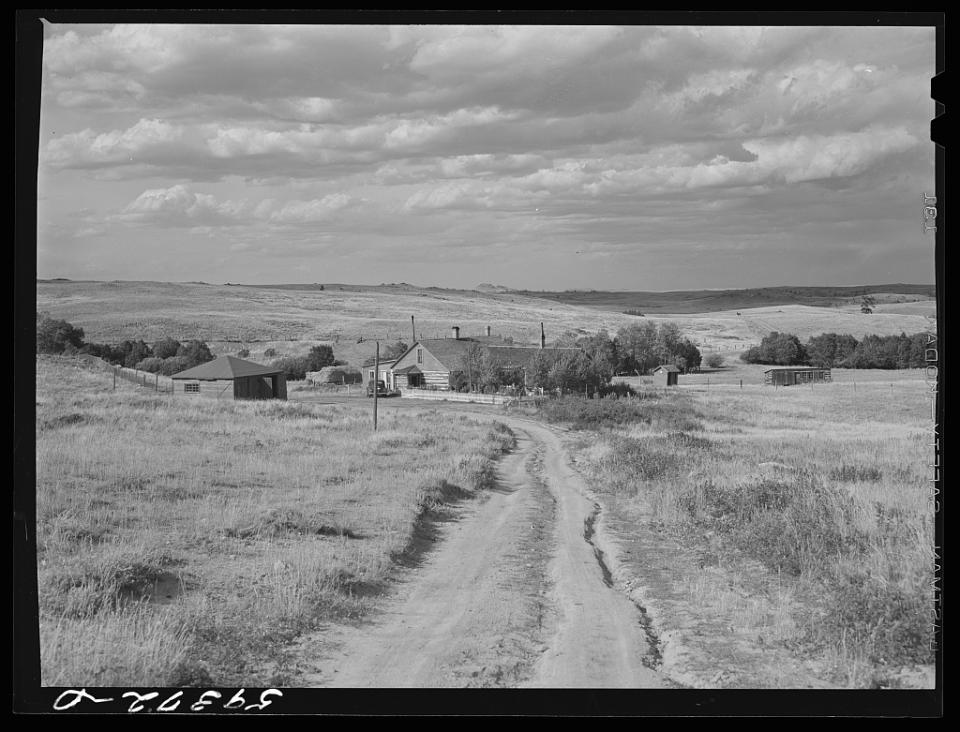
Managing water was, in fact, the forte of the dry farmer, and even as the drought of 1936 continued unabated, a small amount of moisture fell that season—enough for some small operators to make use of. From early April through late November, the already parched Gillette area received only 3.92 inches of rain. That was not enough for small grains, but as one report noted, “corn and several of the annual forage crops made a crop although the yields were not so good as in years of more nearly normal rainfall. Yet enough feed was produced to be of great value in carrying livestock through the fall and winter.”23 The same pattern appeared in Crook County, where one report noted, “During the drought of the last few years corn has done pretty well and supplied a big part of the stock feed for winter.”24 Those who had made their living on the land without access to water, who had chosen to forgo debt or been denied it, and who produced for their own needs rather than distant markets—those people somehow managed to survive and keep their land. They did so, sometimes, while watching their debt-ridden but formerly prosperous neighbors wrestle not just with drought but with the debt collectors that seemed to arrive with it.
Human Causes—and Controversy
To the extent the drought was simply a matter of insufficient rainfall, it was a natural calamity. But some observers argued there was more to it—that how people had treated the land made an already fragile resource far more vulnerable. Had ranchers damaged the land by overgrazing it? Had farmers by plowing it up? T. H. Watkins—a historian of the American West and author of two books on the Great Depression—later argued that the drought had fallen on land already badly abused. Writing of the 1930s, he described much of the western range as having “been broken and exposed by repeated plowing, leached of its nutrients by constant planting and replanting, grazed down to the dirt by cattle and sheep, its topsoil skinned off in sheets or gullied by water erosion during wet years.”25 The drought, he concluded, did its most devastating work on lands already weakened by decades of abuse.
At the time, the ranching industry pushed back against any suggestion of overgrazing. The Wyoming Stock Growers Association responded categorically — overgrazing was not the cause; the range was simply not getting enough rain. The WSGA circulated a pamphlet produced by the American National Livestock Association, “If and When it Rains: The Stockman’s View of the Range Question,” published in 1938, which enlisted testimony from ranchers across the West to make their point.26 The argument was straightforward: it had quit raining in summer and snowed less in winter, and the lack of moisture alone explained the problems on the range. If blame was to be assigned, the pamphlet pointed at federal policy—specifically the homestead laws, which, it argued, had encouraged “breaking up of many a fine cattle and sheep range into what might be called starvation homestead units.”
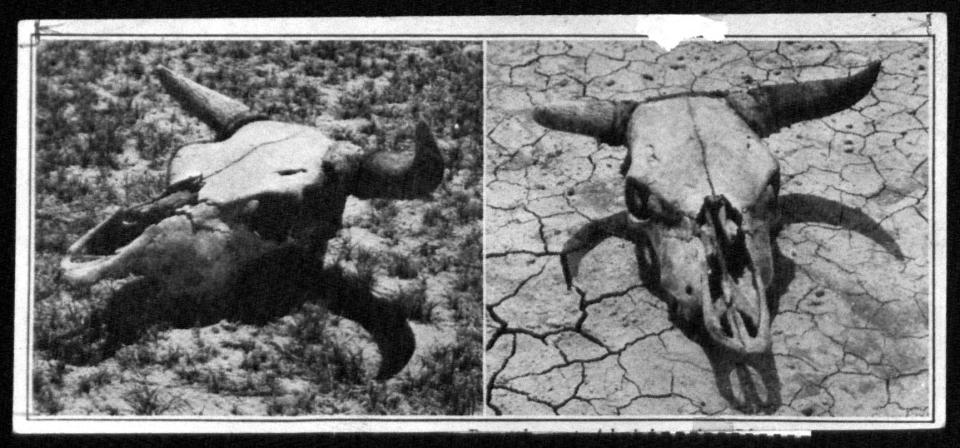
The pamphlet assembled testimony from an impressive array of Wyoming stock growers to testify about the extent and origin of the problem. Thomas Cooper, former president of the Wyoming Wool Growers Associated, stated flatly: “In my opinion, based on 50 years of practical observation, the range is better today [1936] than 50 years ago. Fred Warren, son of former governor and senator Francis E. Warren, observed, “We have run stock every year. We carry more stock on this range than in the old days. My father came to this very spot shortly before his death, in 1929. That was before this present flare-up about range depletion. He loved the land, and knew it. ‘Fred,’ he said, ‘I believe the grass is better now than it was when I first came.’”27 Most of the testimony pointed to the same conclusion: when the drought ended, the range returned to normal health. That was a fine point worth making—it confirmed, in the stockgrowers’ view, that the problem was not overgrazing, which would have produced enduring shortages of forage. The problem was drought alone, temporary by nature and reversible with a shift in weather patterns. So testified John Budd of Big Piney:
Nineteen thirty-four was the driest summer that I can remember here. Nineteen thirty-five was not much better, but we had plenty of snow during the winter of 1935 and 1936, then some rains during the summer, which helped, then more snow last winter and plenty of rains at the proper times this summer, which resulted in the grass in the Green River Valley, being better than it has been for the last 25 years, which should show that the lack of snow in the winter and of rains during the summers in the western range states is the main reason the ranges have been so short for the past few years.28
Charles A. Myers of Evanston spoke of the “transformation from famine to feast” that had taken place several times. “No, the range has not been denuded by private ownership or corporate greed... In the future, as in the past, our range crops [are] going to depend almost entirely on humidity.” T. D. O’Neil of Big Piney agreed: “Mother Nature comes to the rescue with moisture in the form of snow or rain or both... Water is undoubtedly the solution of all of our forage troubles of the range.”29
The reality was likely both simpler and more complex than some were willing to acknowledge. The WSGA’s own numbers showed that in 1934 there were more than a million cattle in the state—1,004,000—the largest number in forty-two years, going back to 1892, with the exception of the brief post-World War I boom in 1919.30 Despite the deterioration of the range, cattle numbers had not only held steady but actually increased—suggesting that the carrying capacity of the range had already been exceeded.
A Combination of Problems
There was more to it than raw numbers. Drought itself compounded the grazing problem—as range conditions deteriorated, the pressure on what remained intensified. Some livestock growers saw the situation in more nuanced terms than the official spokespeople of their organizations, recognizing that the carrying capacity of the range was not a fixed number but something that varied with conditions.
Dominic Pousche at Diamondville was one of a handful of ranchers interviewed in 1941 about their experience grazing on the public domain over the years. Pousche put it plainly: “Drouth and overgrazing work together when the range is short of grass and you have a lot of stock you try to get all you can out of the range. Consequently you overgraze the range. For example this year one could run twice as many stock without hurting the range no more than regular herds did last year.”31 Pousche was doubtless correct—ranchers and herders would often begin a season with more livestock than the range could support that year.
A. F. Vass, an agricultural economist at the University of Wyoming and an outspoken advocate of commercial ranching, framed the problem with precision: “During drought years, our ranges will always be overstocked, and the gains and profits will be light, as in 1934. During years of relatively heavy precipitation, ranges will be understocked with heavy gains per animal. At present, there is no known practical method that will correct this situation 100 per cent...If the farmer’s crop is a failure, he leaves his harvesting machines in the shed. The rancher cannot leave his harvesting machines (cattle and sheep) in the shed. They have to be fed. The result is a loss on livestock during the drought years, and a loss of range feed during the relatively wet years.”32
Henry Wallace and the Stockgrowers
The issue was fundamental to the livestock industry—for both cattle and sheep—since how the problem was defined would determine the solution. The core fear among grazers was that if overgrazing were identified as the cause of the range’s decline, herd reductions or exclusions from parts of the range would follow.

Among those who believed overgrazing was indeed a serious problem was Henry A. Wallace, then serving as Secretary of Agriculture, who brought that view directly to the WSGA when it met in Douglas in June 1934. Wallace was neither an academic nor a city dweller, and he understood agriculture from the inside. He was a prominent Iowa farmer, identified with the “progressive” or “scientific” farming movement—his family had developed hybrid crop strains and published agricultural advice through their journal, Wallace’s Farmer. His father, Henry C. Wallace, had served as Secretary of Agriculture under Harding and Coolidge. The younger Wallace broke with the Republican Party, became a Democrat, helped deliver rural support for Roosevelt in 1932, and was appointed Secretary of Agriculture in 1933.
In his mid-forties at the time, Wallace was described as someone “as earthy as the black loam of the corn belt, as gaunt and grim as a pioneer.”33 Even those Wyoming ranchers who disagreed with him found him honest and sincere. Charles A. Myers of Evanston, president of the WSGA, told his fellow ranchers that Wallace was “working intelligently, honestly, earnestly, to overcome some of the troubles of the cowmen.”34
That respect, however, did not mean Wyoming ranchers were entirely comfortable with what Wallace might say. His ideas about reforming agriculture had already caused unease, and when he appeared before the WSGA in Douglas, some five hundred farmers and ranchers gathered to hear him, the anticipation high and the atmosphere tense—“the air was charged with static.” Elmer Brock of Kaycee, acting chair of the organization, set aside his usual gavel and called the meeting to order “by rapping with the butt end of a six-shooter.” Wallace met the room on its own terms, responding with candor and bluntness that left nothing open to misinterpretation:
For the last five years... over most of the mountain states you have been definitely overstocking your ranges, and you glory in your shame. You have been eating off the good pasture grass, and you have eaten it so close in many regions that the water has washed away the soil over large areas, and the wind has blown a lot of it away, until some of the land is almost permanently ruined. It is all right to go ahead if you want to under your rugged individualism and overstock your ranges and eat off your good pastures, it is all right for you to hurt yourselves if you want to, but it is a shame to hurt the land the way you have been doing.35
So said the Secretary of Agriculture. For the ranchers and farmers crowded into the La Bonte Hotel that afternoon, the message was unmistakable: the federal government intended to reshape the way the West used its land. The drought and the depression had brought them to this moment. The New Deal would define what came next.
[Editor’s Note: Special thanks to the author and to the Wyoming State Historic Preservation Office for making this article available and to the Wyoming Cultural Trust Fund for its ongoing support for this project. Michael Cassity’s historical monograph, Wyoming Will Be Your New Home, from which this article is adapted and excerpted, is one of many historic contexts published by the Wyoming State Historic Preservation Office. These documents are meant to offer a broad background against which historic developments can be better understood as the agency works to preserve properties and places important to an understanding of Wyoming’s past. The contexts also, however, are based on sound research and are full of well-told, vivid stories. With this in mind, WyoHistory.org is collaborating with the SHPO office to bring more of this history to a wider readership. The Cultural Trust has provided the funds to make this collaboration possible. We offer our thanks to all.]
Footnotes
- “The 1930 Agricultural Outlook for Wyoming,” Wyoming Extension Service Circular No. 28 (March 1930): 5. The Wyoming circular drew on the national outlook analysis in Bureau of Agricultural Economics, The Agricultural Outlook for 1930, Miscellaneous Publication No. 73 (Washington, D.C.: U.S. Department of Agriculture, February 1930).
- Milton Friedman and Anna Jacobson Schwartz, A Monetary History of the United States, 1867–1960 (Princeton: Princeton University Press, 1963), 299 ff.
- T. A. Larson, History of Wyoming, 2nd ed., rev. (Lincoln: University of Nebraska Press, 1991), 414.
- A. W. Willis, “Wyoming Agricultural Situation for 1933,” Wyoming Agricultural Extension Service Circular No. 45 (February 1933): 5.
- Willis, “Wyoming Agricultural Situation for 1933,” 6.
- Jan Curtis and Kate Grimes, “Drought,” Wyoming Climate Atlas, Wyoming State Climate Office, accessed February 3, 2026, https://www.wrds.uwyo.edu/sco/climateatlas/drought.html.
- Leslie E. Sommer, “Cattle Grazing in the Sybille Country,” typescript, June 2, 1941, WPA Federal Writers Project Files, Subject File 1367, Wyoming State Archives, Cheyenne.
- “Government Agencies Unite to Alleviate Local Distress,” News-Record [Gillette, Wyoming], July 2, 1936.
- Lorena Hickok, One Third of a Nation: Lorena Hickok Reports on the Great Depression, ed. Richard Lowitt and Maurine Beasley (Urbana: University of Illinois Press, 2000), 334.
- “Record Heat Grips West; Deaths to Date Put at 700,” The New York Times, July 25, 1934, 1.
- Charles A. Fowler, A Wyoming Country Boy in the 1930s: Memoirs of Charles A. Fowler, III (Bloomington, Indiana: 1stBooks, 2003), 265–266.
- “Stock Moving out of County,” News-Record, June 13, 1936.
- Ibid.
- “Cattle Being Moved Rapidly,” News-Record, July 7, 1936.
- Larry Joseph Krysl, “The Effects of the Great Depression on the State of Wyoming, 1935–1940” (PhD dissertation, University of Wyoming, 1960), 19, ProQuest Dissertations and Theses, https://www.proquest.com/dissertations-theses/effects-great-depression-on-state-wyoming-1935/docview/301866895/se-2.
- “County Known as Drouth Area,” News-Record, July 8, 1936.
- The counties showing growth in farms and ranches between 1930 and 1935 were Big Horn, Carbon, Converse, Crook, Fremont, Goshen, Hot Springs, Johnson, Lincoln, Natrona, Park, Sheridan, Sublette, Sweetwater, and Washakie. Albany declined from 548 to 537, Teton from 280 to 259, Uinta from 435 to 432, and Weston from 616 to 611. U.S. Department of Commerce, Bureau of the Census, Sixteenth Census of the United States: 1940; Agriculture, Volume 1, Part 6, Statistics for Counties (Washington, D.C.: Government Printing Office, 1942), 186–187.
- Maurice Frink, Cow Country Cavalcade: Eighty Years of the Wyoming Stock Growers Association (Denver: The Old West Publishing Co., 1954), 160–161.
- Ed Langelier and Mrs. Ed Langelier, oral history interview by Bill Barton, April 1, 1976, OH-327, Wyoming State Archives.
- Jessie L. Duhig, “Agriculture: Hot Springs County, Wyoming,” typescript, undated, WPA Federal Writers Project Files, Subject File 1308, Wyoming State Archives.
- Workers of the Writers’ Program of the Work Projects Administration in the State of Wyoming, Wyoming: A Guide to Its History, Highways, and People (New York: Oxford University Press, 1941; reprint, Lincoln: University of Nebraska Press, 1981), 105.
- Agnes Wright Spring, Seventy Years: A Panoramic History of the Wyoming Stock Growers Association ([Cheyenne]: Wyoming Stock Growers Association, c1943), quoted in Krysl, “The Effects of the Great Depression on the State of Wyoming, 1935–1940,” 23.
- “State Experiment Farm News Notes,” News-Record, November 28, 1936.
- Carl Plattner, “Crook County in General,” typescript, undated, WPA Federal Writers Project Files, Subject File 1265, Wyoming State Archives.
- T. H. Watkins, The Hungry Years: A Narrative History of the Great Depression in America (New York: Henry Holt & Co., 1999), 424-425.
- American National Live Stock Association, If and When it Rains: The Stockman’s View of the Range Question (Denver: n.p., 1938).
- Francis E. Warren may not have been the best authority when it came to sensitive stewardship of the range. The elder Warren had revealed his priorities when he wrote his son, in fear that he might be charged too much for grazing rented land, "I hope you will eat every hair off that part of the range, getting it just as close as you can without injury to the sheep, and save our own range accordingly." This quotation is from a May 22, 1914, letter of F. E. Warren to Fred Warren, Francis Warren Papers, American Heritage Center, University of Wyoming, Laramie; quoted in Debra L. Donahue, The Western Range Revisited: Removing Livestock from Public Lands to Conserve Native Biodiversity (Norman: University of Oklahoma Press, 1999), 34.
- John C. Budd in “If and When it Rains: The Stockman’s View of the Range Question,” typescript, WPA Federal Writers Project Files, Subject File 408, Wyoming State Archives, 10.
- T.D. O’Neil in “If and When it Rains: The Stockman’s View of the Range Question,” typescript, WPA Federal Writers Project Files, Subject File 408, Wyoming State Archives, 11-12.
- Agnes Wright Spring, Seventy Years: A Panoramic History of the Wyoming Stock Growers Association ([Cheyenne]: Wyoming Stock Growers Association, c1943), 134.
- Bryan (Jack) Archer, handwritten notes of interview with Dominic Pousche, August 1, 1941, in “Interviews with Farmers and Ranchers regarding the Taylor Grazing Act,” WPA Federal Writers Project Files, Subject File 409, Wyoming State Archives.
- Spring, Seventy Years, 220.
- Unofficial Observer [John Franklin Carter], The New Dealers (New York: The Literary Guild, 1934), 76–77.
- Spring, Seventy Years, 137, 139.
- Spring, Seventy Years, 138.