The New Deal and Wyoming Agriculture, Part 3: Returning homesteads to ranchland—and removing the people
In a curious way, the New Deal approach to agriculture seemed to divide the state into its western and eastern part. Programs in the western part had to do with the extensive public land, especially the range, where cattle ranchers and sheep growers grazed their livestock. Most programs in the eastern part of the state, however, focused on homesteads and farms, and on the erosion on farms that were in private hands. Those programs speeded up the abandonment of farms and homesteads whose soils had always been poor and were now badly damaged by drought. Much of the land in eastern Wyoming would revert to older systems of production used before it was homesteaded—that is, to large-scale ranching.
Among the New Deal’s government programs, the Agriculture Department was implementing its Drought Relief Program and bringing the Agricultural Adjustment Administration (AAA) to full operation. At the same time, the Interior Department was addressing similar issues of direct interest to Wyoming farmers and ranchers.
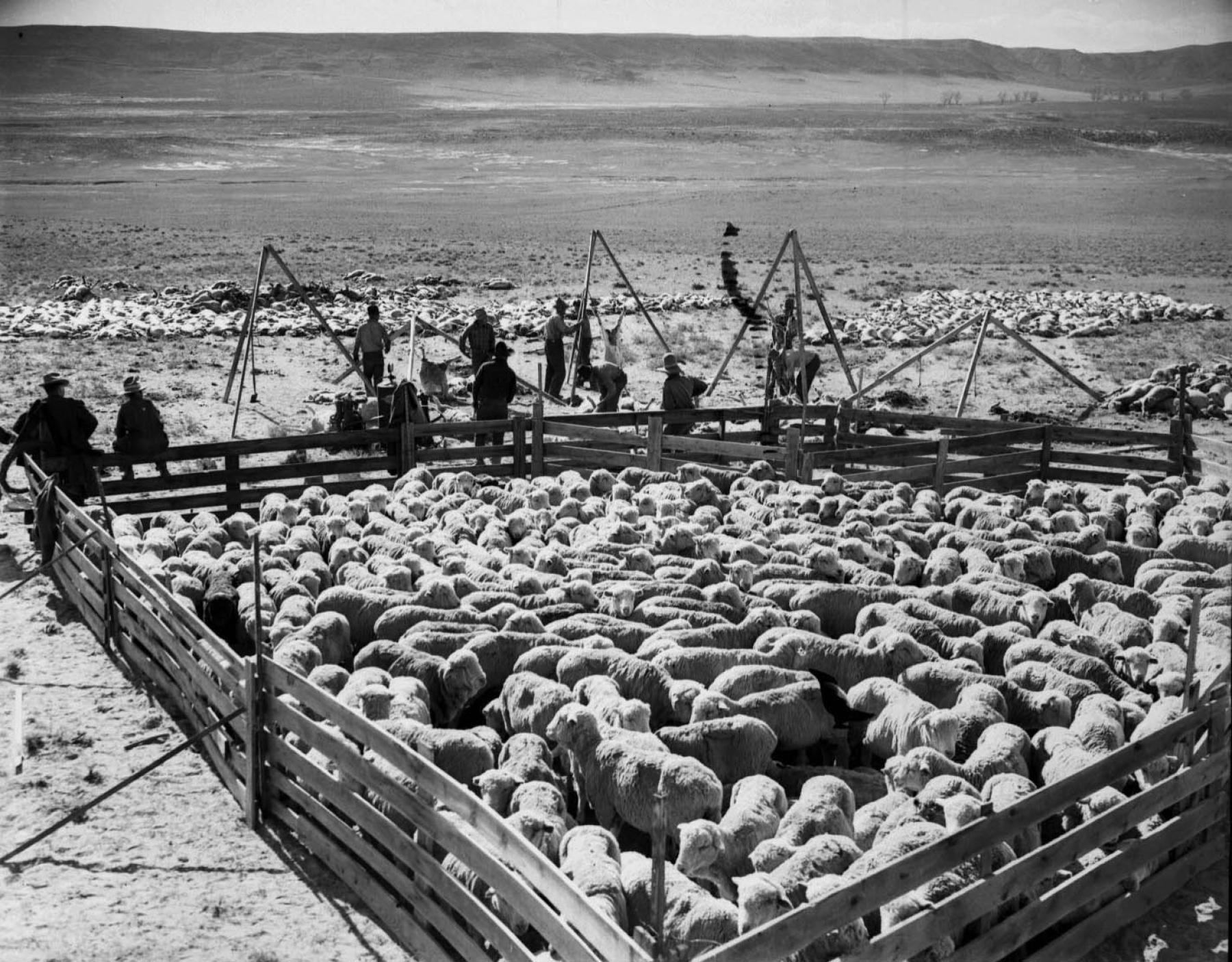
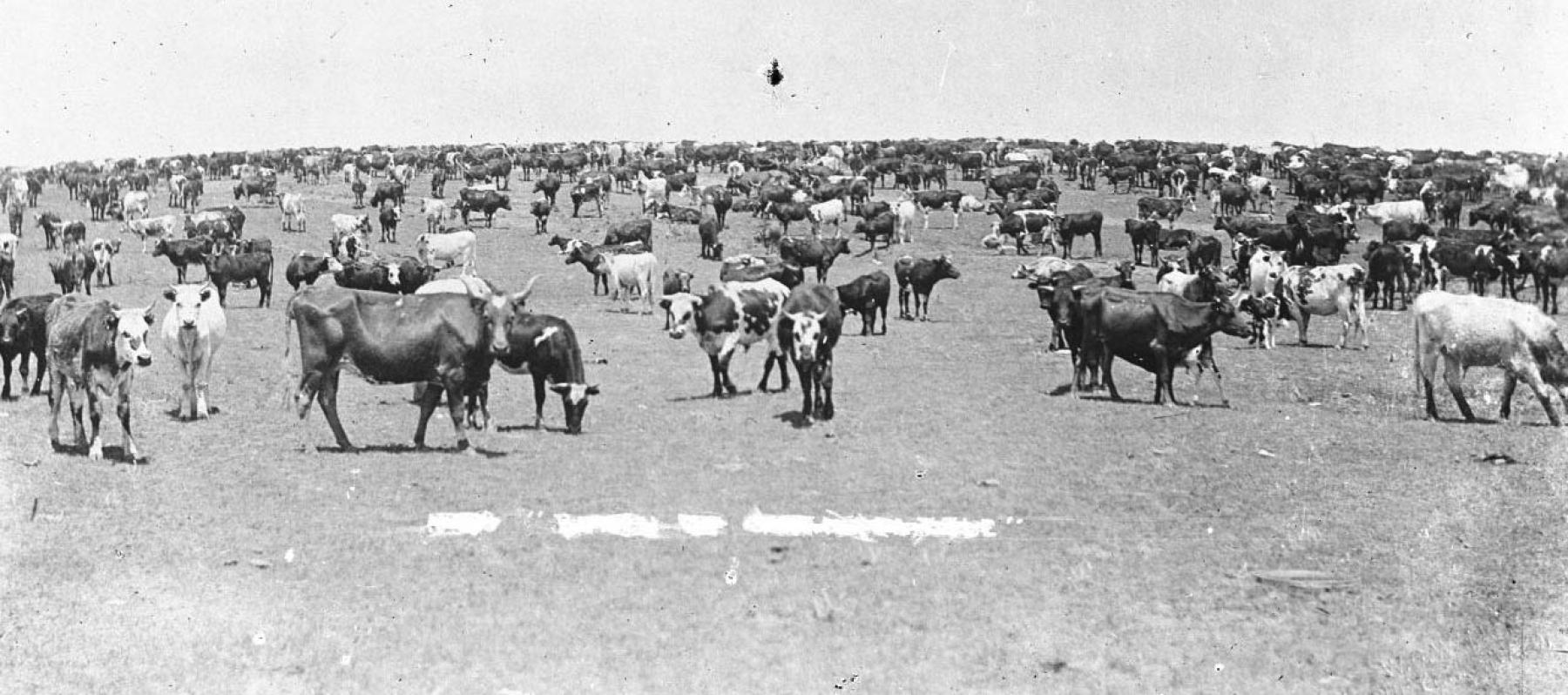
These issues focused on the use, and misuse, of the public domain. Vast areas in Wyoming and the West had long been owned by the federal government. Some parts had ended up in private hands through homesteading, and some, still in federal hands, had been administered by such agencies as the national forests in the Agriculture Department and the General Land Office in the Interior Department. For many years this land was simply used by whoever got to it first and most powerfully, much as had been the case in the days when cattle barons turned loose their cattle on the open range to consume what they could. One consequence was a general depletion of the public domain.1
The New Deal sought to reverse course in the nation’s land laws and to regulate and stabilize activity on the domain. The land laws themselves were to blame, the new administration argued, echoing ranchers who had objected over the years to homesteaders taking up land the ranchers wanted to graze.
The nation’s land laws in history had been broadly and increasingly democratic in that they encouraged settlement of public lands among as many people as possible in relatively small holdings—homesteads. But the perspective of the new administration combined the livestock rancher’s traditional opposition to homesteading with a modern inclination toward planning and regulation.

In 1934 the enactment of the Taylor Grazing Act abruptly halted that history. Discussion had gone on for some time, but it was clear that something was going to be enacted in the new administration. The Wyoming Stock Growers Association had opposed federal regulation of the range, preferring instead that the federal government simply turn over the lands to the states for distribution to private hands. In truth, however, the ranchers and the wool growers found provisions to like in the measure, including, and especially, the end of homesteading.
Unclaimed land on the public domain was, as of passage of the act, no longer available for homesteading except in Alaska and on the Bureau of Reclamation’s irrigation projects. In addition, the Secretary of the Interior was given responsibility “to stop injury to the public grazing lands by preventing overgrazing and soil deterioration, to provide for their orderly use, improvement, and development, and to stabilize the livestock industry dependent upon the public range.”2 The public domain in the western states was accordingly divided into official grazing districts, except where the public land that remained was in small or scattered parcels. In Wyoming, the eastern part of the state had been the most heavily settled, the most homesteaded, and the most privately owned. Only small amounts of the public domain remained there. In the western part of the state, however, the percentages of public land were much greater. Sweetwater and Washakie counties each had more than half of their lands as public domain and forty percent of Big Horn County was in that category. One fourth of Natrona County’s land was in the public domain; Sublette, Lincoln, Fremont, and Carbon counties each had around a third of their land held by the Department of the Interior as public domain.3 The eastern part of the state had no grazing districts. The western part had seven.
The fears of the Wyoming Stock Growers Association and the Wyoming Wool Growers Association were soon assuaged. In August 1934, after the bill was signed into law, as reported by the WSGA, U.S. Senator Robert Carey told a Casper meeting held to discuss the act that he was convinced Harold Ickes, the Secretary of the Interior, “intended to administer the act in fairness and justice to the users.” Carey had opposed the measure and had wanted the federal government to grant the land to the states. So, as the WSGA further reported, “Senator Carey’s remarks did a great deal to allay the misapprehension on the part of the stock growers who attended the conference.”4 The stock growers themselves, through local committees, would be in charge of regulating the land they grazed. In addition, the established stock growers in a district were generally the people who would be given permits and who would be in charge of organizing the local districts.5 With minimal paid staff in the federal Division of Grazing, the authority exercised by the local “advisory boards” was substantial.
Ranchers who wanted to graze the public range in a district elected advisory boards from among themselves. These boards met with a federal grazing official to work out the rules: which applicants qualified for permits, how much grazing a specific range could sustainably support, and who would receive permits for how many animals. The boards excluded “tramp livestock”—animals owned by ranchers who had no home ranch of their own to fall back on when they weren’t using the public range—and also ruled out anyone who hadn’t already been using that range. They then issued permits to keep grazing within the limits they had established. Because this process gave established users considerable power to divide the range among themselves and shut out newcomers, the federal Division of Grazing independently investigated the advisory board members’ own applications to check for favoritism.6
Exactly how the process for administering the grazing districts through locally empowered advisory boards turned out is far from clear, given the subtlety of the issues and the variety of the districts and their composition. In addition, the process was ongoing, not one that came to a stop at any given moment. The general pattern, however, likely is similar to one in Wyoming District 4 in southwestern Wyoming. In that case, the general configuration of the district advisory board seems to have remained fairly constant: In the late 1950s, scholar Wesley Calef observed that the Rock Springs Grazing Association was in a “strong position with respect to its Taylor grazing lease.” In that district, Calef noted, “The president of the association is also president of the Grazing Advisory Board of Wyoming District 4. Four of the six sheep ranchers’ representatives on the local advisory board are also shareholders in the association.”7 This was not altogether a government takeover of private prerogatives. More nearly, it was a situation in which the most powerful and prominent bodies—the producer groups organized earlier—exercised power both on their own and in their newly acquired governmental authority.8
Getting livestock off the range
The Division of Grazing in the Interior Department launched its own program for improving the range. Naturally, part of the rehabilitation involved just getting some of the livestock off it. Issuing permits for certain numbers of animals in order to restrict the usage to the carrying capacity of particular sections was one of the largest steps. Projects also included physical improvements such building trails and camping areas for herders and their sheep, but they also included more substantial construction. In 1939 one newspaper reported that the “Taylor Grazing Division” was planning to build a bridge over the Green River for sheep to cross twice a year going to and from their winter and summer ranges. In addition, the account noted, “The bridge will be on a recognized trail now being developed.”
Other projects included constructing stock driveways, developing springs, and building truck trails.9 In 1940, the Grazing Service (as the Division of Grazing had been renamed the previous year), in coordination with the Lincoln County wool growers, planned a new trail from Sage in southwestern Lincoln County near the Utah line up to the Wyoming National Forest (now the Bridger-Teton National Forest), a project that reflected cooperation between the Department of Agriculture and the Department of Interior; indeed, the Agriculture Department’s Forest Service was doing exactly the same thing within the forests, and trails for livestock were a prominent feature on their lists of projects.10
The Division of Grazing initially had very few employees on the payroll and any range improvements had to come from outside sources. The primary source was the Civilian Conservation Corps. This program, created soon after Franklin Roosevelt became president, was designed to provide work in conservation-oriented projects for unemployed young men. It was popular because it addressed unemployment, promoted conservation, and gave urban youths the chance to see—and contribute to—a part of the nation they otherwise would have missed. The bulk of their pay was sent directly to their families, thus providing additional support for the needy in the cities. CCC units, or camps, were assigned to other government agencies, such as the Forest Service, the National Park Service, the Division of Grazing, or the General Land Office. Then they became for all practical purposes employees of that agency. The camps were not permanent. The enrollment period was six months, after which the camp might continue to work on projects for the same agency in the same location or might be moved. The six-month enrollment allowed for considerable rotation among the people who signed up, and this meant that more people could be employed, if for a shorter time.
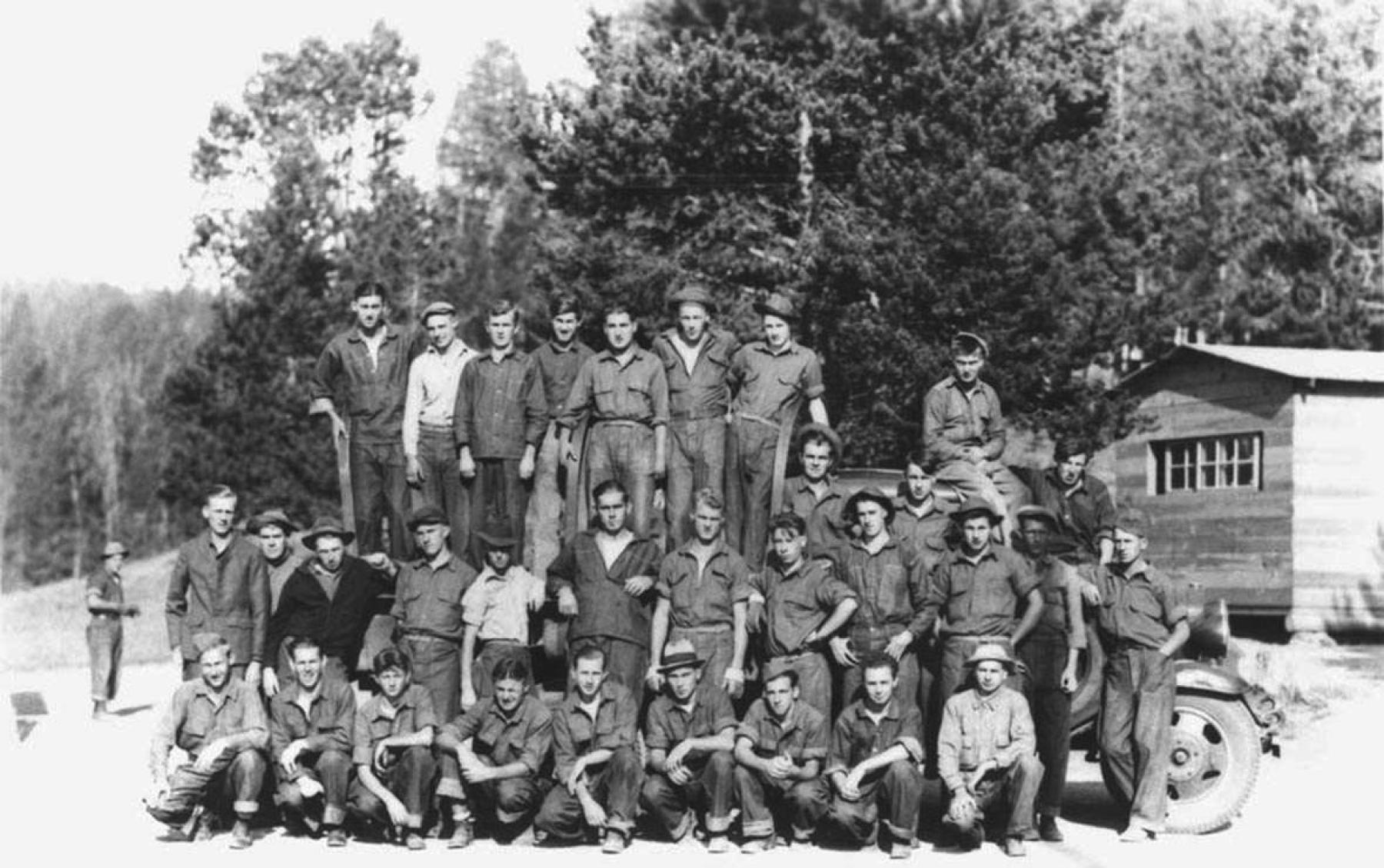
The CCC projects varied widely. Just as an example, in Fremont County, projects included water development, rodent eradication, drift fences, trails, erosion control, and firefighting.11 The range improvement work of the CCC was widespread, systematic, and thorough, but also focused on a very practical, commercial goal: increase the productivity of the range for livestock. This perception of conservation in terms of sustained yield and practical production, as opposed to preservation of nature, was an important element in the Franklin Roosevelt administration just as it had been in the Theodore Roosevelt approach. Kenneth B. Platt of the Grazing Service put this work into perspective: “Everyone concerned looks forward to the time when the range will take care of increased, not decreased, numbers of livestock. This is the ultimate aim of the Grazing Service, just as it is the hope of every stockman.”12
Getting people off the range
In the western part of the state, rehabilitation of the range generally involved reducing the numbers of cattle and sheep grazing it to manageable proportions using the AAA and the Taylor Grazing Act. And over much of the state, another push for rehabilitation involved a variety of agencies (Forest Service, Division of Grazing, CCC) developing range improvement programs and work projects to facilitate and manage grazing over a period of years.
But a third effort was perhaps the most delicate: to reduce the human habitation on the land, and even to remove some of the people who lived there—including people who had homesteaded in high hopes and good faith. This was especially important in the eastern part of the state. The critical perception here was that just as the range had been overgrazed by cattle and sheep, so had parts of the public domain been farmed to the point of destruction.
Defining farming as a commercial enterprise that had to turn a profit to be successful, government and business agreed increasingly that much of this land on the Great Plains, including in Wyoming, was just no good for farming. They concluded further that farming had ruined it, destroyed its nutrients, and left it vulnerable to erosion. The only hope was to remove the people who farmed large swaths of the land and restore it to its proper use—pasture lands for grazing.
From the perspective of the twenty-first century, this reasoning sounds obvious to many people, and even makes those who did not grasp its truth earlier seem naïve or stupid. But it is important to remember that the shift represented a complete revolution in thinking, in assumptions, and in values. Homesteading, once a national virtue, was now, at the very least, subject to questions.
It was a new approach to the values of farming. For many people who took up homesteads, the object was not to get rich but to get by, to have a piece of land on which they could be independent and free of forces that moved other people from place to place, job to job, rental to rental, ever fleeing one temporary refuge in search of another because of their dependence on others for survival and prosperity.
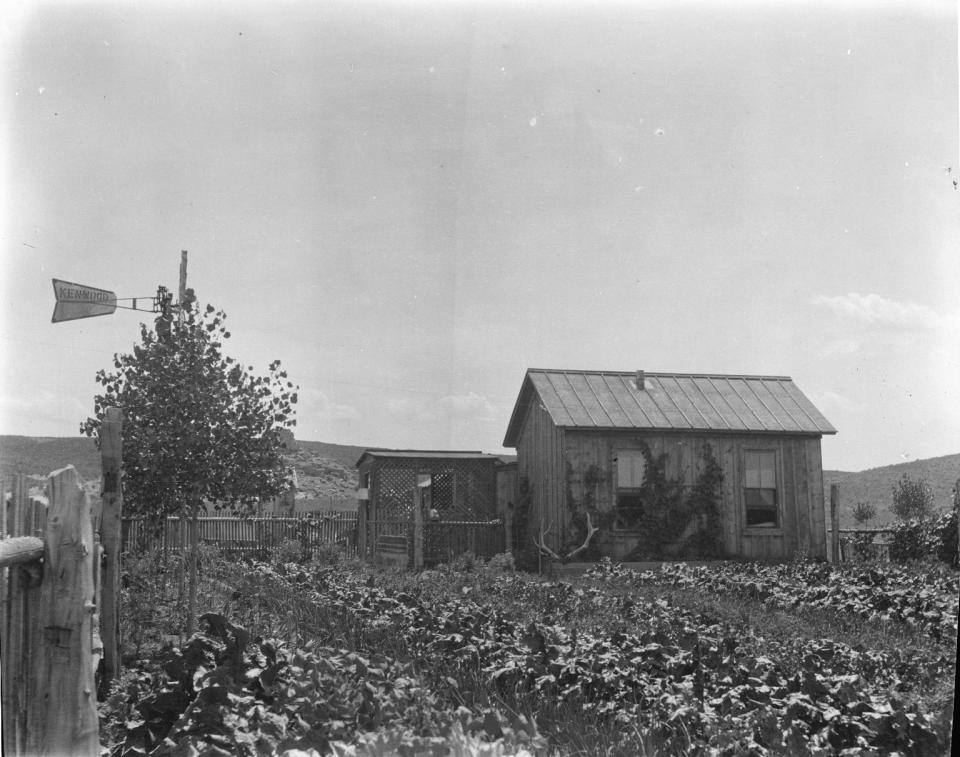
Farming was about an organic connection to the earth, with roots as firmly embedded in the notion of freehold democracy as in the tilth of the soil. But according to the new approach, these homesteaders had it wrong. Farming was not a way of life, the experts at the agricultural colleges taught. It was a business. And farmers needed to think of themselves as businesspeople.
Still, the homesteaders, the irrigation farmers, the dryland farmers, the small rancher or family with a small flock of sheep, continued on, clinging to the land as if their identity depended on it, oblivious to the larger economic opportunities and circumstances and their role in the economy as businesspeople. The problem was not that the farmer could not make ends meet; obviously farmers could and did, and that was the problem according to those who wanted them to shift to commercial, businesslike operations.13 If they kept books like any other business, they would realize that they were not making a profit, but since they did not keep those ledgers, they just continued farming.
As if the perception that farming was a business and not a way of life were not enough to doom those out on the homestead, another set of circumstances seemed to clinch the argument that more of them should leave and go to town. In the view of some, farming had even destroyed the earth; where there had once been fields of grain, now there were gullies and washes of exposed dirt and clay and sand, the topsoil removed by wind and downpours. In the 1930s, the official view was that the areas of the state where that erosion had taken place were extensive and included the area with most farms: “The farm land areas in Wyoming which are considered problem areas are chiefly centered in the eastern half of Wyoming. These areas include portions of Campbell, Weston, Niobrara, Converse, Goshen, Platte, and Johnson counties. In most of these areas erosion is prevalent.”14 This took in a substantial part of the state—and even more in terms of the number of farms and people located there.
The solution increasingly was to “retire” the land that, in the views of the policy makers, should never have been farmed in the first place. The first step in this course of treatment was to stop people from taking up homesteads on the public domain. This was achieved with one swift stroke—the Taylor Grazing Act’s withdrawal of almost all public land from homesteading. The next step was more difficult. In 1935, the State of Wyoming created a State Planning Board to gather information and guide the state in establishing priorities for the coming years, especially in its coordination with the federal government’s various programs.
As with the discussion over whether the drought was the problem in the livestock industry, or whether it was something deeper, like overgrazing, a similar debate emerged in farming. The Planning Board’s consultants viewed the problem as caused by a defective set of laws: According to the Planning Board, “in some of these areas, conditions are due to very small farms rather than to natural disadvantages.”15 The solution followed naturally: “modification of ranch setups.”
The fundamental recommendation of this analysis was to protect soil from wastage when possible, but the other soils “should be withdrawn from cultivation and rededicated to permanent vegetative cover, such as pasture or forests…Correct farming methods should be practiced. The land owners who do not wish to remain in these problem areas should be given an opportunity relocate upon productive farms. The stable farmers in these regions could then be assisted and their holdings increased to allow the introduction of pasture and to prevent the serious wind erosion occurring in many places in the problem areas.”16 When this view in Wyoming government converged with a national apparatus with the same objectives, the future was set. If the homesteaders and owners of small farms and ranches were already in trouble, an even more devastating wind was beginning to blow them off the land.
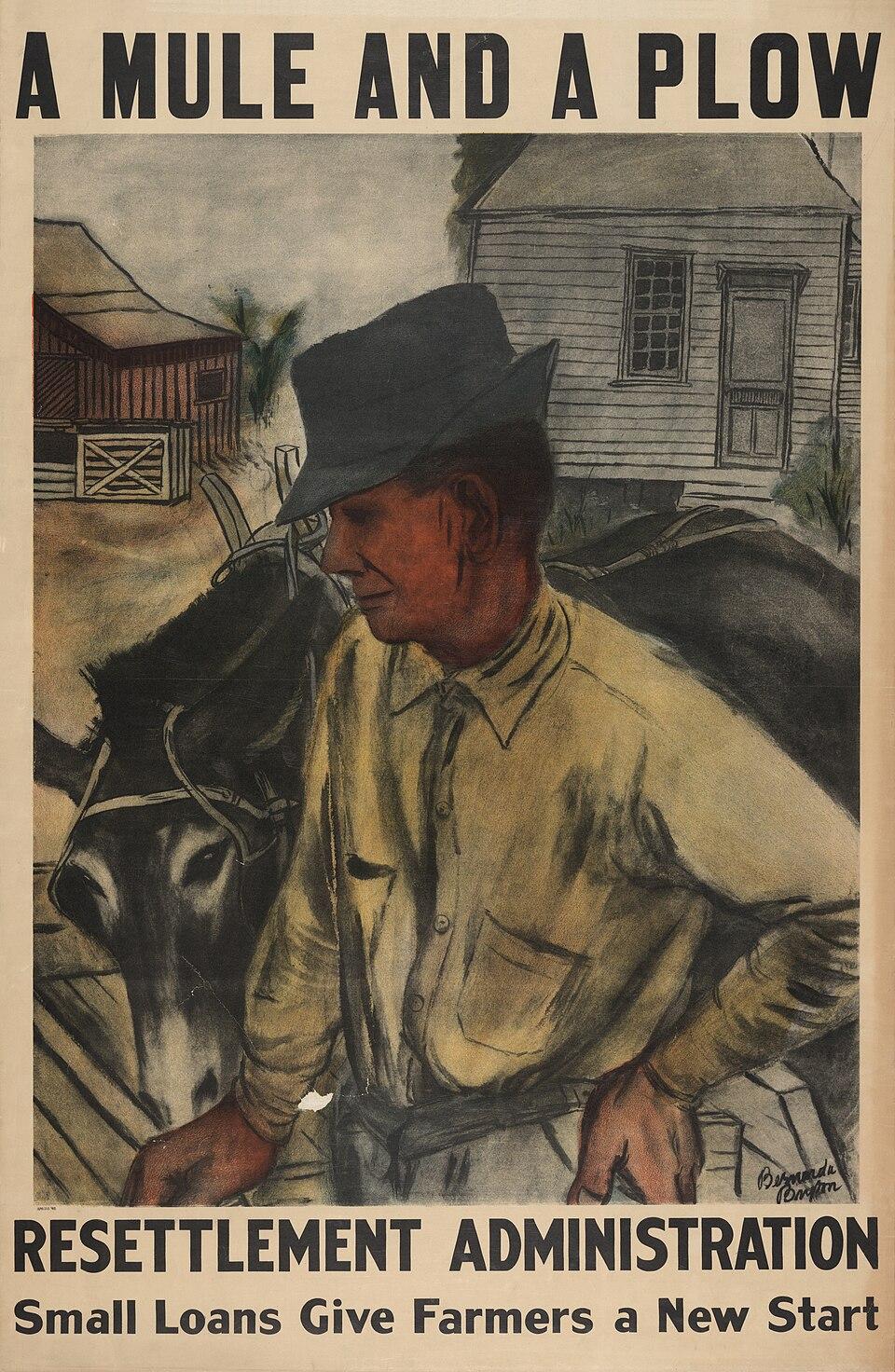
The creation of the Resettlement Administration in May 1935 sprang from a compassionate impulse to help people on the farm who had been left out of benefits when times were good and injured that much more when times were bad—specifically those left out by the government’s own programs that had been biased in favor of the biggest operators. Drawing upon existing appropriations under the 1935 Emergency Relief Appropriation Act, President Roosevelt created the Resettlement Administration with an executive order, and named Rexford Tugwell, his close advisor and Undersecretary of Agriculture, to serve as its director.17 The mission of the Resettlement Administration was to provide assistance to the impoverished farmers by removing them from their farms and ranches and resettling them elsewhere. In the summer of 1935, the Resettlement Administration had quickly organized its program in Wyoming, focusing on the eastern counties where erosion was especially endemic.
Coming to Thunder Basin
Within a few months, the program had formulated its major goals and brought its focus to bear on the Thunder Basin area of Converse, Campbell, Niobrara, and Weston counties and had secured options to purchase land in those counties. This plan proposed to provide permanent relief for people situated on “unproductive land” by purchasing the land from its owners. The necessary work, after buying out the residents, included “restoration of land that should never have been plowed, by reseeding with native grass,” and “conservation and better usage, stabilization of grass resources through water development and controlled grazing practices.”18
What was new, though, was the removal of the people who had been farming the land. The agency would “remove farm families from waste land and transfer them to more productive sites where they can maintain life on an economic basis.” And the farmland those people would leave behind “will revert to grazing, with consequent conservation for vast areas now damaged by overgrazing, wind and water erosion.”19
At its inception, William Fischer notes in his research on the area that 309 families (not 309 individuals) resided in the Thunder Basin area planned for restoration. In February 1936, payments began to those who had indicated a willingness to sell to the government, and by July 1940, 172 families had left. Fischer notes that the schools in the community had been pronounced “far from desirable,” and they too were removed.20
Once again the U.S. government became the owner of this land.21 The Campbell County Rehabilitation Committee, which advised the county agent in the process, saw the benefits of the program and, as Fischer quotes the committee, endorsed the idea that the residents “be allowed to trade their land to the government for irrigated tracts.” County livestock operators in particular worked to see the project realized, including Ernest P. Spaeth, who was also chair of the Rehabilitation Committee, and Thomas A. Nicholas who saw this project as important in “stabilizing the livestock industry.” The only nervousness on the part of the ranchers stemmed from their fear that “outside livestock owners will be able to take advantage of government purchased lands to unfairly compete with us.”22
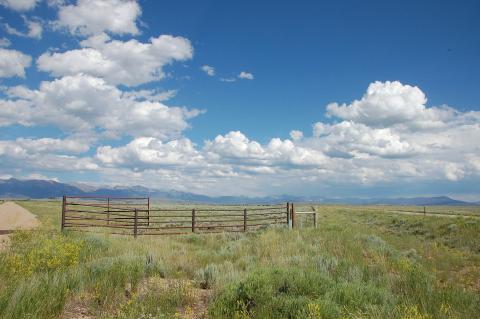
The range improvement work proceeded in the Thunder Basin project with dams being built, seeps and springs improved, and other alterations. And land was purchased—lots of land. The Land Utilization Project, as it was officially termed, ultimately took in nearly two and a half million acres. Agnes Wright Spring described the area as consisting “primarily of three types: small, dry-land farms unsuited for cultivation and too small to produce a satisfactory living, owned by families who wished to find other locations; abandoned homesteads over which no satisfactory management could be exercised without Government purchase; and selected tracts located at strategic points through the project area on which water facilities could be developed for the improvement of the range.”23
The critical point came when people were moved off the land they had been farming. The question of staying or leaving was profound, but the criteria may have been subtle, and there is scant evidence about how decisions were made regarding who could stay and who needed to move. The only clear threshold, or at least as clear as anything in those tangled processes, was that of who qualified for loans from the Resettlement Administration. Larry Krysl, in his master’s thesis examining the Depression in Wyoming, observes that the RA loans were made to qualifying families “in order to build up their holdings to a profit-making level, thereby preventing abandonment of their farms.”
Drawing upon records from the Resettlement Administration, Krysl notes that the RA officials examined the farms and got out their ledgers to chart their income and expenses. The new system of bookkeeping that farmers had been encouraged to use was now part of the calculus in determining who stayed on the land: “The size and use of individual loans granted by the RRA [Rural Resettlement Administration] were determined by a farm and home management plan. These plans took into consideration all possible sources of income and all possible expenditures of the farm family, and, in order for the farm to have been truly rehabilitated, these two had to balance.”24 The 1937 Resettlement Administration study of Goshen County put it slightly differently. In that study, the report measured the farms and ranches in Goshen County by their ability to increase their operating capital, a concept as foreign as another language to many in the county.25
So those people who could not demonstrate in this system of ledgers and accounts that their farm was profitable in the strictest technical sense, those people were bought out and moved out. One homesteader in the Dry Creek area of Converse County described the situation: “Now on account of the great depression following the World War the larger numbers of pioneers are selling their claims to the Government for a very small price and quitting our part of Converse County. The land thus sold is being enclosed in immense pastures to be leased to stockmen.”26
Agnes Wright Spring again observed how the area was then turned over to local ranchers who grazed their cattle where formerly homesteads were dominant, and in so doing they emulated their fellow ranchers in the western part of the state; they “organized co-operative grazing associations, and proceeded to lease privately owned land, State land, and public domain in addition to tracts purchased in the land-use program.”27 What the ranchers had failed at in the Johnson County War and in subsequent efforts, they had finally achieved with the New Deal.
The road to the future was clear. Grazing, not farming, was to be the use of the non-irrigated lands in the eastern part of the state. And this meant that the range improvement programs gained new strength and breadth; they were no longer restricted to national forests or to Taylor Grazing land, and the Department of Agriculture was even contracting with private ranch owners to undertake improvements on their own land. In November 1936, the newspaper in Douglas could report, “the range improvement program started in this county in September has grown until there are 170 ranches signed up with approximately one and one-half million acres of range land listed for improvements, or about one-half of the entire area of the county.” In that county about seventy-five reservoirs were being built, a hundred miles of fence were being “rebuilt,” and “possibly 80 or 90 springs are being developed and considerable water spreading and contouring is being done.”28
In Niobrara County, the local extension agent reported 253 ranchers indicated that they were going to participate in the Range Improvement Program, representing about 650,000 acres, building fifty stock-watering reservoirs, about twenty wells, developing about fifty springs and seeps, and constructing about 120 miles of fence.29 Each one of these projects had to start after September 9 and had to be completed by the end of the calendar year. In Campbell County, County Extension Agent Floyd Dominy (who would later become head of the Bureau of Reclamation) oversaw a fast-moving program. By the following spring, nearly $50,000 had been distributed to approximately 300 Campbell County ranchers who had constructed reservoirs and other range improvements under the program's provisions, including 237 stock water reservoirs, 229 developed springs, 46 drilled wells, 25 miles of cross fence, and 300 contoured acres of range land.30
With an emphasis on regulating grazing on the public domain in the western part of the state and an emphasis on discouraging farming in the non-irrigated lands of the eastern part of the state, and a willingness to use the resources of any and every agency available to improve the range all over the state, the landscape of Wyoming’s farms and ranches was being dramatically altered in the 1930s.
Agnes Wright Spring captured a little of this transformation when she wrote of the whole state in 1941:
Since 1933 much work has been done by Civilian Conservation Corps forces and others engaged under relief programs, to improve forage conditions and to facilitate the management of livestock on the ranges. Areas only partially utilized heretofore, because of lack of water, have been made suitable for sheep and cattle by construction of livestock watering ponds and reservoirs. Range fences have been constructed to separate range allotments and to reduce drift of cattle. Stock driveways, trails and bridges, corrals, and cattle guards that have been built will facilitate the use of approximately 5,000,000 acres of livestock ranges in the national forests in Wyoming.31
[Editor’s Note: Special thanks to the Wyoming State Historic Preservation Office for making this article available and to the Wyoming Cultural Trust Fund for its ongoing support for this project. Michael Cassity’s historical monograph, Wyoming Will Be Your New Home, from which this article is adapted and excerpted, is one of many historic contexts published by the Wyoming State Historic Preservation Office. These documents are meant to offer a broad background against which historic developments can be better understood as the agency works to preserve properties and places important to an understanding of Wyoming’s past. The contexts, however, are also based on sound research and are full of well-told, vivid stories. With this in mind, WyoHistory.org is collaborating with the SHPO office to bring more of this history to a wider readership. The Cultural Trust has provided the funds to make this collaboration possible. We offer our thanks to all.]
Footnotes
- See the discussion on this thorny issue in Phillip O. Foss, Politics and Grass: The Administration of Grazing on the Public Domain (Seattle: University of Washington Press, 1960), 8–38.
- Kenneth B. Platt, “The Taylor Grazing Act in Operation, Article 11: The Grazing Service: Organizations, Aims, Methods,” undated, WPA Collection, Wyoming State Archives, subject file 382. Although the document does not indicate, it appears to have been published by the Grazing Service, as the Division of Grazing became known in 1939.
- Wyoming State Planning Board, A Survey of Public Domain in Wyoming (Cheyenne: Wyoming State Planning Board, 1937), 21.
- Agnes Wright Spring, Seventy Years: A Panoramic History of the Wyoming Stock Growers Association (Cheyenne: Wyoming Stock Growers Association, 1943), 144.
- Foss, Politics and Grass, 82.
- Florence L. Wardell, “Grazing,” typescript prepared from records of the United States Department of Interior, Division of Grazing, Worland, Wyoming, [1939 or 1940], WPA Collection, Wyoming State Archives, subject file 1216, [127–129]. Ms. Wardell was from Byron.
- Wesley Calef, Private Grazing and Public Lands: Studies of the Local Management of the Taylor Grazing Act (Chicago: University of Chicago Press, 1960), 206.
- For an example of this dynamic, see Calef, Private Grazing and Public Lands, 211. Calef considers the case of the Rock Springs Grazing Association (RSGA), which had declined to divide its public land lease into individual allotments, and contemplates what would happen if a government district manager concluded “that it was necessary and desirable to subdivide the lease into allotments.” Calef asks whether the manager could then “go to the grazing district advisory board for independent judgment and support,” and observes: “Perhaps. But four members of the board including the board president would be the same persons he had talked with at the association meeting.”
- News clippings, [1939], WPA Collection, Wyoming State Archives, subject file 408.
- Ibid.
- Cora Marcy, “Agricultural Facts,” WPA Collections, subject file 375. This fact sheet both summarizes CCC activities and quotes from an unidentified report of the CCC or Division of Grazing on those activities. For the history of one CCC camp in Wyoming, see Ann Noble, “Civilian Conservation Corps,” https://www.sublette.com/history/ccc/.
- Platt, “The Taylor Grazing Act in Operation, Article 11.”
- See in this regard a column in the Wyoming Farm Bulletin as early as 1912 lamenting that farmer who were not businesslike in their operations actually managed to continue operating, even though their records would show them operating at a loss “for generations”: “Farming differs in one particular essential from any other business, in that a farm may give a living to a man and his family and at the same time be operated at a continual loss. This may go on for generations, and that without mortgaging the farm. In figuring profits the merchant subtracts from the gross profits depreciation upon equipment and stock, rent upon buildings, providing he owns them, and interest upon money invested in his business. If his own labors are given to the business, he figures a salary for himself. How many farms are there in the country that will give a profit after figuring as does the business man? It is quite the usual thing for a farmer to figure that he has made so much money during the past year. He does not figure in what his own labor would have cost if he had hired out to someone else, nor does he consider his wife’s labor as being commercially valuable.” “Profits from the Farm,” Wyoming Farm Bulletin, I (March 1912), 122.
- State Planning Board, Wyoming, Land Utilization: Preliminary Studies (Revised), February 1936, mimeographed document widely available including copies at Wyoming State Archives and Coe Library, University of Wyoming, 16.
- State Planning Board, Wyoming, Land Utilization: Preliminary Studies, 13.
- State Planning Board, Wyoming, Land Utilization: Preliminary Studies, 16–17.
- The text of this executive order, unusual in the brevity of its text and the breadth of its scope, can be found at John Woolley and Gerhard Peters, The American Presidency Project, Santa Barbara, CA: University of California (hosted), Gerhard Peters (database). https://www.presidency.ucsb.edu/.
- “Rehabilitate Ranchers by Purchasing 280,000 Acres Wyoming Land,” The Powell Tribune, October 17, 1935, 7.
- “Wyomingites to Get Much Land Money,” Gillette Daily Journal, November 8, 1935, 1.
- William P. Fischer, “Homesteading the Thunder Basin: Teckla, Wyoming, 1917–1938,” Annals of Wyoming, 71 (Spring 1999), 31–32.
- I want to note once again, in hopes of directing researchers to them, the records for the government’s purchase of these properties from the homesteaders. Those materials represent an exceptional body of information including transfer papers, land use and condition documents, itemization of improvements on the land, and income, assets, and financial records of the landholders who sold. The lands were acquired and managed by the Resettlement Administration, then the Soil Conservation Service, and then were transferred to the Forest Service in the 1960s and are now part of Thunder Basin National Grassland. The documents as of this writing are located at the Douglas Ranger District of the Medicine Bow-Routt National Forest in Douglas, Wyoming. I am grateful for this information to Judy Wolf and Ian Ritchie who have explored this vast source.
- Fischer, “Homesteading the Thunder Basin,” 32.
- Writers’ Program of the Work Projects Administration in the State of Wyoming, Wyoming: A Guide to Its History, Highways, and People (New York: Oxford University Press, 1941), 40.
- Krysl, “The Effects of the Great Depression on the State of Wyoming, 1935–1940,” 38.
- H. L. Stewart, Natural and Economic Factors Affecting Rural Rehabilitation in Southeastern Wyoming (as Typified by Goshen County), Research Bulletin K-13 (Washington, D.C.: Works Progress Administration, 1937), 15–19.
- Mrs. Rhue Lynch, Mrs. C. C. Dickson, and Mrs. R. L. Fetherston, "Notes on Pioneering in Dry Creek Community, Converse County," typescript, [undated], WPA Collection, Wyoming State Archives, subject file 1390.
- Writers’ Program, Wyoming: A Guide to Its History, Highways, and People, 41.
- “Range Program is Under Way in Converse County,” The Douglas Budget, November 19, 1936, 1.
- J. Melvin Stephenson, “1936 Annual Narrative Report, Niobrara County, Wyoming, for Extension Work in Agriculture & Home Economics,” County Extension Agent Annual Reports, Wyoming State Archives, 47. I thank Carl Hallberg once again for locating this county extension agent report in the Wyoming State Archives.
- “Checks Received for 1936 Range Program,” Gillette Daily Journal, April 29, 1937, 4.
- Writers’ Program, Wyoming: A Guide to Its History, Highways, and People, 104.