“Don’t Squat with Your Spurs On”: The Life of Alan K. Simpson
On a freezing New Year’s Eve in 1978, a handful of friends gathered at Christ Episcopal Church in Cody, Wyoming, to watch Alan Simpson sworn into the U.S. Senate by candlelight. Only about twenty people attended the midnight service, but the moment vaulted Simpson ahead in seniority and launched a career that would make him one of the most recognizable—and quotable—political figures in Wyoming history.1
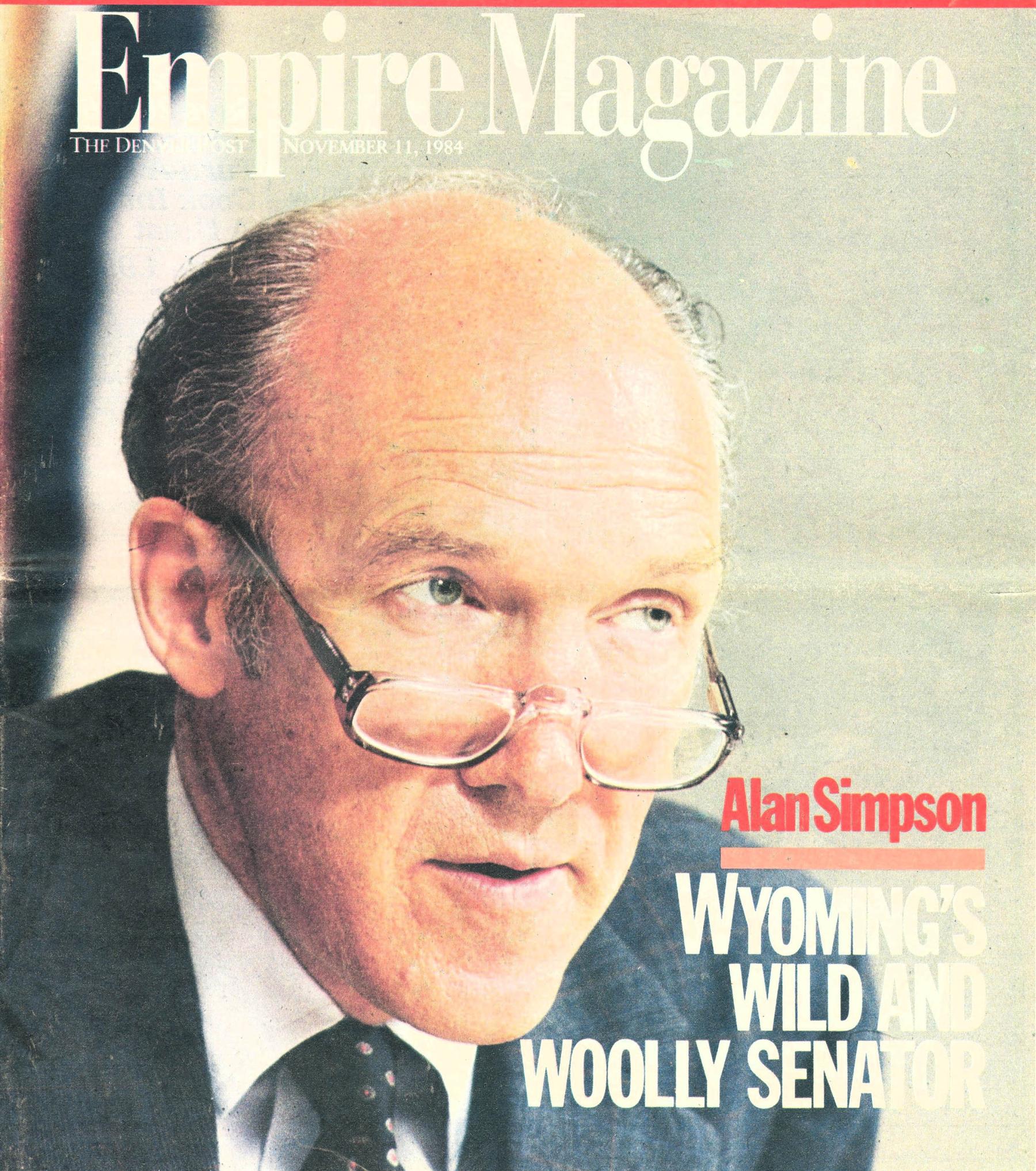
Known for his candor, humor, and ability to work across the aisle, Simpson served three terms in the Senate from 1979 to 1997. His career—shaped by family legacy, small-town roots, and a gift for plainspoken one-liners—left a lasting mark on both Wyoming and the nation.
Family Roots and Wyoming Heritage
Simpson came from one of Wyoming’s most prominent political families. His grandfather, William L. Simpson, practiced law in Jackson and later Cody, while his father, Milward L. Simpson, served as governor of Wyoming from 1955 to 1959 and U.S. senator from 1962 to 1967. Al was born September 2, 1931, in Denver, Colorado, but grew up in Cody, a community that remained central to his identity throughout his life.2
Reflecting on his upbringing, Simpson recalled the way his parents kept their house open to the town’s youth: “We were a pretty rambunctious bunch … there were just always boys around the house... and Mom fed them, she got them to sing in the choir at the church by offering them ice cream and cake and a quarter.”3 Many of those boys came from broken homes, and Simpson remembered that his mother’s generosity left a lifelong impression.
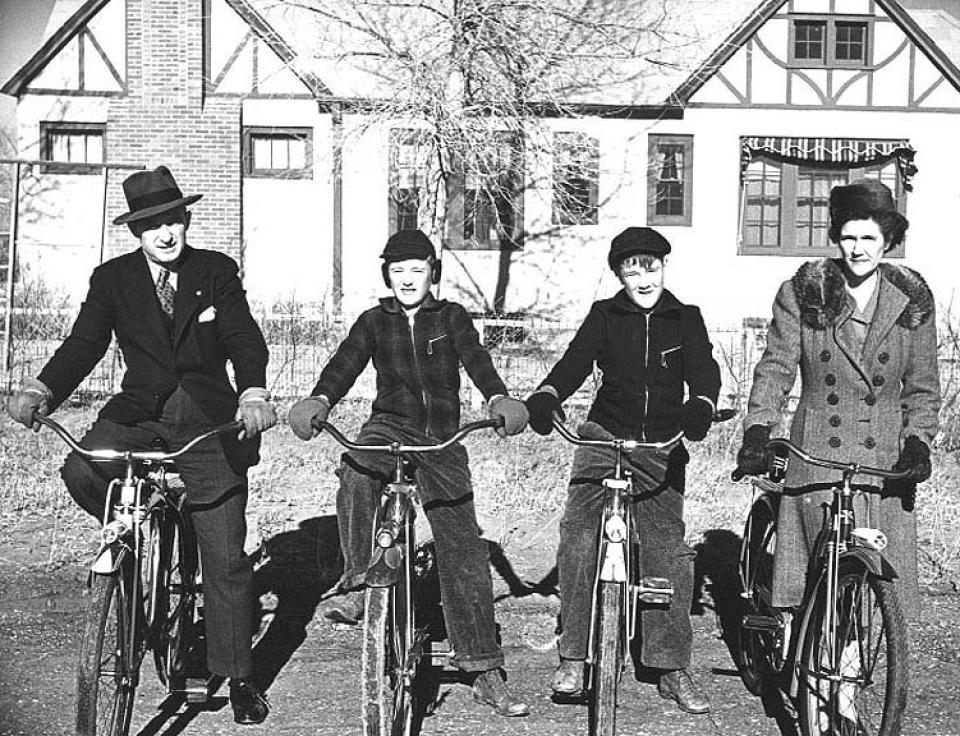
His father, Milward, was both a larger-than-life figure and a constant presence. “When he came into a room you knew that old Simp was there... he had that aura about him,” Simpson said.4 Milward was also a disciplinarian. Simpson remembered him warning, half in jest and half in seriousness: “If it came down to keeping your mother around this joint or you two, you guys would be gone fast.”5
A Troubled Youth
Despite this steady family life, Alan Simpson often described his youth as unruly. In interviews he was brutally honest: “I was just a nasty little son of a bitch... I was destructive, I lit fires, I was a fire bug.”6 With friends he vandalized property, shot up mailboxes, and even set fire to an abandoned federal building. These acts eventually brought him before a judge and put him on probation.7
Simpson never concealed these stories—instead, he used them later in life to argue for leniency and second chances for young offenders. He even recounted them in a Supreme Court brief supporting juvenile justice reform. In his telling, those misdeeds helped him appreciate forgiveness, responsibility, and the value of a community willing to give young people another chance.
Education, Army Service, and Law Practice
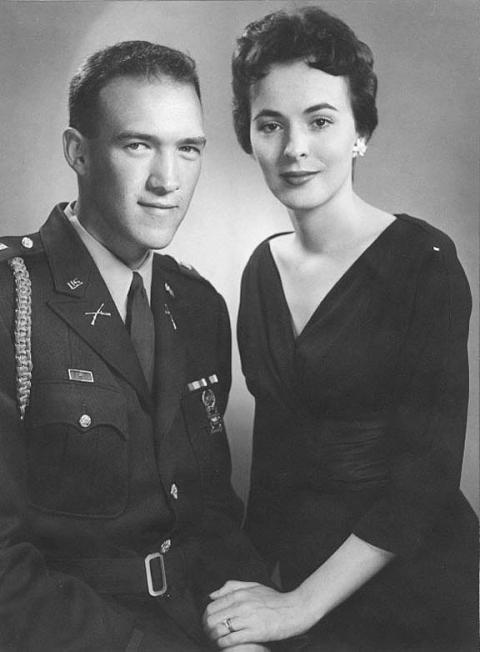
After graduating from Cody High School in 1949, Simpson spent a year at the Cranbrook School in Michigan before returning to Wyoming. At the University of Wyoming, he excelled socially and athletically, earning a bachelor’s degree in 1954. He married Ann Schroll that same year, beginning a partnership that would last more than seventy years.
From 1955 to 1956, Simpson served in the U.S. Army in Germany. He returned to Wyoming and completed his law degree at the University of Wyoming in 1958. Back in Cody, he practiced law with his father, joining a line of Simpson family attorneys that stretched across four generations.8
Wyoming Legislature
Simpson entered politics in 1964, winning election to the Wyoming House of Representatives. He served until 1977, including four years as majority leader and a term as speaker pro tempore.9
His most enduring legislative achievement was helping establish Wyoming’s severance tax on minerals and the Permanent Mineral Trust Fund, which required a constitutional amendment to protect its principal. Simpson recalled industry leaders urging legislators to act: “They said, this is it. And we’ll help you pass it. We’ll get the American Petroleum Association and take away the last legion of naysayers.”10 He warned colleagues that the oil wealth of Park County would not last forever: “When that product is gone, we will all be stunned at what will happen with our property taxes. So you better start putting it away.”11
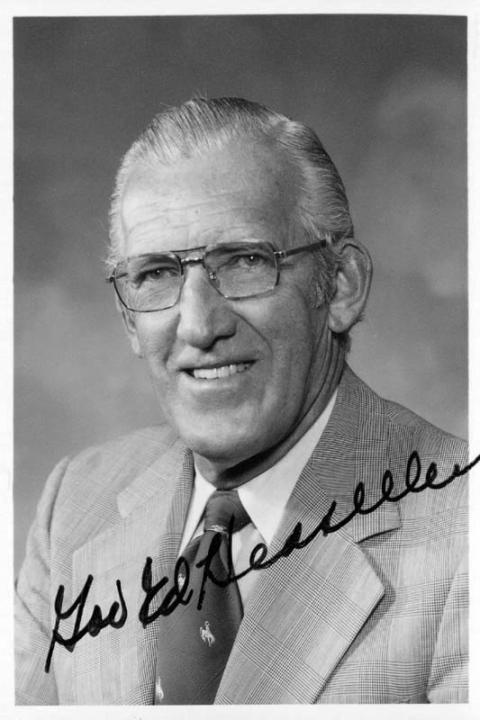
Simpson also forged bipartisan partnerships, especially with Wyoming Governor Ed Herschler, a Democrat. Together they advanced landmark state policies: “Ed and I did the Clean Water Act, the Clean Air Act, plant siting legislation, domestic violence stuff... if it said at the top, ‘Sponsored by Ed Herschler and Al Simpson,’ I’m telling you, it passed because they respected both of us, and across the aisle.”12
During his dozen years in Cheyenne, Simpson honed the humor and plainspokenness that would define his Senate career. He credited humor as his essential tool: “Humor is the universal solvent against the abrasive elements of life.”13
U.S. Senate Star
In 1978, Simpson won election to the U.S. Senate, succeeding Cliff Hansen, who had himself succeeded Al’s father a decade earlier. Seniority gained from that unusual New Year’s Eve swearing-in gave him an early edge among his incoming class.14 Re-elected twice, Simpson served until 1997, spending ten years as Republican whip—the second-ranking position in the Senate.15
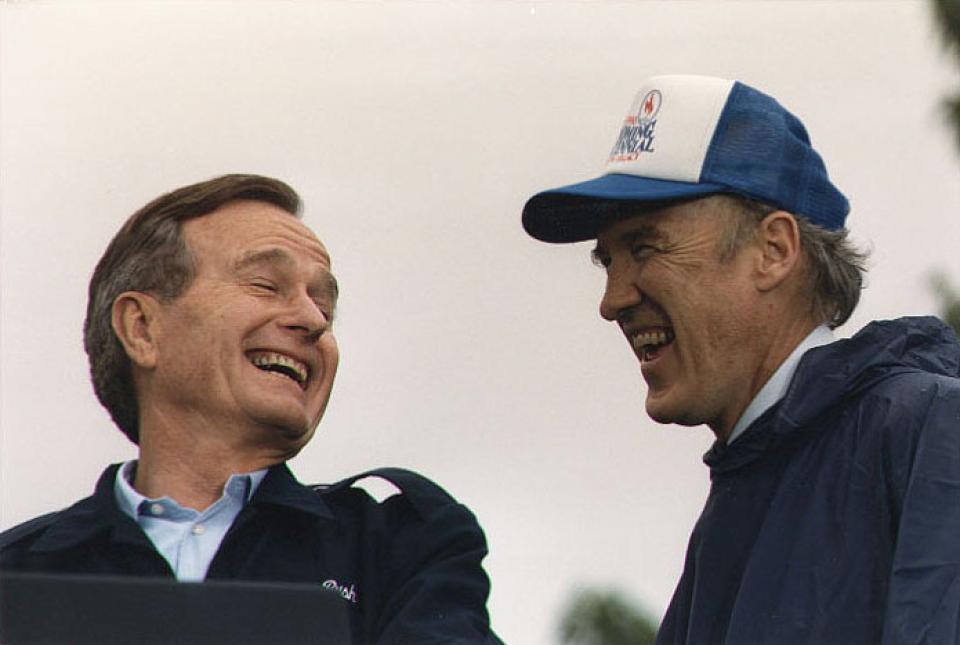
At the height of his influence, Simpson’s name would surface in presidential politics. In 1980, George H. W. Bush considered Simpson a preferred choice as running mate. Though Simpson joined Bush on a Florida fishing trip that year, he insisted he had no interest in the vice presidency, joking that he could never imagine leaving Wyoming for such a confined role.16
Immigration Policy
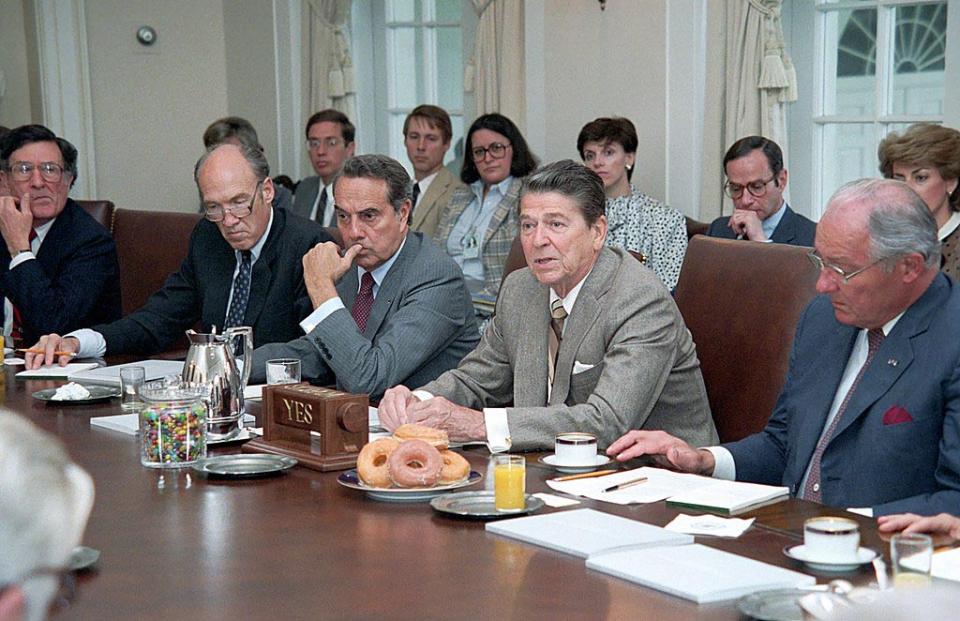
Immigration was the issue most associated with Simpson during his Senate career. As chair of the Senate Subcommittee on Immigration and Refugee Policy, he became the driving force behind the Immigration Reform and Control Act (IRCA) of 1986, often known as the Simpson-Mazzoli bill. Working across the aisle with Romano “Ron” Mazzoli, a Kentucky Democrat in the U.S. House, Simpson crafted legislation intended to address both illegal immigration and provide legal status for undocumented workers already in the country.
A March 1982 editorial in The New York Times titled, “Not Nativist, Not Racist, Not Mean,” commended the Simpson-Mazzoli bill as “at once tough, fair, and humane.”17 Simpson himself explained his drive in personal terms. In August 1982, The New York Times reported that his immigration reform efforts grew partly out of his boyhood experiences near the Heart Mountain internment camp, where he befriended Japanese American Scouts.18
Simpson emphasized the stakes in a 1984 article: “Illegal immigration endangers a fair and generous policy of legal immigration... America as a nation philosophically supports a generous immigration policy, but current trends threaten to diminish this generosity.” The 1986 act reflected this dual approach: it created employer sanctions to deter the hiring of undocumented workers, while also providing a legalization program for millions already in the country. Simpson defended the approach as necessary: “If the government could not find these people when they entered, how can we expect to find them now to remove them? In addition, mass deportation would involve excessively expensive and intrusive procedures.”19
However, the law’s implementation proved more problematic than Simpson anticipated. Academic research later found that IRCA’s employer verification requirements led to unintended discrimination against Hispanic workers and others who appeared foreign-born. A 1995 study in the journal Demography found that employers who reported IRCA-related practices employed fewer Hispanic workers than those who did not, suggesting the law’s record-keeping requirements may have encouraged workplace discrimination rather than preventing it.20
After the law passed, Simpson continued to push for further reforms. In a 1988 essay in the San Diego Law Review, he argued that while the act had dealt with illegal immigration, “an important issue was still left unresolved... the reform of legal immigration.”21 He highlighted three concerns: the unchecked growth of family-based immigration, the failure to select more immigrants for skills and national interest, and the unintended dominance of admissions from a few regions.
Pushing these bills through was exhausting. Simpson compared the struggle to “giving dry birth to a porcupine.”22
The Anita Hill Controversy
Simpson’s Senate career faced its most controversial moment during the 1991 Supreme Court confirmation hearings for Clarence Thomas. As a member of the Senate Judiciary Committee, Simpson was widely criticized for his aggressive questioning of Anita Hill, who testified that Thomas had sexually harassed her. Simpson later recalled his intense reaction: “I lost my marbles, I did. I was snarling.”23 He told the committee he had “stuff coming over the transom about Professor Hill,” and said critics should “watch out for this woman.”24 The controversy drew national condemnation and became a defining moment in debates over how sexual harassment claims should be handled.
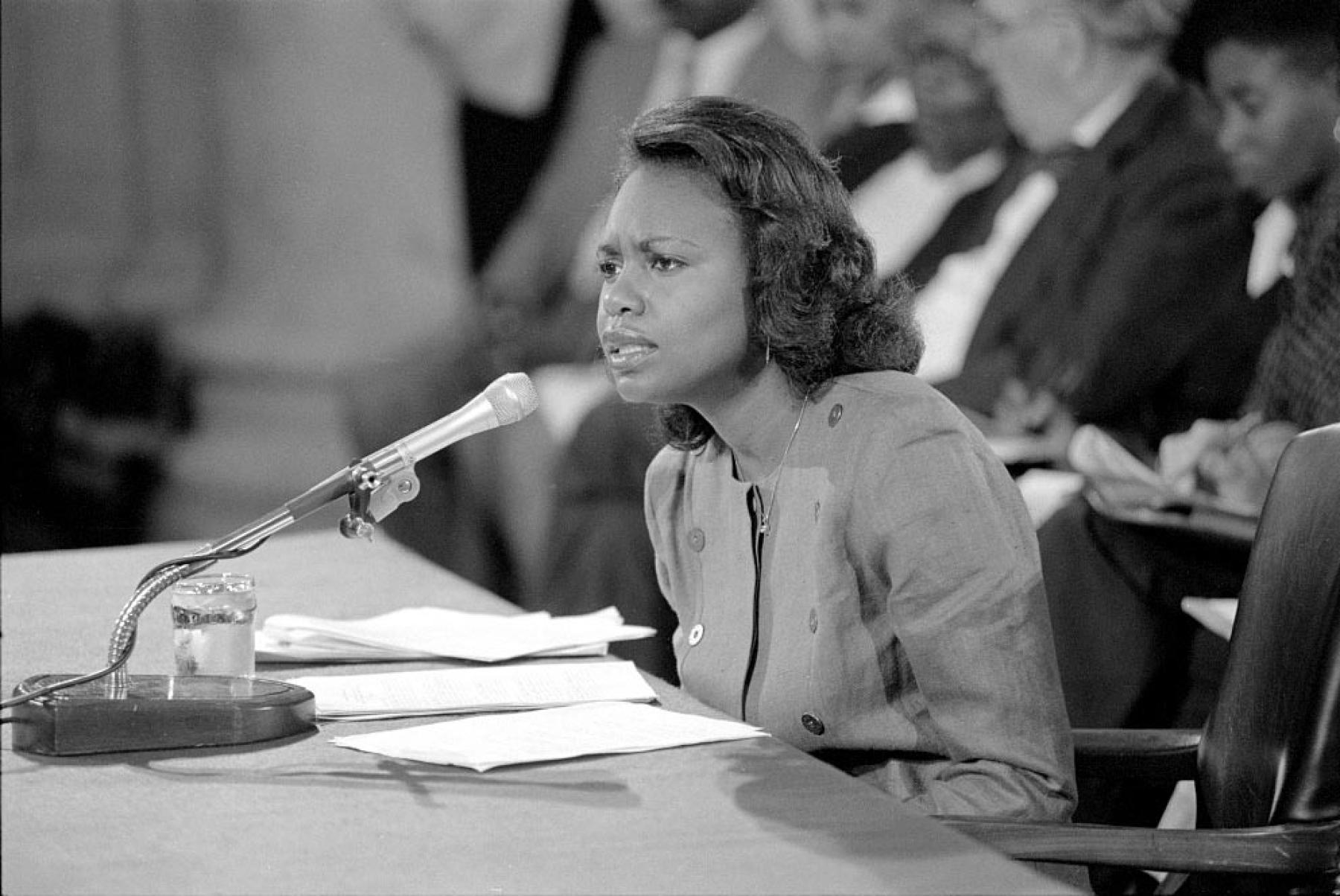
Simpson defended his actions by citing his personal experience with women who had faced real abuse in his law practice, but acknowledged the damage to his reputation. Just weeks later, he expressed regret, telling an audience at a Republican fundraising event: “I have been riding high, a bit too cocky, arrogant, yeah, too smart by half sometimes.” He took full responsibility, saying “I do not blame the media for anything, nothing. I do not blame activist feminine groups, for anything, nothing. They’re blameless. The responsibility is mine and I shall handle it and handle it well.”25 Despite the controversy, Thomas was confirmed by a 52-48 vote.
Civil Liberties and Friendship with Norman Mineta
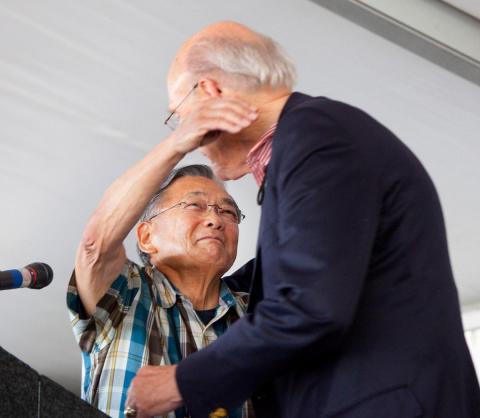
Another highlight was his partnership with Democrat Norman Mineta on Japanese American reparations. Simpson and Mineta first met as Boy Scouts during World War II, when Mineta was confined with his family at the Heart Mountain Relocation Center near Cody. “We met as Boy Scouts when he was behind barbed wire and I was a free kid from Cody,” Simpson recalled. “We never lost touch.”26
Together they championed the Civil Liberties Act of 1988, which provided an official apology and financial reparations to interned Japanese Americans. For Simpson, it was a matter of friendship and principle.
Simpson also linked his sense of justice to personal experiences as a young lawyer. In 1981, The Denver Post recounted his early defense of two Hispanic farmhands cheated by a car dealer, noting that Simpson’s advocacy against local prejudice reflected his enduring belief in fairness.27
Social Issues and Independence
Simpson often defied his party on social issues. He supported abortion rights, calling them “a deeply intimate and personal decision” that government had no business controlling.28 He also expressed support for LGBT rights, noting his own family ties: “I had a cousin who was gay... what am I supposed to do? Throw him out of my life?”29
These stances earned him criticism from conservatives, but also respect for his honesty. He liked to quote his great-grandfather: “Don’t be too right and don’t be too left. Just get in the middle of the road and travel as far as you can.”30
Humor and Style
Simpson became legendary for his one-liners. On nuclear waste storage at Yucca Mountain, he quipped that the plan amounted to a national “nuclear suppository.”31 He mocked political zealots as “bug-eyed” and derided rigid activists as “super-greenies.”32 At one debate, after his opponent denounced him as “a vile person” and “unfit for office,” Simpson stepped to the microphone and replied in his slow cowpoke drawl: “Spirted rascal, ain’t he?”33
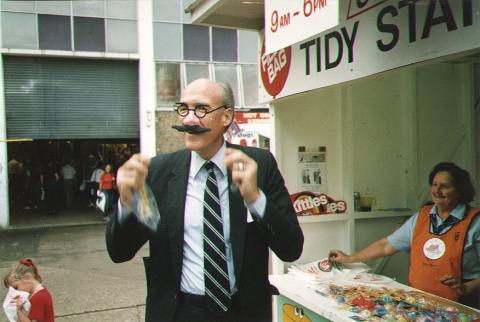
His towering frame and booming laugh made him memorable in the Capitol, but his Wyoming plainspokenness grounded him. “Don't squat with your spurs on,” he liked to remind young politicians.34 His public profile even stretched into popular culture: Simpson appeared as himself in a cameo in the 1993 political comedy Dave, alongside other real‑life figures.35
Media Relations
Simpson understood the importance of media relations in his political effectiveness, though his relationship with the press evolved considerably over his career. Journalists initially praised his plainspoken style. In 1980, the Casper Star described him as “straightforward” and “refreshing,” a senator who rejected political fakery and connected with constituents though blunt honesty.36 The Washington Monthly profiled him as among the best senators, highlighting his humor, long work hours, and ability to work across party lines and win friends even in defeat. The magazine noted that while Simpson could be “amiable and funny,” he also possessed necessary toughness for Senate leadership, quoting Edmund Muskie’s assessment: “To be a good senator you’ve got to be about half son-of-a-bitch, and I see you are.”37
The Washington Post called him “one of the most original characters... to pass through the nation’s capital.” The senator, the paper said, would sometimes answer his own phone while in the Senate. Once, when a caller asked, “Where is that skinny bastard?” he replied, “Speaking.”38 This unpretentious accessibility became part of Simpson’s distinctive style, reinforcing his reputation as a down-to-earth westerner who never lost touch with his Wyoming roots despite his years in Washington.39
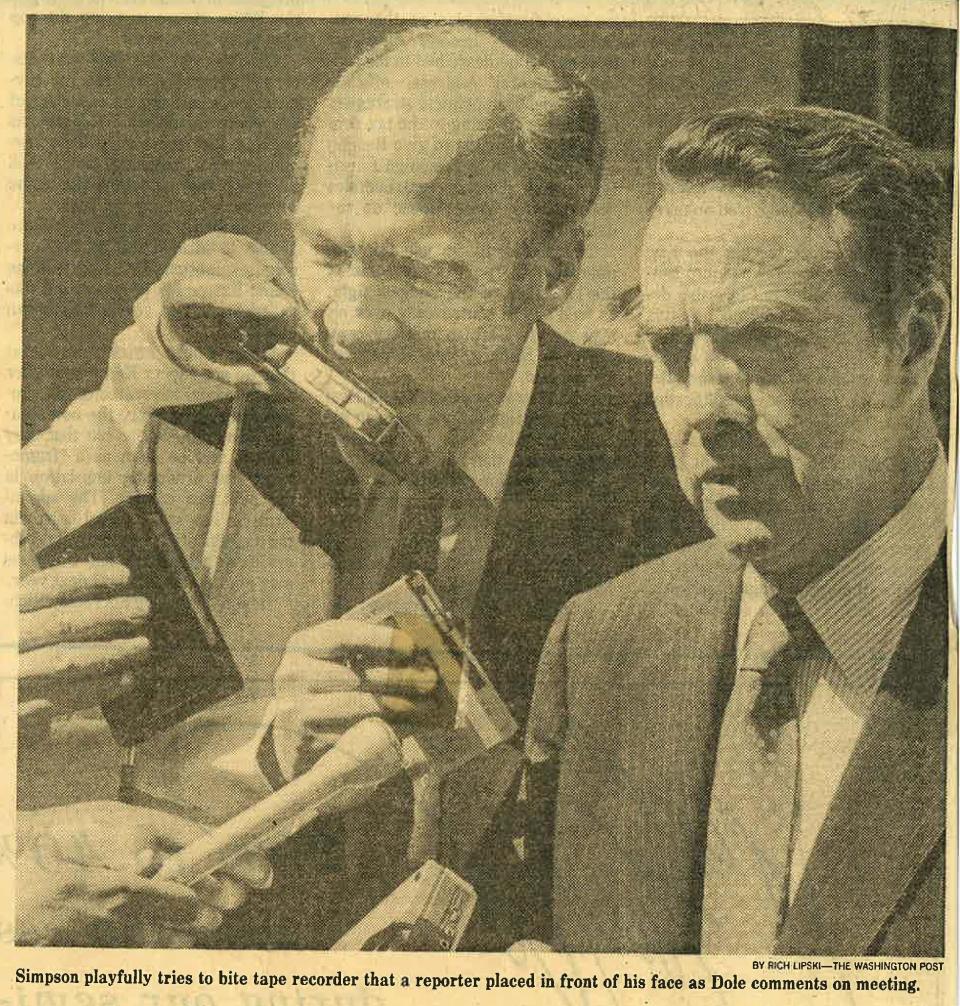
However, Simpson's relationship with the media was not without friction. While he initially cultivated reporters and earned favorable coverage for his accessibility and candor, his attitudes toward the press grew increasingly critical over time. In a 2013 lecture at Harvard’s Kennedy School, Simpson remarked that he had “always had a most interesting relationship with the press” and maintained “the strange view that the First Amendment belonged to me too,” insisting he had the right to criticize journalists just as they criticized him.40 He believed that “two things could make things better and make the world of government and public service a better place”: politicians should give up their pleas to go “off the record,” and journalists should abandon their reliance on anonymous sources.41
His frustrations with media practices deepened during controversies such as the Anita Hill hearings and Persian Gulf War coverage. These tensions culminated in his 1997 book Right in the Old Gazoo: What I Learned in a Lifetime of Meeting the Press, a combative memoir-critique charging that bias, ethical duplicity, and rumor-mongering had become rife in American journalism. Despite his criticisms, Simpson maintained a rule throughout his career: “In every case, when they're after your butt, answer the phone,” refusing to dodge media inquiries even when coverage turned hostile.42
Public Engagement
Simpson actively engaged with constituents and the broader public through various media platforms. He reached Wyoming constituents through a column titled “Ask Al” in which residents could submit questions for the senator to answer.43 The feature maintained strict confidentiality for personal correspondence while providing a forum for public dialogue on policy issues. This direct accessibility reflected Simpson’s commitment to staying connected with Wyoming voters even as he gained national prominence, reinforcing his reputation as a senator who remained accountable to his home state.
On the national level, from 1987 to 1993, Simpson co-hosted the weekday, two-minute radio program Face-Off, opposite Democratic Senator Ted Kennedy. The series, produced by The Broadcast Group heard on 290 commercial stations nationwide, presented debates between the two senators. Simpson noted: “Ted Kennedy and I have always had a unique relationship. We couldn't be further apart on philosophy or when it comes to most issues before the Senate. That should make for some lively give and take.”44
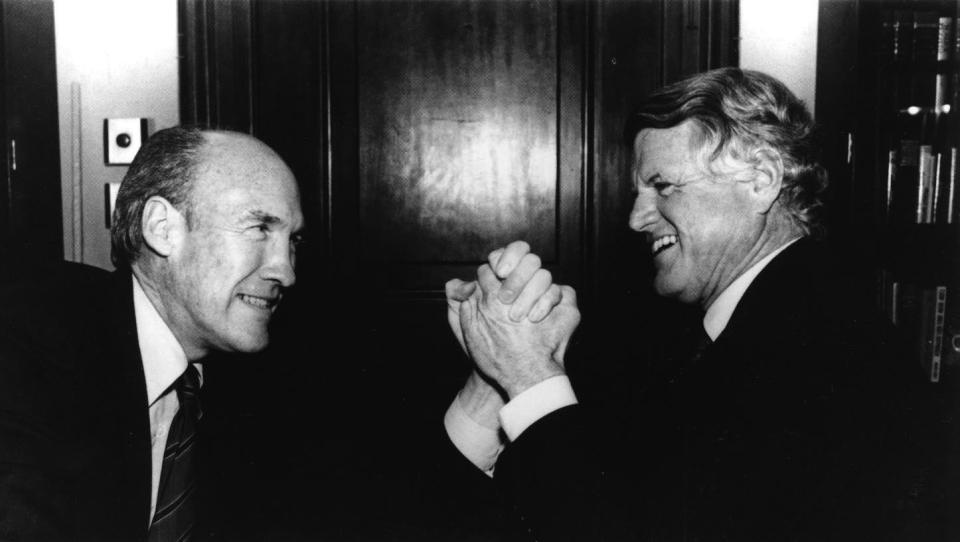
Indeed it did. The show featured brisk, good‑humored exchanges on issues from OSHA and gun control to the Americans with Disabilities Act—often spirited, occasionally needling, and distinctly bipartisan. The partnership reflected their broader working style: “We’ve never really gone at each other but we have,” Simpson recalled. “Sometimes he’d come up on the Senate floor and he’d say, ‘You bastard, you really threw a harpoon, didn’t you?’ I said, ‘Well, you deserved it. You nailed me last week and I think you needed that.’ That's the way we did our business, with affection.”45
Later Public Service
Simpson retired from the Senate in 1997 but remained active in public life, continuing his commitment to bipartisan governance and fiscal responsibility. In 2006, he joined the bipartisan Iraq Study Group, co-chaired by former Secretary of State James A. Baker III and former Congressman Lee H. Hamilton. The ten-member commission was tasked with conducting a comprehensive review of the situation in Iraq and providing recommendations for U.S. policy. After extensive deliberation, the group released its report in December 2006, concluding that the situation in Iraq was “grave and deteriorating” and urging a new strategy that included a phased withdrawal of U.S. combat troops.46 The Iraq Study Group’s recommendations represented a significant departure from the Bush administration’s existing strategy and reflected Simpson’s continued willingness to tackle difficult national security challenges through collaborative, nonpartisan approaches.47
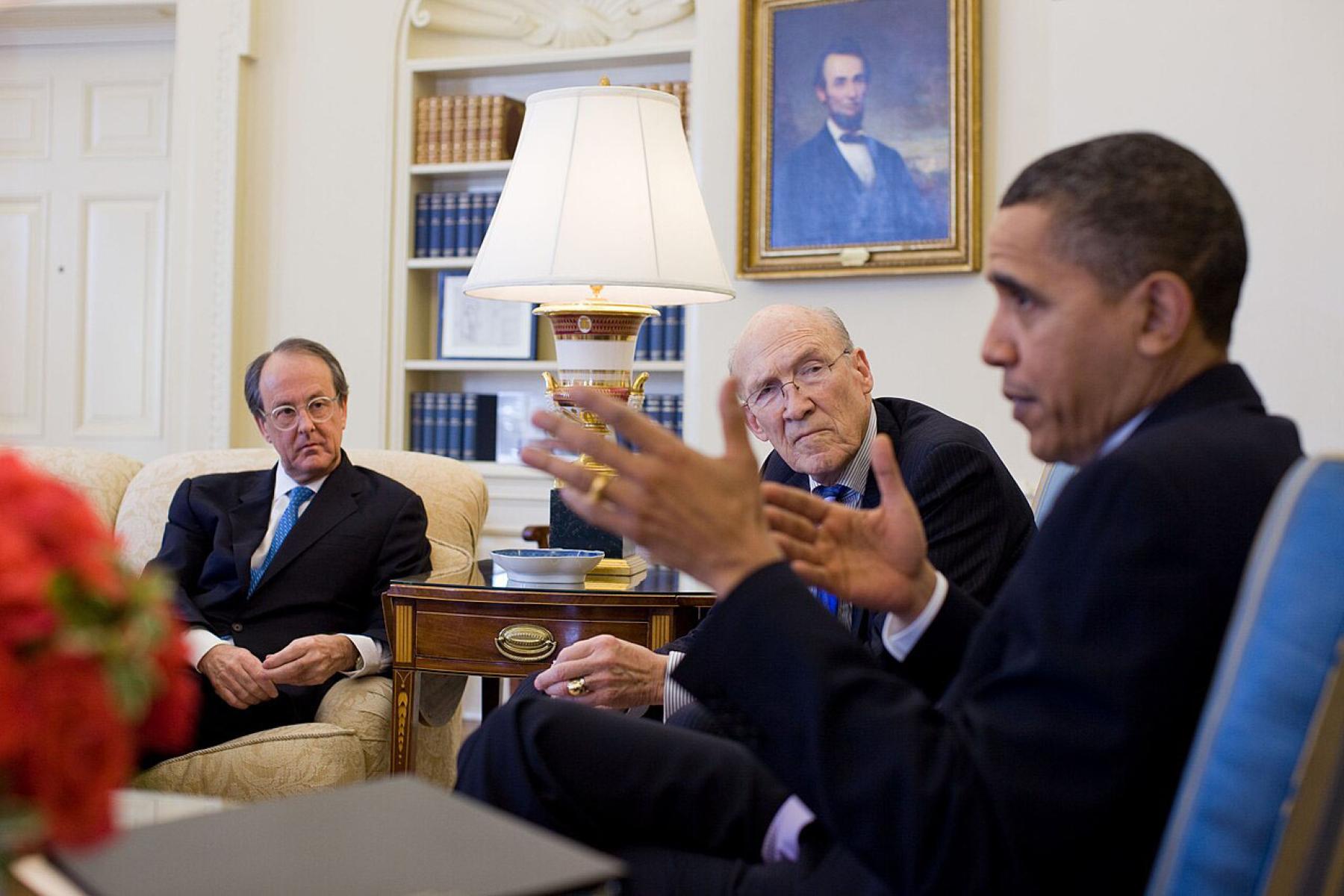
In 2010, President Barack Obama appointed Simpson co-chair of the National Commission on Fiscal Responsibility and Reform—better known as the Simpson-Bowles Commission—alongside Erskine Bowles, a Democrat and former White House Chief of Staff.48 The 18-member bipartisan commission was tasked with identifying “policies to improve the fiscal situation in the medium term and to achieve fiscal sustainability over the long run,” with the national debt then totaling around $13.56 trillion and federal budget deficit running over $1 trillion each year.49 The commission’s comprehensive plan proposed reducing the deficit to 2.3 percent of GDP by 2015, capping total tax revenue at 21 percent of GDP, and reducing spending to less than 22 percent of GDP through a combination of tax reform, entitlement changes, and spending cuts.50 Although the plan gained support from 11 of the 18 commissioners (five Republicans, five Democrats, and one independent), it fell short of the required 14-vote supermajority needed for formal endorsement and congressional consideration.51
Teacher, Mentor, and Public Voice
Beyond government service, Simpson became a popular teacher at Harvard and the University of Wyoming. He insisted on candor in the classroom: “Political correctness is like wearing duct tape over your mouth.”52 Students admired his frankness and humor, even when they disagreed with him.
He also wrote two memoirs, gave speeches, and became a media favorite for his sharp commentary. At George H. W. Bush’s funeral in 2018, Simpson declared: “Hatred corrodes the container it’s carried in”—a line that captured his lifelong philosophy.53
In 2022, President Joe Biden awarded Simpson the Presidential Medal of Freedom, the nation’s highest civilian honor. The award recognized Simpson’s decades of public service and bipartisan leadership. Biden, who had served with Simpson in the Senate since 1979, praised him as “a man of principle, pragmatism, and enormous integrity” who “never hesitated to work with the other team if it meant moving the ball forward for America.”54
Personal Life
Alan and Ann Simpson shared more than seventy years together, raising three children in Cody and remaining deeply rooted in Wyoming. His brother, Pete, became a leading educator and legislator, and the two remained close collaborators and confidants.55 Simpson often looked back fondly on his athletic youth. In a 1981 Laramie Boomerang interview, he recalled his “glory days” on the 1949 Cody High School basketball team, which won a state championship. Those experiences shaped his loyalty to Wyoming and the friendships that sustained him throughout life.56
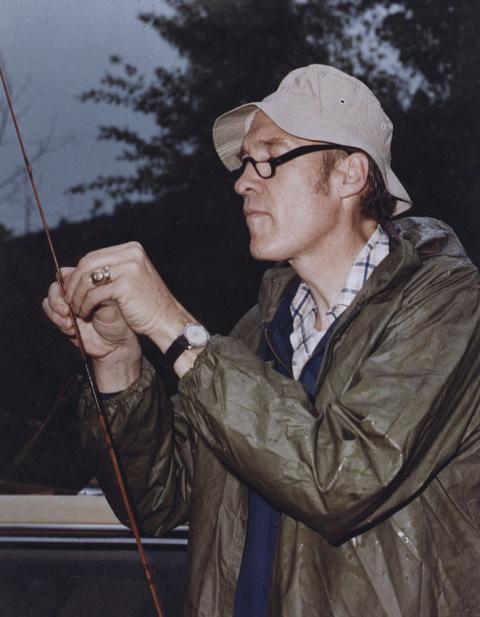
Family and loyalty were central to Simpson’s life. Despite his years in Washington, he remained a Cody lawyer at heart, anchored by community ties. President George H.W. Bush regularly sent warm greetings to Simpson’s events in Wyoming, noting their shared love of fishing and Simpson’s “good sense of humor.” Bush once joked about their fishing competitiveness, writing that Simpson was “so obsessed with fishing that he actually asked me to remint all our coins, replacing ‘E Pluribus Unum’ with ‘Fish or Cut Bait.’”57
Death and Legacy
Alan Simpson died at his home in Cody on March 14, 2025, at age 93. Tributes poured in, praising his humor, honesty, and devotion to Wyoming. The New York Times wrote of Simpson: “Folksy, irreverent and sometimes cantankerous, a gaunt, 6-foot-7 beanpole with a ranch hand’s soft drawl... whom school children and tourists in the gallery sometimes took for a Mr. Smith-goes-to-Washington oddball, especially during his occasional rants against ‘bug-eyed zealots’ and ‘super-greenies,’ as he liked to call environmental lobbyists.”58
Simpson’s legacy endures in the laws he helped shape, the fiscal framework he supported in Wyoming, and the friendships he fostered across party lines. He often said that politics was tough, but survivable with humor and straight talk.
Above all, he remained a son of Wyoming—candid, loyal, and rooted in community.
Primary Sources
Archival Collections (American Heritage Center, University of Wyoming)
- Alan K. Simpson Papers: Interviews by Anne MacKinnon (2024), press releases, “Ask Al” columns, newspaper clippings, and correspondence.
- Milward L. Simpson Family Oral History Project (2003-2009): Interviews with Alan K. Simpson by Kim Winters.
Other Primary Sources
- Alan K. Simpson, “The Immigration Reform and Control Act: Immigration Policy and the National Interest,” University of Michigan Journal of Law Reform 17, no. 2 (1984), https://repository.law.umich.edu/mjlr/vol17/iss2/4/.
- Alan K. Simpson, “Legal Immigration Reform,” San Diego Law Review 25, no. 2 (1988), https://digital.sandiego.edu/sdlr/vol25/iss2/2/.
- Alan Simpson, Edward M. Kennedy Oral History Project interview, Miller Center, University of Virginia (May 10, 2006), https://millercenter.org/the-presidency/presidential-oral-histories/alan-simpson-oral-history-0.
- Alan K. Simpson, “The Moment of Truth: Math, Media and Mystery,” Theodore H. White Lecture, Harvard Kennedy School (November 12, 2013), https://shorensteincenter.org/th-white-lecture-simpson/.
- James A. Baker III and Lee H. Hamilton, The Iraq Study Group Report (2006), chrome-extension://efaidnbmnnnibpcajpcglclefindmkaj/https://www.govinfo.gov/content/pkg/GPO-IRAQSTUDYGROUP/pdf/GPO-IRAQSTUD….
- White House press releases and remarks (Obama and Biden administrations).
Secondary Sources
- Robert D. McFadden, ‘Alan K. Simpson, a Folksy Republican Force in the Senate, Dies at 93,” The New York Times, March 14, 2025
- Ward Sinclair, “Freshman Simpson: Western Breeze Through Stuffy Senate,” The Washington Post, January 21, 1980
- Contemporary newspaper articles (Powell Tribune, Denver Post, Casper Star, Laramie Boomerang)
- Darrell West and Ashley Gabriele, “Ten Leadership Lessons from Simpson-Bowles,” Brookings Institution (2016)
- Academic articles on immigration policy impacts
Footnotes
-
K.T. Roes, “Cody Ceremony Marks Simpson Swearing-In,” Powell Tribune, January 4, 1979, Alan K. Simpson Papers, Collection Number 10449, Box 1, Folder 2, American Heritage Center, University of Wyoming.
-
Robert D. McFadden, “Alan K. Simpson, a Folksy Republican Force in the Senate, Dies at 93,” The New York Times, March 14, 2025, updated March 17, 2025, https://www.nytimes.com/2025/03/14/us/politics/alan-k-simpson-dead.html.
-
Alan K. Simpson, interview by Kim Winters, March 22, 2005, Milward L. Simpson Family Oral History Project, 20032-009, Collection Number 11387, American Heritage Center, University of Wyoming.
-
Ibid.
-
Ibid.
-
Alan K. Simpson, interview by Kim Winters, March 10, 2006, Milward L. Simpson Family Oral History Project, AHC.
-
Ward Sinclair, “Freshman Simpson: Western Breeze Through Stuffy Senate,” The Washington Post, January 21, 1980, https://www.washingtonpost.com/archive/politics/1980/01/22/freshman-simpson-western-breeze-through-stuffy-senate/f64df257-cbd2-4e6f-a3b6-aa734a00ae4f/.
-
Simpson, interview by Kim Winters, March 22, 2005, Milward L. Simpson Family Oral History Project, AHC.
-
McFadden, “Alan K. Simpson, a Folksy Republican Force in the Senate;” “Alan K. Simpson – Member,” Princeton University, https://www.princeton.edu/~ceps/simpsonbio.pdf.
-
Alan K. Simpson, interview by Anne MacKinnon, March 26, 2024, Alan K. Simpson Papers, AHC.
-
Ibid.
-
Alan K. Simpson, interview by Kim Winters, July 26, 2009, Milward L. Simpson Family Oral History Project, AHC.
-
Alan K. Simpson, interview by Kim Winters, August 15, 2006, Milward L. Simpson Family Oral History Project, AHC.
-
Roes, “Cody Ceremony Marks Simpson Swearing-In.”
-
Sinclair, “Freshman Simpson: Western Breeze Through Stuffy Senate.”
-
“Columnists: Bush wants Simpson as running mate,” The Washington Post, [1980], Alan K. Simpson Papers, Box 1, Folder 1, AHC.
-
“Not Nativist, Not Racist, Not Mean,” The New York Times, March 18, 1982, Alan K. Simpson Papers, Box 1, Folder 7, AHC.
-
Martin Tolchin, “Personal Roots Near Heart Mountain,” The New York Times, August 11, 1982, Alan K. Simpson Papers, Box 1, Folder 7, AHC.
-
Alan K. Simpson, “The Immigration Reform and Control Act: Immigration Policy and the National Interest,” University of Michigan Journal of Law Reform 17, no. 2 (1984): 152, 161, https://repository.law.umich.edu/mjlr/vol17/iss2/4/.
-
B. Lindsay Lowell, Jay Teachman, and Zhonggren Jing, “Unintended Consequences of Immigration Reform: Discrimination and Hispanic Employment,” Demography, Vol. 32, No. 4 (November 1995): 624, https://pubmed.ncbi.nlm.nih.gov/8925950/.
-
Alan K. Simpson, “Legal Immigration Reform,” San Diego Law Review 25, no. 2 (1988): 215, https://digital.sandiego.edu/sdlr/vol25/iss2/2/.
-
Alan K. Simpson, interview by Anne MacKinnon, March 26, 2024, Alan K. Simpson papers, AHC.
-
Alan K. Simpson, interview by Kim Winters, July 26, 2009, Milward L. Simpson Family Oral History Project, AHC.
-
Ibid.
-
Associated Press, “Senator Admits to Arrogance in Hearings,” The New York Times, October 28, 1991, https://www.nytimes.com/1991/10/28/us/senator-admits-to-arrogance-in-hearings.html.
-
Alan K. Simpson, interview by Kim Winters, August 15, 2006, Milward L. Simpson Family Oral History Project, AHC; “A Friendship Born in One of America’s Darkest Hours,” CBS News Sunday Morning, December 9, 2018, https://www.cbsnews.com/news/alan-simpson-norman-mineta-friendship-born-out-of-japanese-american-internment-camp/.
-
Bill Hosokawa, “A Sense of Justice,” The Denver Post, May 24, 1981, Alan K. Simpson Papers, Box 1, Folder 5, AHC.
-
Alan K. Simpson, interview by Anne MacKinnon, March 25, 2024, Alan K. Simpson Papers, AHC.
-
Ibid.
-
Alan K. Simpson, interview by Kim Winters, August 15, 2006, Milward L. Simpson Family Oral History Project, AHC.
-
Alan K. Simpson, interview by Anne MacKinnon, March 26, 2024, Alan K. Simpson Papers, AHC.
-
Sinclair, “Freshman Simpson: Western Breeze Through Stuffy Senate.”
-
Eleanor Randolph, “The Best and the Worst of the U.S. Senate,” Washington Monthly, January 1982, Simpson Papers, Box 1, Folder 9, AHC.
-
Sinclair, “Freshman Simpson: Western Breeze Through Stuffy Senate.”
-
“Dave,” AFI Catalog of Feature Films, American Film Institute, https://catalog.afi.com/Catalog/moviedetails/59500.
-
Bob Messenger, “Simpson: Straightforward, refreshing senator,” Casper Star, September 24, 1980; Alan K. Simpson Papers, Box 1, Folder 2, AHC.
-
Randolph, “The Best and the Worst of the U.S. Senate.”
-
Ibid.
-
Sandra McElwaine, “The Gentleman From Wyoming,” American Politics, May 1988, Alan K. Simpson Papers, Box 2, Folder 7, AHC.
-
Alan K. Simpson, “The Moment of Truth: Math, Media and Mystery” (Theodore H. White Lecture on Press and Politics, Shorenstein Center on Media, Politics and Public Policy, Harvard Kennedy School, Cambridge, MA, November 12, 2013), https://shorensteincenter.org/th-white-lecture-simpson/.
-
Ibid.
-
Ibid.
-
“Ask Al” columns, Alan K. Simpson Papers, Box 43, Folder 1, AHC.
-
Alan K. Simpson, “News From Senator Alan K. Simpson,” press release, November 2, 1987, Box 2, Folder 2, Alan K. Simpson Papers, AHC.
-
Alan Simpson, interview by Stephen Knott and Janet Heininger, Edward M. Kennedy Oral History Project, May 10, 2006, Miller Center, University of Virginia, Washington, D.C., https://millercenter.org/the-presidency/presidential-oral-histories/alan-simpson-oral-history-0.
-
James A. Baker III and Lee H. Hamilton, co-chairs, The Iraq Study Group Report (New York: Vintage Books, 2006), xiii, 140-141, xvi, chrome-extension://efaidnbmnnnibpcajpcglclefindmkaj/https://www.govinfo.gov/content/pkg/GPO-IRAQSTUDYGROUP/pdf/GPO-IRAQSTUD….
-
Richard D. Hooker Jr. and Joseph J. Collins, “Reflections on Lessons Encountered,” in Lessons Encountered: Learning from the Long War, ed. Richard D. Hooker Jr. and Joseph J. Collins (Washington, DC: National Defense University Press, 2015), https://ndupress.ndu.edu/Other-Publications/Books/Lessons-Encountered/Article/915964/chapter-6-reflections-on-lessons-encountered/.
-
“President Obama Establishes Bipartisan National Commission on Fiscal Responsibility and Reform,” The White House, February 18, 2010, https://obamawhitehouse.archives.gov/the-press-office/president-obama-establishes-bipartisan-national-commission-fiscal-responsibility-an; “Welcoming the National Commission on Fiscal Responsibility and Reform,” The White House, February 18, 2010, https://obamawhitehouse.archives.gov/blog/2010/02/18/welcoming-national-commission-fiscal-responsibility-and-reform.
-
Darrell West and Ashley Gabriele, “Ten Leadership Lessons from Simpson-Bowles,” Brookings Institution, July 28, 2016, https://www.brookings.edu/articles/ten-leadership-lessons-from-simpson-bowles/.
-
“The Moment of Truth: Report of the National Commission on Fiscal Responsibility and Reform,” Tax Policy Center, December 2010, https://taxpolicycenter.org/briefing-book/moment-truth-report-national-commission-fiscal-responsibility-and-reform-december-2010.
-
West and Gabriele, “Ten Leadership Lessons from Simpson-Bowles.”
-
Simpson, interview by Kim Winters, August 15, 2006.
-
Sinclair, “Freshman Simpson: Western Breeze Through Stuffy Senate.”
-
“Remarks by President Biden at Presentation of the Presidential Medal of Freedom,” The White House, July 7, 2022, https://bidenwhitehouse.archives.gov/briefing-room/speeches-remarks/2022/07/07/remarks-by-president-biden-at-presentation-of-the-presidential-medal-of-freedom/.
-
Simpson, interview by Kim Winters, March 22, 2005, Milward L. Simpson Family Oral History Project, AHC.
-
Alan Simpson, “Senator Simpson Recalls ‘Glory Days’” Laramie Boomerang, July 10, 1981, Alan K. Simpson Papers, AHC.
-
George Bush, letter to Casper, Wyoming ‘Boys Club’ regarding Senator Al Simpson tribute, White House, Washington, [May 1996]. Context provided by “Fellow Senators Roast Simpson,” Rocket Miner, May 29, 1996. Alan K. Simpson Papers, AHC.
-
McFadden, “Alan K. Simpson, a Folksy Republican Force in the Senate.”