Fort Platte
Fort Platte was a trading post built in 1841 on the left bank of the North Platte River in present-day Goshen County, Wyoming, approximately one mile northeast of the American Fur Company’s Fort William—and later Fort John—near the confluence of the Laramie and North Platte rivers. It was the first serious competition the American Fur Company had faced at that location. Its construction forced the American Fur Company to replace the deteriorating Fort William with a larger, more impressive facility, and the intense rivalry between the two posts defined the character of the emigrant trade on Wyoming’s North Platte corridor throughout the first half of the 1840s.1
Lancaster Lupton and the Post’s Origins
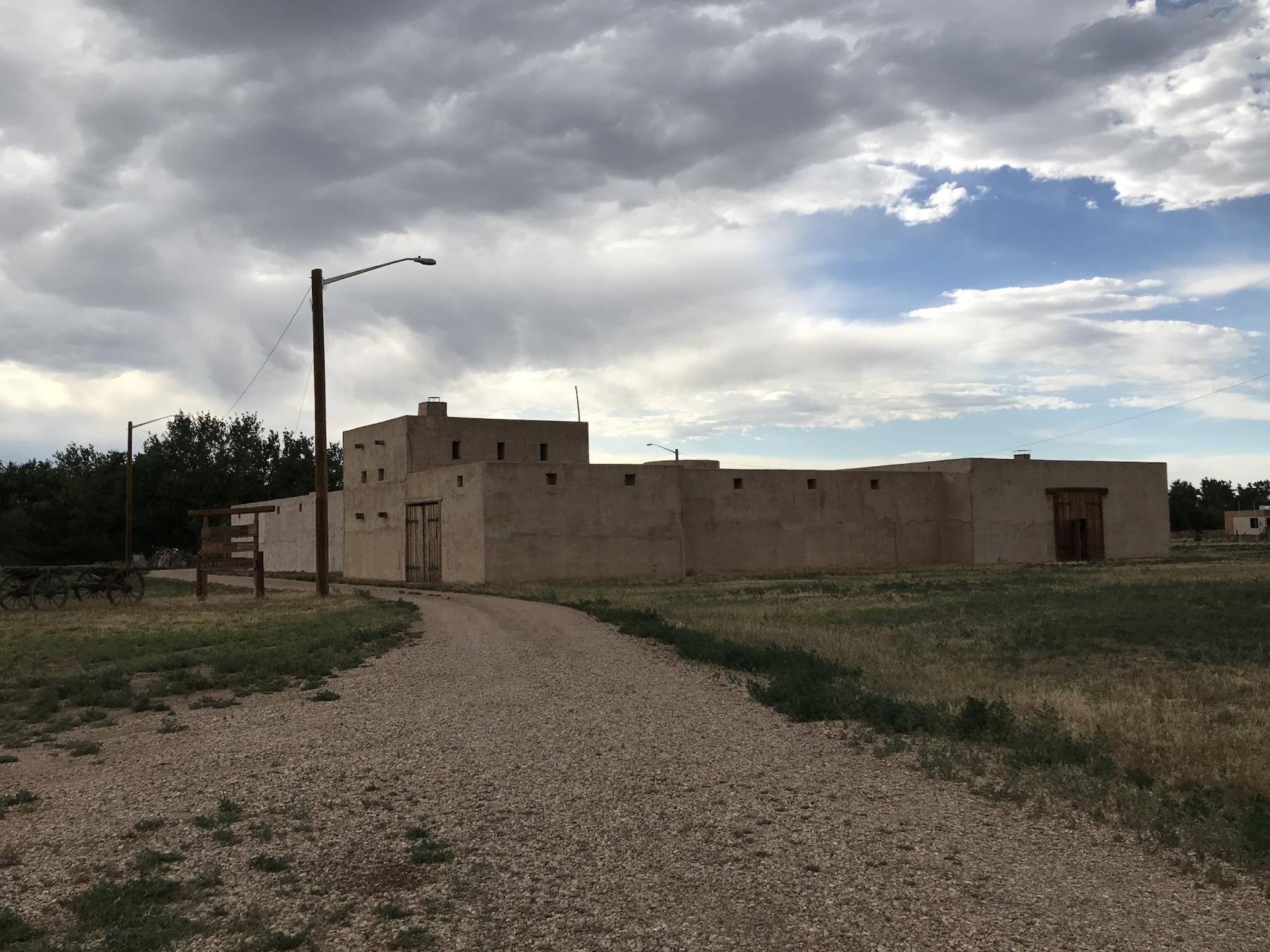
Fort Platte was constructed by Lancaster Lupton, a former military man and former American Fur Company employee. Born in New York in 1807, Lupton graduated from the United States Military Academy at West Point in 1829 and served in the army’s Third Infantry before resigning his commission after a visit to Fort William in 1836 convinced him of the commercial potential of the North Platte region.2 He had already entered the fur trade on the South Platte, where he constructed Fort Lupton approximately fifteen miles south of present-day Denver. Adobe construction was common on the South Platte, and it was almost certainly there that Lupton acquired both the technique and the ambition to build a rival post near Fort William.3
The exact date of Fort Platte’s construction is uncertain; it may have been as early as the fall of 1840. There is no mention of the post by Father Pierre-Jean De Smet, a Jesuit missionary who traveled the trail in the summer of 1840, but travelers through the region in 1841 do.4 The timing was calculated. By 1841 the Rocky Mountain beaver trade that had sustained the American Fur Company’s dominance through the 1830s had effectively collapsed, and the center of commercial gravity on Wyoming’s trails was shifting toward the buffalo robe trade and the rapidly growing traffic of overland emigrants. Fort Platte was built to capture both.5
Physical Description
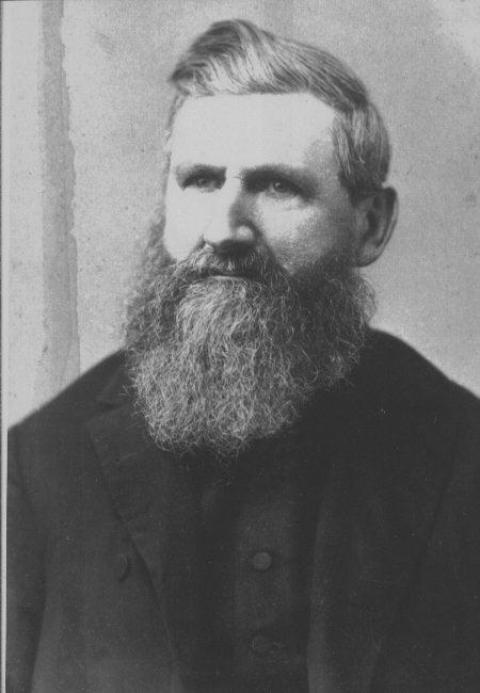
The post was constructed on the left bank of the North Platte, between the Laramie and Platte rivers, a mile northeast of Fort William.6 Contemporary traveler Rufus Sage, who arrived at Fort Platte from Independence, Missouri, in November 1841, located it precisely on the left bank of the North Fork of the Platte at latitude 42° 12’ 10”, longitude 105° 20’ 13”, sitting directly on the overland wagon road to Oregon.7 Sage described the post as having exterior adobe walls measuring 250 by 200 feet, twenty feet tall and four feet thick, with bastions at the northwest and southwest corners and twelve interior buildings. Those buildings included an office, a store, a warehouse, a meat house, a blacksmith shop, a kitchen, and five dwellings, arranged to form a yard and corral.8
A Mormon emigrant party measured the post in 1847, two years after its abandonment. They found the exterior walls to be 144 by 103.2 feet with eleven-foot walls thirty inches thick. Inside were sixteen-by-fifteen-foot rooms surrounding a yard sixty-one feet nine inches by fifty-six feet. The northern portion was set aside as a horse yard measuring ninety-eight feet nine inches by forty-seven feet, and the northeast corner had an attached building measuring twenty-nine feet four inches by nineteen feet six inches. The post was whitewashed adobe with eighteen rooms in total—six on each of the east and west sides and three on each of the north and south sides—used as stores, blacksmith shops, and dwellings.9 The discrepancy between Sage’s and the Mormon party’s measurements likely reflects renovations carried out by later owners after Lupton sold the post in 1842.10
Ownership, Operations, and Rivalry
Fort Platte’s opening immediately disrupted the American Fur Company’s unchallenged position at the Laramie–Platte confluence. The two rival posts stood within sight of each other, and the competition between them was fierce. Fort Platte was the first post seen by approaching travelers along the overland road, giving it a commercial advantage. Lupton also employed John Richard, reputed by contemporaries to be the most adept liquor smuggler in the West, whose trade in illegal alcohol brought furs from the Lakota when other goods could not.11 But in 1841 the American Fur Company replaced Fort William with Fort John, a new adobe post, and the competition proved ultimately insurmountable; Lupton was bankrupt by 1842.12
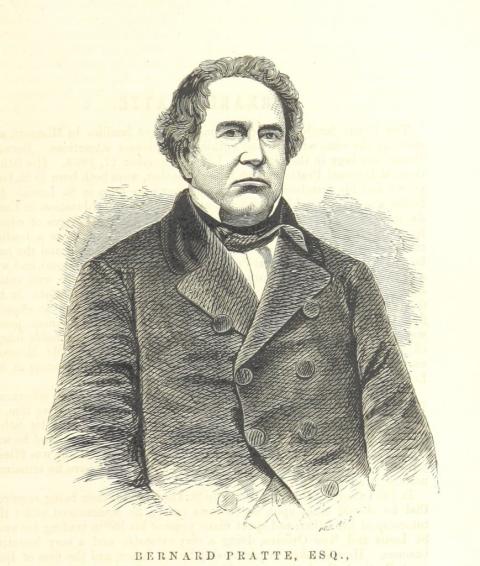
In April 1842 Lupton sold the post to John Sybille and David Adams, who placed Joseph Bissonette and John Richard in charge of operations.13 Several travelers of the period refer to Fort Platte as Fort Bissonette or Richard’s Fort, reflecting the prominence of these two men in the post’s daily operations.14 Sybille and Adams either rebuilt or remodeled the post after their purchase, with renovations completed in October 1842 as noted by explorer John C. Frémont, who passed through the region that year.15 The competition from Fort John proved too stiff for Sybille and Adams as well, and in August 1843 they sold the post to Bernard Pratte Jr. and John Charles Cabanne.16
Pratte and Cabanne competed fiercely with Fort John over the next two years, with allegations of illegal alcohol sales frequently levied against them by American Fur Company traders.17 By 1844 they were expanding their ambitions, with plans to build four new posts throughout the region.18 In a sharp reversal, however, the pair sold Fort Platte and some of their supplies to the American Fur Company traders at Fort John by the winter of 1845.19 Their motivation was strategic: located within a mile of Fort John, Fort Platte was poorly positioned to intercept the emigrant traffic before it reached the larger post. Pratte and Cabanne moved operations eight miles east of Fort John to a new post, Fort Bernard, constructed in the summer and fall of 1845 by Cabanne, Bissonette, and Richard.20
Abandonment and Later History
With Fort Platte now in American Fur Company hands and Fort Bernard serving as the new competition post to the east, the American Fur Company had no further use for Fort Platte. They left it to deteriorate. The post was still standing when the military purchased Fort John in 1849, and it may have been used as filler material during military construction activities at Fort Laramie in the 1850s.21 The property subsequently remained under military control until Fort Laramie was abandoned in 1890, when the Fort Laramie property was divided and sold to homesteaders. Fort Platte’s site passed into private agricultural ownership along with the surrounding land. In July 1951 the Historical Landmark Commission of Wyoming erected a commemorative plaque near the site on state highway 160.22 Not even an adobe brick remains from the post today.23
[Editor’s Note: Special thanks to the author and to the Wyoming State Historic Preservation Office for making this article available, and to the Wyoming Cultural Trust Fund for its ongoing support for this project. Greg Pierce’s historical monograph, Negotiating the West: A History of Wyoming Trading Posts, from which this article is adapted and excerpted, is one of many historic contexts published by the Wyoming State Historic Preservation Office. These documents are meant to offer a broad background against which historic developments can be better understood as the agency works to preserve properties and places important to an understanding of Wyoming’s past. The contexts also, however, are based on sound research and are full of well-told, vivid stories. With this in mind, WyoHistory.org is collaborating with the SHPO office to bring more of this history to a wider readership. The Cultural Trust has provided the funds to make this collaboration possible. We offer our thanks to all.]
Footnotes
-
David W. Lupton, “Fort Platte, Wyoming, 1841–1845: Rival of Fort Laramie,” Annals of Wyoming 49, no. 1 (1977): 84; Wyoming State Historic Preservation Office, “Fort Laramie,” WyoHistory.org, November 8, 2014, https://www.wyohistory.org/encyclopedia/fort-laramie; Greg Pierce, Trading Posts in Wyoming, Multiple Property Documentation Form, National Register of Historic Places, Wyoming State Historic Preservation Office, State Parks and Cultural Resources, Cheyenne, Wyoming, 2012, Section E, 48.
-
Lupton, “Fort Platte,” 83; Barton H. Barbour, A Special History Study: The Fur Trade at Fort Laramie National Historic Site (Santa Fe: National Park Service, 2000), 38.
-
Pierce, Trading Posts in Wyoming, Section E, 48; Lupton, “Fort Platte,” 83.
-
Lupton, “Fort Platte,” 84; Hiram Martin Chittenden, The American Fur Trade of the Far West (Lincoln: University of Nebraska Press, 1935), 941.
-
Pierce, Trading Posts in Wyoming, Section E, 28–30; Greg Pierce and Mark E. Miller, “In Search of the Fraeb Battlefield and Trading Post, August 1841,” Plains Anthropologist 60, no. 235 (2015): 224.
-
Chittenden, American Fur Trade, 941; Charles Jr. Hanson and Sue Walters, “The Early Fur Trade in Northwestern Nebraska,” Nebraska History 53, no. 7 (1976): 298.
-
R. B. Sage, Scenes in the Rocky Mountains, and in Oregon, California, New Mexico, Texas, and the Grand Prairies (Philadelphia: Carey & Hart, 1846), 46.
-
Ibid.
-
Thomas Bullock, Journal of Thomas Bullock, Clerk of Brigham Young’s Pioneer Band, n.d., Mormon Church Historian’s Office, Salt Lake City, Utah, 123–125.
-
Lupton, “Fort Platte,” 87.
-
Sage, Scenes in the Rocky Mountains, 46; Wyoming State Historic Preservation Office, “Fort Laramie.”
-
Sage, Scenes in the Rocky Mountains, 46; LeRoy R. Hafen and Francis Marion Young, Fort Laramie and the Pageant of the West (Glendale, California: Arthur H. Clark Company, 1938), 94.
-
Lupton, “Fort Platte,” 87.
-
Hafen and Young, Fort Laramie, 89, 94.
-
John C. Frémont, Report of the Exploring Expedition to the Rocky Mountains in the Year 1842, Senate Doc. No. 174, 28th Congress, 2nd Session (1842); Donald Jackson and Mary Lee Spence, The Expeditions of John Charles Frémont (Urbana: University of Illinois Press, 1970), 146–147.
-
Hafen and Young, Fort Laramie, 94.
-
Ibid., 94–98.
-
Ibid., 95.
-
Ibid., 103–104; Hanson and Walters, “Early Fur Trade,” 298.
-
Hafen and Young, Fort Laramie, 101–103; Lupton, “Fort Platte,” 21–23.
-
Hafen and Young, Fort Laramie, 107; Merrill J. Mattes, Fort Laramie and the Forty-Niners (Estes Park, Colorado: Rocky Mountain Nature Association, 1949), 27.
-
Hafen and Young, Fort Laramie, 107.
-
Wyoming Almanac, “Lupton’s Luckless Location: The History of Fort Platte,” https://wyomingalmanac.com/?p=456.