Fort Bernard
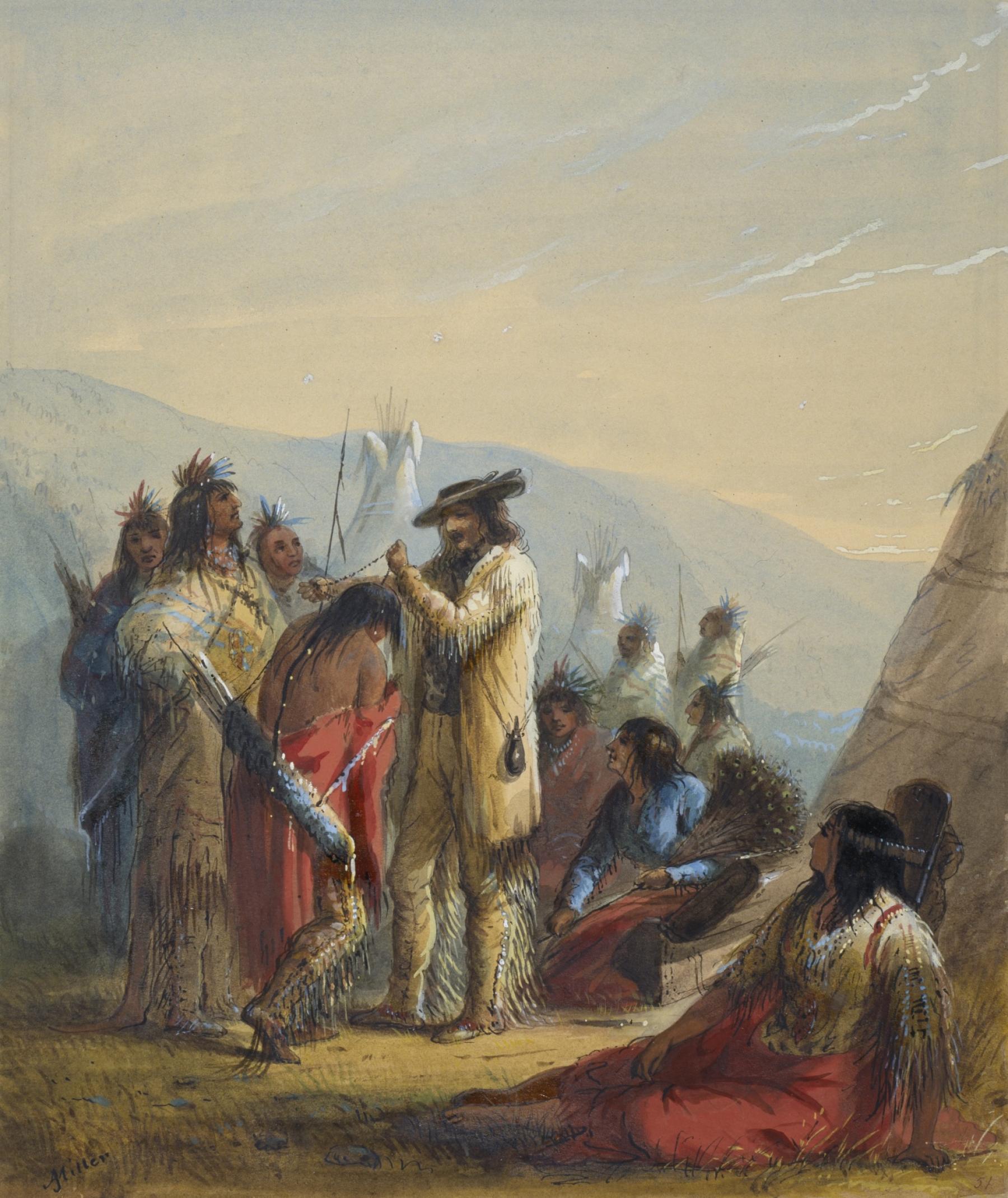
Fort Bernard was a short-lived but commercially significant trading post established in 1845 on the North Platte River in what is now Goshen County, Wyoming, approximately eight miles southeast of the American Fur Company’s Fort John. Operating for less than two years before being destroyed by fire, it was the most aggressive competitive challenge Fort John faced in the years immediately preceding the United States Army’s purchase of that post in 1849. Fort Bernard’s brief history captures a pivotal moment in the North Platte trade when the combination of Lakota robe commerce and the surging emigrant traffic on the Oregon Trail made the region one of the most commercially contested stretches of the entire overland road.1
Founding and Ownership
The post grew directly out of the failure of Fort Platte, a rival establishment that had competed with Fort John since 1841. By 1845, Fort Platte was in decline, and its then-owners Bernard Pratte Jr. and Jean Charles Cabanne resolved to abandon it and relocate their operations downriver, beyond the immediate shadow of Fort John, to capture emigrant trade before wagon parties reached the American Fur Company’s post. In the summer and fall of 1845, Pratte, Cabanne, Bissonette, and Richard established the new post eight miles to the east. The post was named Fort Bernard, almost certainly for Bernard Pratte Jr., though some accounts suggest it honored his father, Bernard Pratte Sr., who had been a prominent fur trader in his own right.2
On December 18, 1845, Pratte and Cabanne sold their interest to Honoré Picotte, leaving Bissonette, Richard, and Picotte as partners. Post operations were run by Richard and field operations conducted by Bissonette. The exact role Picotte played is not clear from surviving records. The post also went by the name Richard’s Post, reflecting John Baptiste Richard’s central role in its day-to-day management. Richard, known widely by the French pronunciation of his surname—“Reshaw”—was a trader of considerable experience and commercial daring who would go on to build the first successful toll bridge across the North Platte River near present-day Casper a decade later.3
Trade and Physical Description
Fort Bernard opened for business at a propitious moment. Emigrant traffic on the Oregon Trail was accelerating rapidly through the mid-1840s, and the combined emigrant and robe trade offered independent operators a genuine opportunity to compete with the well-capitalized American Fur Company. The post performed well from the outset. In the fall and winter of 1845–1846, it did a brisk trade in corn exchanged for buffalo robes. In the spring of 1846, Fort Bernard managed to undersell Fort John by thirty to forty percent in the emigrant market, a price advantage that alarmed the American Fur Company and drew favorable attention from westbound wagon parties. Beyond dry goods and provisions, the traders dealt in mules and horses, exchanged sound animals for trail-worn ones, repaired or traded wagons, and engaged in the robe trade with the Oglala and Brulé Lakota bands who frequented the area.4
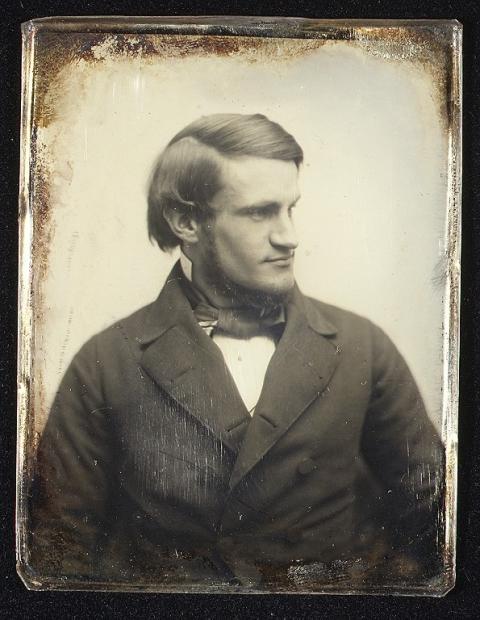
The post’s physical form is unusually well documented for a trading establishment of its size and brief duration, owing primarily to Francis Parkman’s visit in July 1846. Parkman, traveling the Oregon Trail for the material that would become his classic account The Oregon Trail, described the post as designed to form a hollow square, with rooms for lodging and storage opening onto an interior courtyard. Fortifications had not been completed at the time of his visit, and Parkman found the fort “ill-fitted for the purposes of defense,” with only two of the planned four stockade walls in place. The main room he visited measured ten by ten feet, constructed of logs with a black mud floor; the roof was rough timber, and a large fireplace of flat prairie stones dominated the interior. The livestock trade—horses and mules in particular—suggests the post almost certainly included some form of stable or corral. The documented exchange and repair of emigrant wagons makes the presence of a blacksmith plausible, though no contemporary account confirms one explicitly.5
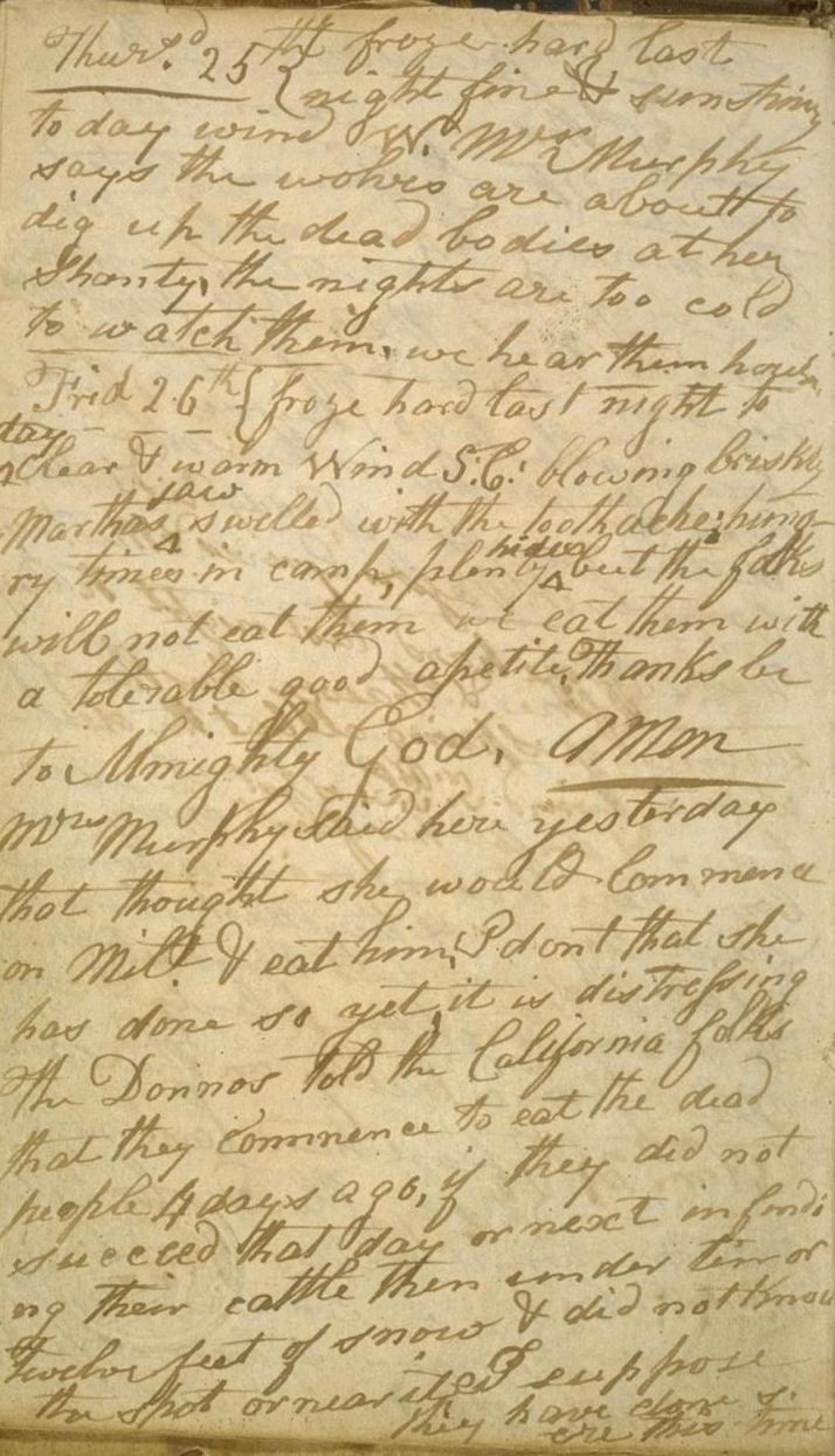
Among the thousands of emigrants who stopped at Fort Bernard in the summer of 1846 was the ill-fated Donner Party, which halted there on June 26 rather than pushing directly to Fort Laramie, having learned that pasturage was short at that post and that Sioux bands were gathering on the Laramie plain. The halt gave the party an opportunity to repair wagon wheels damaged by weeks of intense heat and to reprovision. George Donner wrote an optimistic letter from the fort the following day, describing the company's good health and provisions and reporting that the Indians in the area were speaking friendly to them. Within ten months he would be dead in the Sierra Nevada.6
Destruction and Aftermath
Fort Bernard was destroyed by fire sometime between the fall of 1846 and the spring of 1847. Emigrant accounts confirm it was fully operational in August 1846, while travelers passing in May 1847 found it already destroyed. The fire occurred while Richard was in Pueblo, Colorado, acquiring new supplies and while Bissonette was trading in Lakota camps. Suspicion fell on employees of rival Fort John, though this was never demonstrated. The post was not rebuilt.7
The site did not remain vacant for long. In 1849, following the army’s purchase of Fort John and its transformation into the military post of Fort Laramie, Bissonette entered a new association with James Bordeaux and Charles Primeau, and the three operated out of Bordeaux’s Sarpy Point Post, constructed near the old Fort Bernard site. The association dissolved by 1850, with Bordeaux continuing at the Sarpy Point Post and Bissonette relocating three miles upriver to his own establishment. The Grattan Fight of August 1854, widely regarded as the opening confrontation of the First Sioux War, took place near Bordeaux’s Sarpy Point Post and thus close to the site of the original Fort Bernard.8
What Remains
The site of Fort Bernard sits on a terrace above the North Platte River on privately owned agricultural land in Goshen County. Despite more than 170 years of farming, the ground retains enough of its original character that investigations have confirmed intact deposits survive below the plow zone. Much of the site remains unexamined, leaving open the possibility that future work could shed light on the post’s physical form, the trade goods it handled, and the lives of those who lived and traded there.9
Significance
Fort Bernard’s importance lies less in its longevity than in what its brief, but vigorous existence reveals about the competitive structure of the North Platte trade at a decisive moment of transition. Its aggressive undercutting of Fort John’s prices demonstrates that the American Fur Company’s dominance was contestable, and that the escalating emigrant traffic created commercial opportunities substantial enough to attract experienced traders willing to challenge an entrenched monopoly. The post’s failure, through fire rather than commercial defeat, left the broader question unanswered: it is impossible to know how long Fort Bernard might have continued had it not burned. What is clear is that the site remained commercially attractive enough to sustain a successor post for nearly two additional decades after the original fort’s destruction.
Francis Parkman’s detailed description of the post in 1846 makes Fort Bernard one of the better-documented small trading posts of the Oregon Trail era. His account, however colored by his characteristically severe judgments, remains the primary first-hand source for the post’s physical form. David Walker Lupton’s 1979 article in Nebraska History remains the most thorough scholarly treatment of the fort’s history, drawing on the Fort Pierre letterbooks and other primary sources to reconstruct the post’s commercial operations and ownership history.10
[Editor’s Note: Special thanks to the author and to the Wyoming State Historic Preservation Office for making this article available, and to the Wyoming Cultural Trust Fund for its ongoing support for this project. Greg Pierce’s historical monograph, Negotiating the West: A History of Wyoming Trading Posts, from which this article is adapted and excerpted, is one of many historic contexts published by the Wyoming State Historic Preservation Office. These documents are meant to offer a broad background against which historic developments can be better understood as the agency works to preserve properties and places important to an understanding of Wyoming’s past. The contexts also, however, are based on sound research and are full of well-told, vivid stories. With this in mind, WyoHistory.org is collaborating with the SHPO office to bring more of this history to a wider readership. The Cultural Trust has provided the funds to make this collaboration possible. We offer our thanks to all.]
Footnotes
-
Greg Pierce, Trading Posts in Wyoming, Multiple Property Documentation Form, National Register of Historic Places, Wyoming State Historic Preservation Office, State Parks and Cultural Resources, Cheyenne, Wyoming, 2012, Section E, 57; R. G. Roberson, Competitive Struggle: America’s Western Fur Trading Posts 1764–1865 (Boise, Idaho: Tamarack Books, 1999), 71.
-
Pierce, Trading Posts in Wyoming, Section E, 57; David Walker Lupton, “Fort Bernard on the Oregon Trail,” Nebraska History 60 (1979), 21–23.
-
Honoré Picotte to James Kipp, December 18, 1845, Fort Pierre Letter Books, 1845–1846, Missouri Historical Society, St. Louis; Lupton, “Fort Bernard on the Oregon Trail,” 23.
-
Honoré Picotte to Pierre Chouteau Jr., March 11, 1846, Fort Pierre Letter Books, 1845–1846, Missouri Historical Society, St. Louis; Lupton, “Fort Bernard on the Oregon Trail,” 29; Dale L. Morgan, Overland in 1846 (Georgetown, California: Talisman Press, 1963), 572, 575; Mason Wade, ed., The Journals of Francis Parkman (London: Eyre and Spottiswoode, 1947), vol. 2, 447.
-
Francis Parkman, The Oregon Trail (New York: Oxford University Press, 2008), 89–90; Pierce, Trading Posts in Wyoming, Section E, 57–58.
-
Eliza P. Donner Houghton, The Expedition of the Donner Party and Its Tragic Fate (Chicago: A. C. McClurg, 1911), chap. 3; Morgan, Overland in 1846, 576–577; Lupton, “Fort Bernard on the Oregon Trail,” 29–30.
-
Lupton, “Fort Bernard on the Oregon Trail,” 32; Pierce, Trading Posts in Wyoming, Section E, 57.
-
Pierce, Trading Posts in Wyoming, Section E, 57–58, 63–64; Douglas R. Cubbison, “The Grattan Fight: Prelude to a Generation of War,” WyoHistory.org, https://www.wyohistory.org/encyclopedia/grattan-fight-prelude-generation-war.
-
Pierce, Trading Posts in Wyoming, Section E, 57–58, 79.
-
Lupton, “Fort Bernard on the Oregon Trail,” 21–35; “Fort Tecumseh and Fort Pierre Journal and Letter Books,” South Dakota Historical Collections 9 (1918): 69–204.