Gilbert’s Station
By 1849, the ninth crossing of the Sweetwater River—already a stop on the well-traveled Oregon Trail—served traders including Jim Bridger, who sold horses, oxen, bacon, and buffalo robes to passing emigrants.1 Nearly a decade later, in 1858, Henry S. Gilbert and William Garrish built a trading post at the crossing, which contemporaries referred to as Gilbert’s Station.2
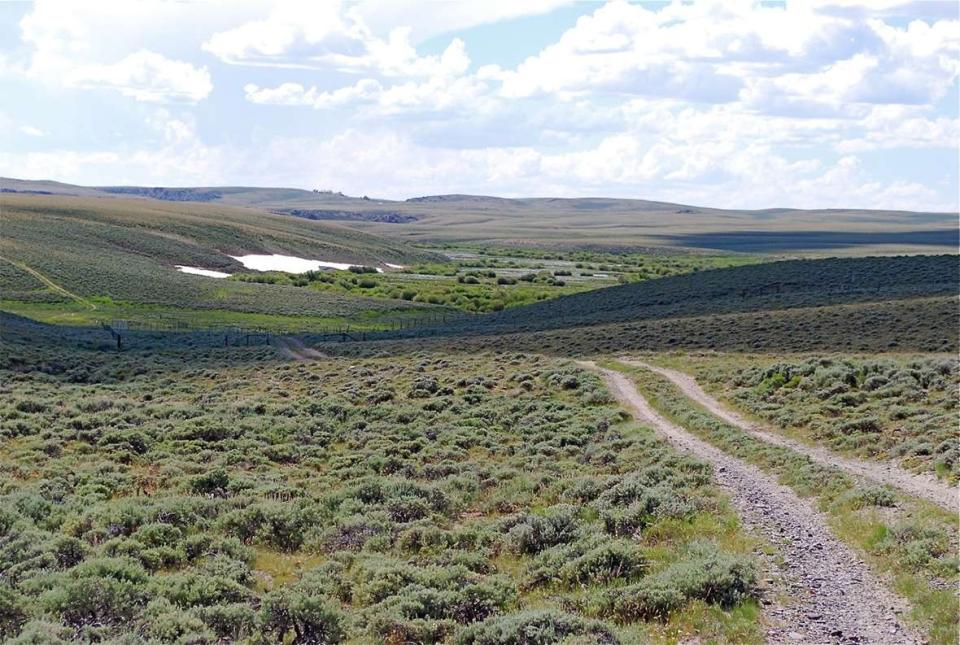
Garrish remains something of a mystery. Gilbert, by contrast, is better documented: a Pennsylvania-born saddler who initially trained as a schoolteacher before switching to the trade, which he practiced first at home and then in Lafayette, Indiana. After a brief stint in Missouri and Kansas, he headed west in 1855, reaching Fort Laramie, where he traded with the Crow and Sioux and supplied emigrants.3 He reportedly took on a contract to supply General Albert Sidney Johnston’s army during the Utah War in the spring of 1858. Finding the job impractical, he stopped at the Sweetwater crossing and built Gilbert’s Station, trading there for a time with the Shoshone, whose chief, Washakie, is said to have become a close friend.4
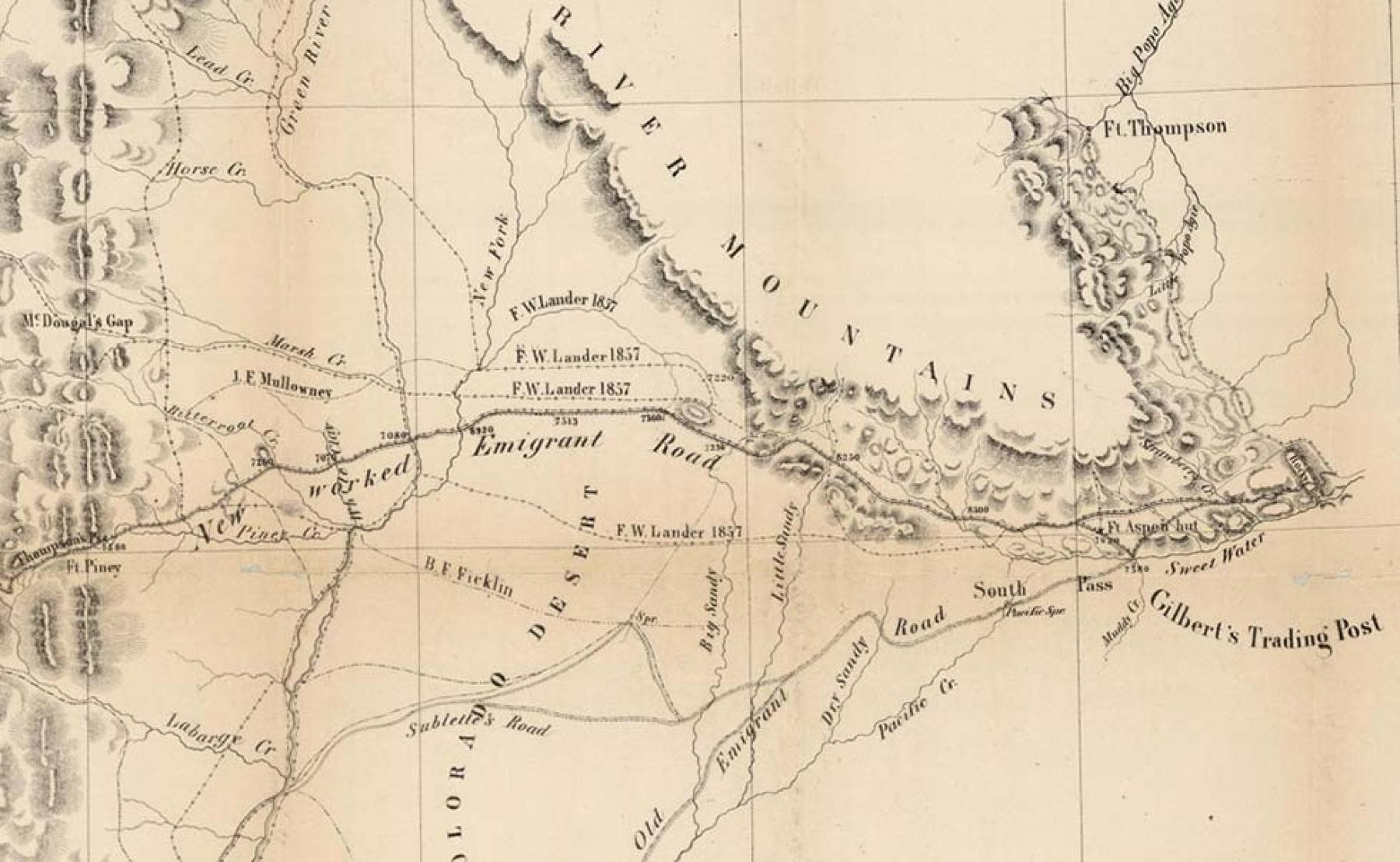
In 1858, the same year Gilbert and Garrish built their post, Gilbert’s Station became linked to a larger federal project already underway: road builder Frederick W. Lander, who had begun surveying routes for a new road the year before, placed Charles Miller in charge of the Lander Cutoff from the station, then withdrew the rest of his crew from the mountains for the winter. Miller did not survive it: he was murdered during an argument at the station, and Lander named Maj. Edmond Yates as his replacement. Yates persuaded large numbers of emigrants to take the new road; by 1859 as many as 13,000 people may have traveled it in a single year, and traffic grew further during the Civil War, when the Lander Cutoff became a favored route.5
Firsthand accounts describe the post itself from these years. On July 5, 1860, emigrant Allen Tyrrell described “a trading post and mail-station” at the crossing, noting two women living there, one the trader’s wife, and “an air of taste and neatness about the premises.”6 Contemporaries described the post in 1861 as consisting of four log cabins, one of which was unfinished, and refer to Gilbert as the hotel keeper, postmaster, and blacksmith.7 There is also a mention of a Pony Express rider at the post in 1861.8
As the Lander Cutoff’s traffic grew, so did the crossing’s infrastructure. The military garrisoned the site in 1861 to protect the crossing, the mail, telegraph, and Pony Express stations in the vicinity.9 The mail and stage were relocated south to the Overland Trail in 1862, while the telegraph station stayed.10 It appears the site was abandoned sometime in 1861 because of increased native hostilities and decreases in emigration. There are no mentions of Gilbert’s Station in the historic literature after 1861. The military garrison, however, remained at the broader crossing for years afterward. After troops left in 1868, the buildings were burned by Native Americans; the site has been known as Burnt Ranch ever since.11
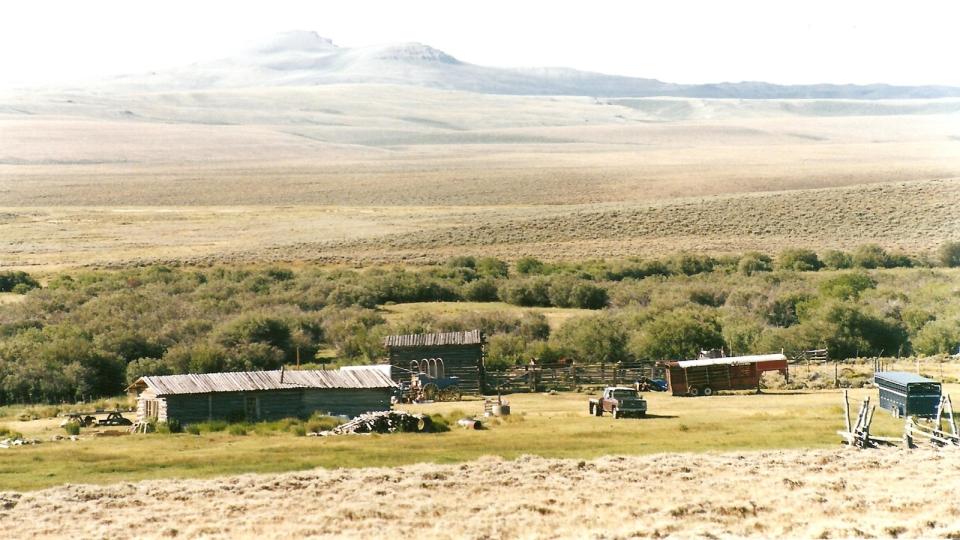
The exact location of Gilbert’s Station is unknown. Today the site sits within the larger site of Burnt Ranch, which saw continued use into the twentieth century.12 Fremont County pioneer H.G. Nickerson erected a stone marker at the spot in 1913.13 Gilbert’s Station, various mail, telegraph, stage, and Pony Express stations, nineteenth-century settlements, and military encampments all existed in this location.14
Gilbert himself did not stay to see any of this: he moved on from Wyoming, eventually settling in Virginia City, Montana, where he became a brewery owner, two-term mayor, and Madison County treasurer; he died there in 1902.15 Garrish’s later life is likewise unaccounted for here, though it may well be documented elsewhere.
Back in Wyoming, archaeological survey of the area has revealed two standing buildings, rock foundations, depressions (likely the locations of buildings), corral locations, and portions of the Oregon Trail.16 Burials in the area are known to include Charles Miller, Joe Barnette, and a Mrs. Bryan; several of the graves have been vandalized.17 There have been no further archaeological investigations to date. As such, it is unclear which of the foundations or depressions found at the site are remnants of Gilbert’s Station or associated with the subsequent occupations.18
Historic and modern construction activities may have seriously disturbed the subsurface remains of the original Gilbert’s Station. However, should the remains of the post be found in good context, they have the potential to provide information relating to emigrant trading activities during the 1850s and 1860s, as well as providing insight into the economic development of Wyoming during this period with the coming of mail, telegraph, stage and Pony Express stations, and the development of permanent settlements.19
Footnotes
-
“The Ninth and Last Crossing of the Sweetwater,” WyoHistory.org, March 26, 2017, https://www.wyohistory.org/encyclopedia/ninth-and-last-crossing-sweetwater.
-
William Bagley, South Pass: Gateway to a Continent: The Historic Context of a National Landscape, Planning and Historic Context Development Program (Cheyenne, WY: Wyoming State Historic Preservation Office, State Parks and Cultural Resources, 2007), 201.
-
“Gilbert Brewing Company Records,” Montana Historical Society, Library and Archives, Helena, Montana, finding aid, Archives West, accessed September 4, 2026, https://archiveswest.orbiscascade.org/ark:80444/xv41728; Progressive Men of Montana (A.W. Bowen & Co., 1901), 174, reproduced in Find a Grave, memorial page for Henry Spang Gilbert, Find a Grave Memorial ID 41791981, accessed September 4, 2026, https://www.findagrave.com/memorial/41791981/henry-spang-gilbert.
-
Progressive Men of Montana, 174–175.
-
Terry A. Del Bene, “The Lander Trail: National Road Building Comes to Wyoming,” WyoHistory.org, November 8, 2014, https://www.wyohistory.org/encyclopedia/lander-trail-national-road-building-comes-wyoming; “The Lander Road, California National Historic Trail,” National Park Service, last updated November 16, 2023, https://www.nps.gov/articles/000/the-lander-road-california-national-historic-trail.htm (on Lander’s 1857 survey preceding 1858 construction).
-
Allen J. Tyrrell, “A Journal of Plains,” manuscript journal in possession of Allen’s great-grandson, Corby Dale, Lemoore, California, typescript, entry for July 5, 1860, quoted in “The Ninth and Last Crossing of the Sweetwater,” WyoHistory.org.
-
Enoch B. Tripp, Journal, entry for July 29, 1861, describing the crossing of Rocky Ridge, on file at the Church History Library, The Church of Jesus Christ of Latter-day Saints, Salt Lake City, Utah; Albert Tracy, “The Utah War Journal of Captain Albert Tracy, 1858–1860,” Utah Historical Quarterly 13 (1945): 103–104, entry for April 13, 1860.
-
Bagley, South Pass, 226.
-
Ibid., 241.
-
Robert Helyer, “Burnt Ranch,” National Register of Historic Places Inventory-Nomination Form, 1973, on file at the National Register of Historic Places, National Park Service, Washington, DC., 6–7.
-
“The Ninth and Last Crossing of the Sweetwater,” WyoHistory.org.
-
Hellyer, “Burnt Ranch,” 6–8.
-
“The Ninth and Last Crossing of the Sweetwater,” WyoHistory.org.
-
Greg Pierce, Trading Posts in Wyoming, Multiple Property Documentation Form, National Register of Historic Places, Wyoming State Historic Preservation Office, State Parks and Cultural Resources, Cheyenne, Wyoming, 2012, Section E, 72–73.
-
“Gilbert Brewing Company Records,” Archives West.
-
Pierce, Trading Posts in Wyoming, 73.
-
“The Ninth and Last Crossing of the Sweetwater,” WyoHistory.org.
-
Pierce, Trading Posts in Wyoming, 73.
-
Ibid.