When is a Massacre a Massacre?
By Adam Reynolds
For close to a decade, my photography has centered on a personal project that offers a a visual survey of the American landscape at sites of historic conflict between the U.S. government and Native American peoples. The project centers on the idea of “massacre,” and how these sites and events have subsequently been commemorated and memorialized. The images explore whether our collective understanding of these shared histories can be reconciled with inherently confrontational and oppositional historic narratives.
Since 2018, I have researched and photographed more than twenty sites throughout the South, Midwest, and Great Plains that relate to the wider US-Native American conflict. From this broader survey, I pulled together those images that can qualify as “massacres” for inclusion in the project’s current iteration.
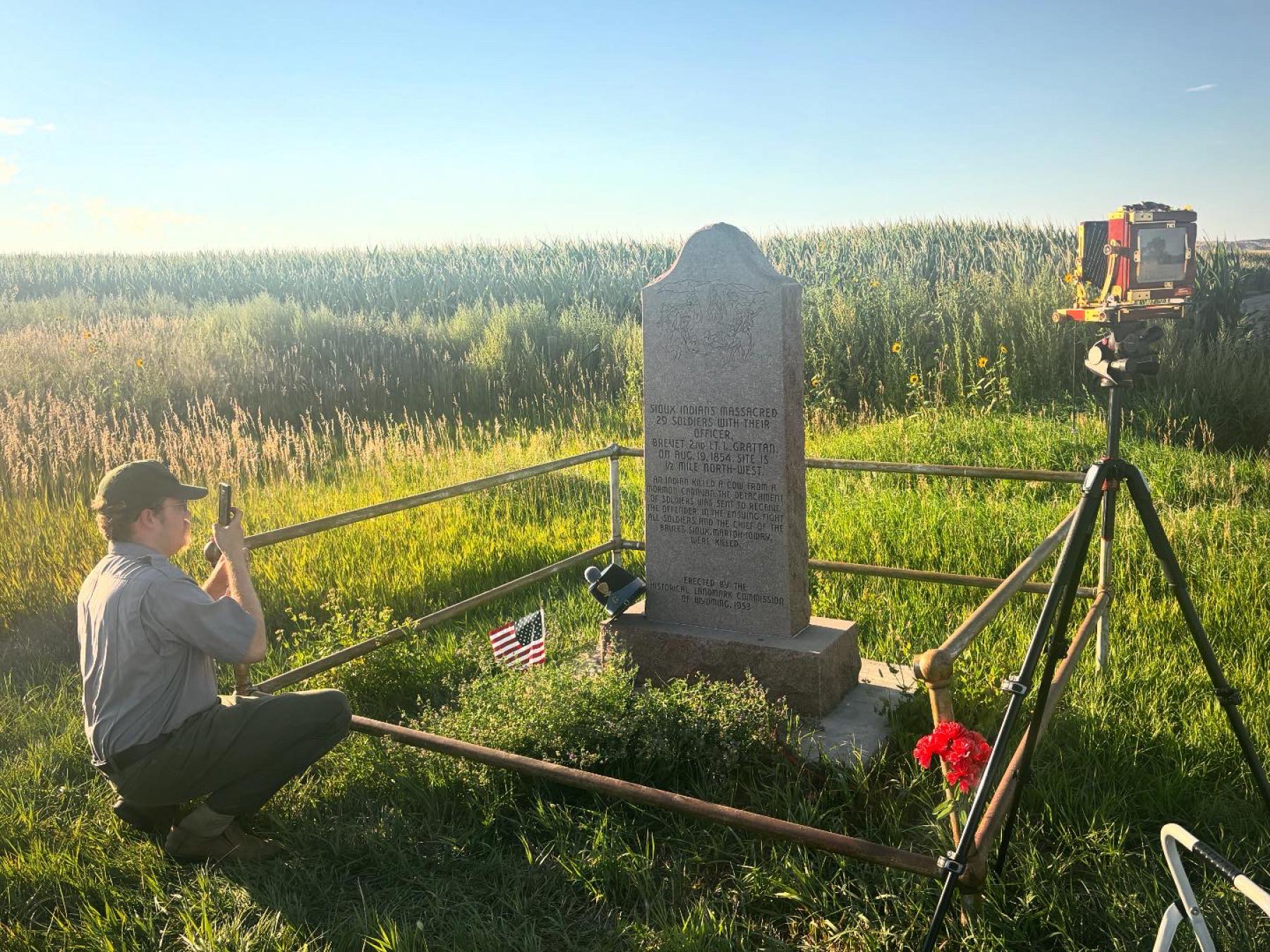
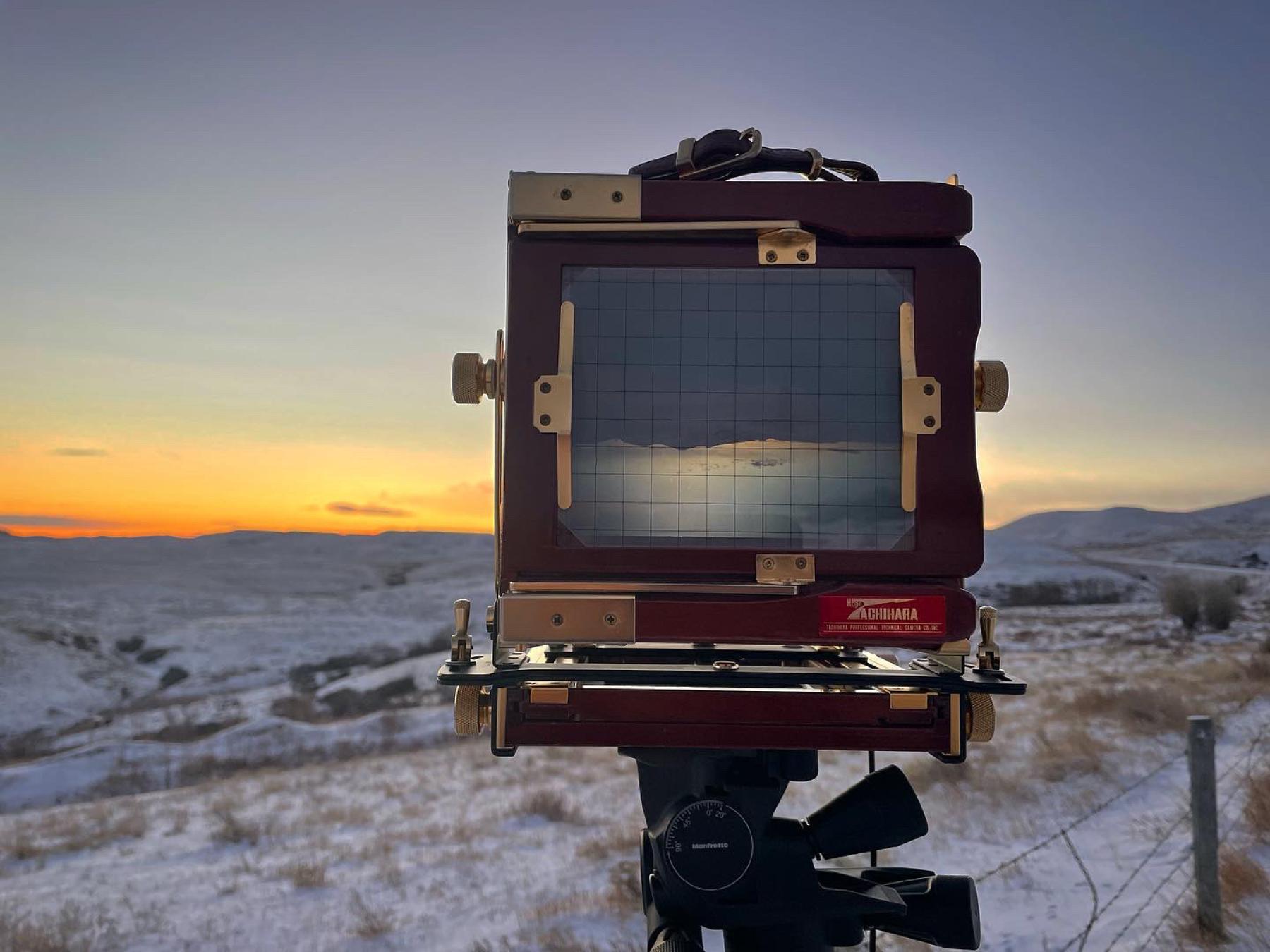
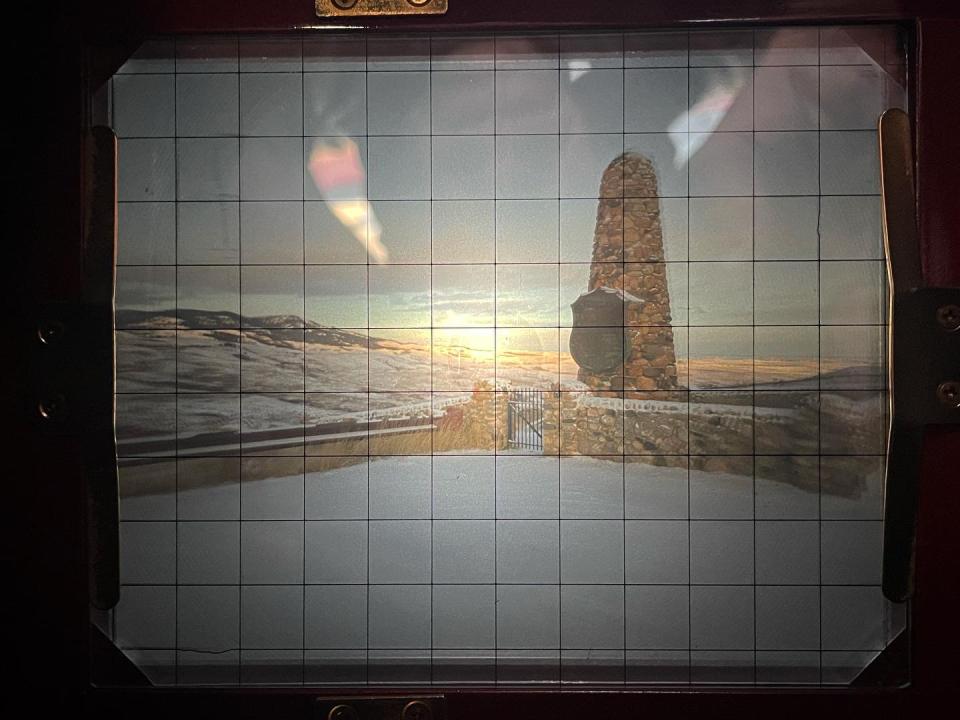
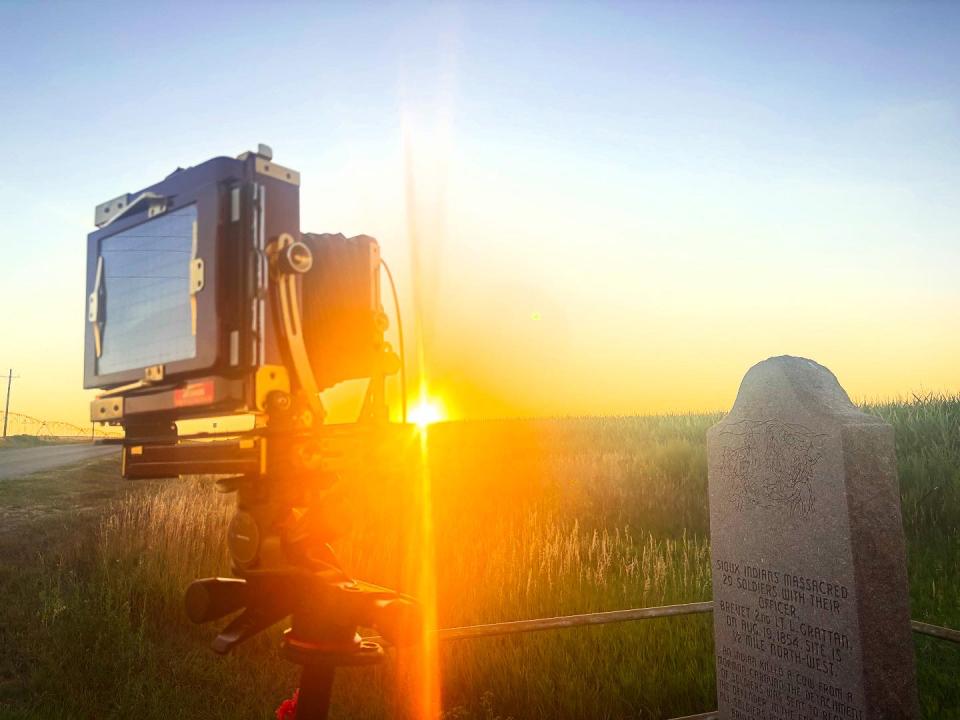
The images were photographed on color film with a 4x5 field camera on or near the anniversary at the site of each event. Collectively, they offer a visual timeline chronicling America’s westward expansion. Documenting these sites on or near their anniversaries reinforces the act or remembering and the importance of historic memory, while also imbuing the landscape itself with an accurate sense of seasonal ambiance. This especially holds true in the wintertime, when many of these events occurred.
I include events commonly acknowledged as massacres, those that arguably qualify, and still others whose historical framing has shifted over time, regardless of who is cast as victim or perpetrator. The story told is a complex narrative about the importance of place, history, and remembrance that challenges longstanding myths of American exceptionalism. The goal is not a comprehensive catalog but rather an exploration of how the term “massacre” operates, whether as a rhetorical weapon, as historical shorthand, or as a lens through which we view the past.
While the aesthetic focus is on the land, elements of memorialization are seen in many of the images. The memorials and names given to these events imply interpretation, which in turn rely on a broad consensus of how an event is understood. The lack of consensus illustrated by the range of names and memorials highlight the continued challenges in creating a more honest and inclusive national narrative. I believe that just as important as the events themselves, the history of how we have come to remember and memorialize them reflects a society’s understanding and values at any given moment in time. Simply put, history is curated, and whether a massacre is remembered and acknowledged often depends on who is doing the remembering.
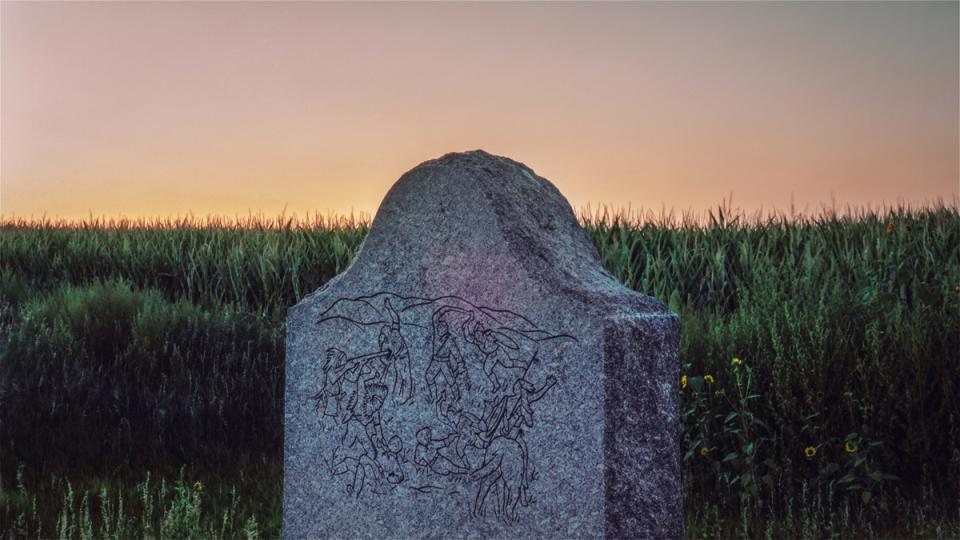
In Wyoming, I photographed two specific sites for the project: the Grattan Fight near Fort Laramie in southeast Wyoming (August 19, 1854) and the Fetterman Fight near Fort Phil Kearny in north-central Wyoming (December 21, 1866). Both incidents are similar in that the small number of US soldiers and their namesake commanders were overwhelmed and killed to a man by far larger numbers of Native American tribal warriors.
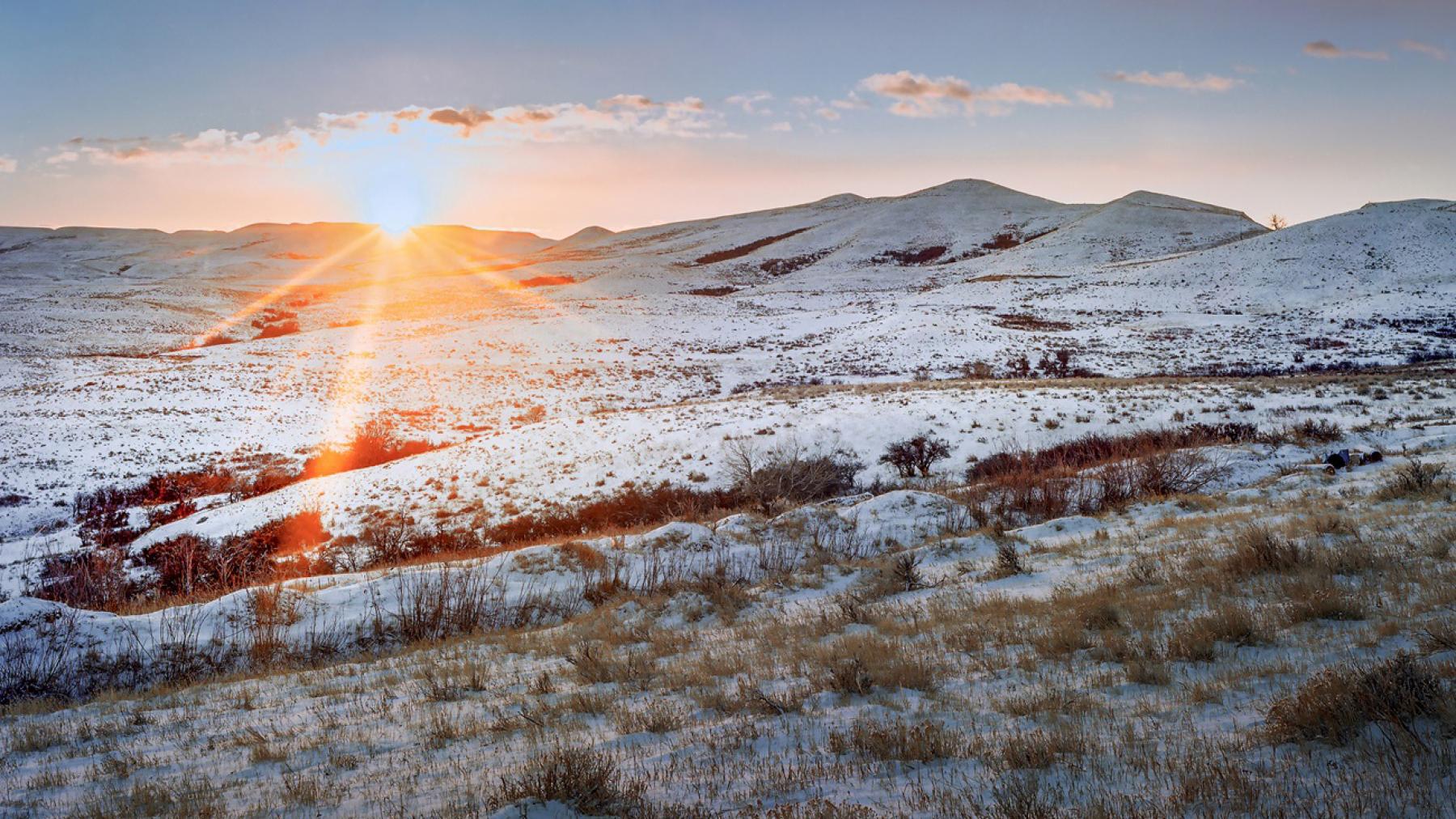
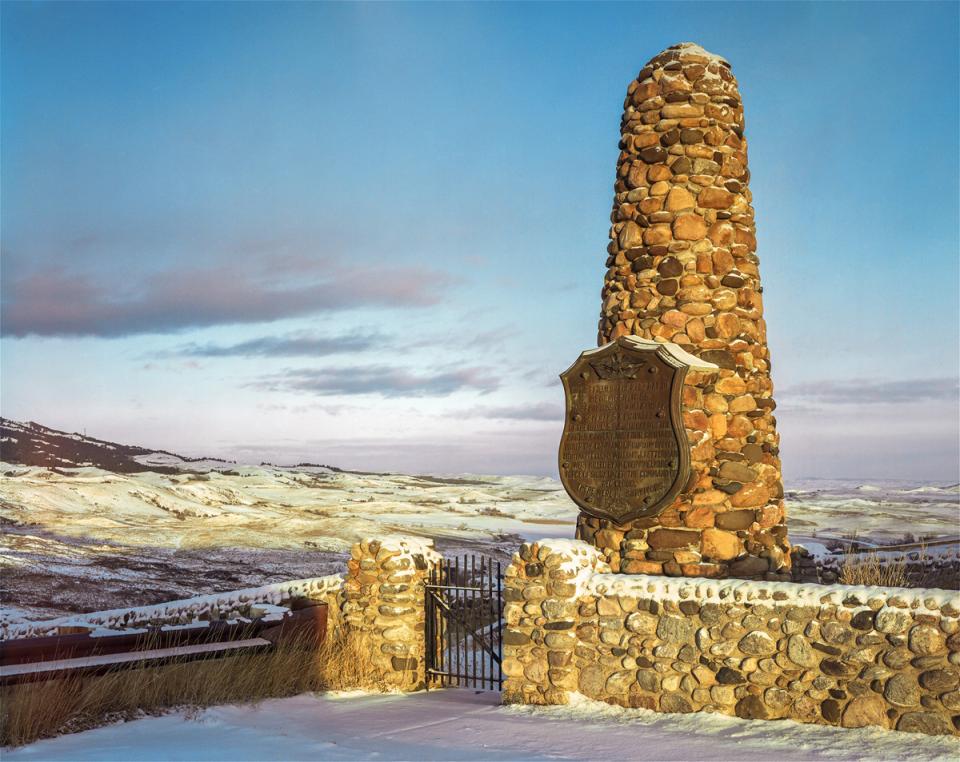
Initially, these two events were known titularly as the “Grattan Massacre” and the “Fetterman Massacre.” Undoubtedly, these soldiers were massacred, but should these be remembered as uppercase “M” titular “Massacres”? Usually when one thinks of a massacre it involves largely defenseless non-combatants (women, children, the elderly) as victims. This was not the case here; if anything, these were incredibly lopsided military encounters brought on in no small part by the institutional hubris of John Grattan and William Fetterman, who considered their opponents not worthy of their respect.
The two existing monuments onsite were erected during a time when America’s westward expansion was celebrated without any real critical examination, Grattan in 1953 and Fetterman in 1908. Both stand on the outskirts of outposts to that inexorable expansion, Fort Laramie and Fort Phil Kearny. Although today at the Fetterman site, additional information panels clarify the history of the encounter while also placing the original monument within its proper historical context.
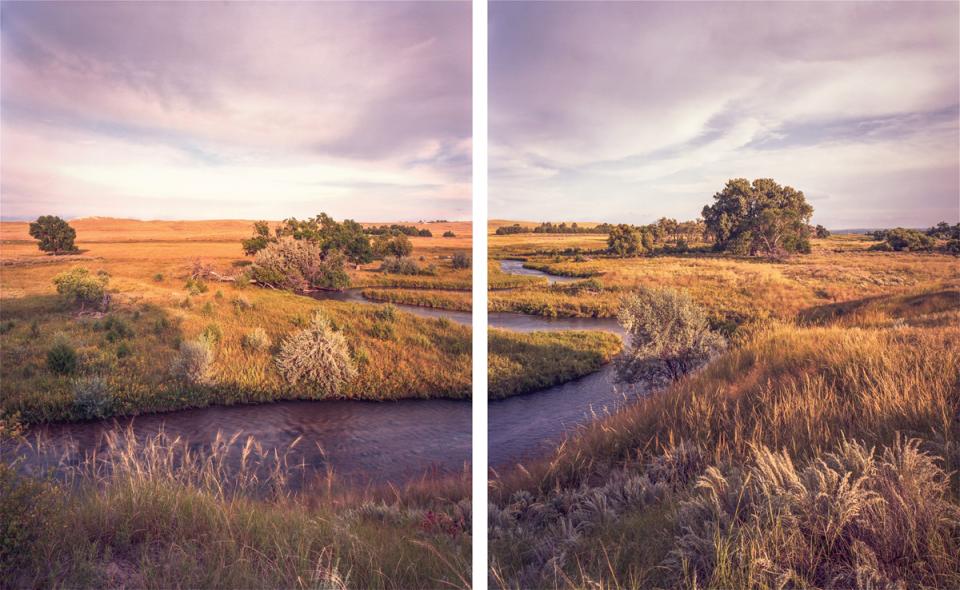
The Blue Water Massacre (September 3, 1855), while occurring in neighboring Nebraska, is the tragic, and largely overlooked act of retaliation by the US military to the Grattan Fight from the year prior. The incident goes by many names—the Battle of Blue Water, the Battle of Ash Hollow, the Harney Massacre, and the Blue Water Massacre—and resulted in the deaths of at least 86 Lakota, primarily women and children. For the purposes of my own project, I prefer designating these events with names that incorporate topographic features from the land itself. At its most fundamental level this was a conflict over land: between those who covet it, defend it, take it, and steal it.
Looking at the Grattan Fight and the Blue Water Massacre together, we can see how the historic narrative has shifted over time. What initially had been called the “Grattan Massacre” has since been reappraised as the “Grattan Fight.” While what had been the “Battle” of Blue Water is now seen for what it actually was, an outright massacre.
No built memorial exists at the site of the Blue Water Massacre. In fact, the official state historic marker along the side of the road refers to it as the “Battle of Blue Water.” However, an ancient cottonwood tree rises high above the meandering path of Blue Water Creek at the site. For those who come to commemorate the event on the anniversary, the cottonwood has come to be known as the “Witness Tree.”
In January 2026, I photographed another little-known site in southern Idaho, the Bear River Massacre of January 29, 1863, now acknowledged as the single largest massacre of Native Americans in US history. At the time of this writing, I am a little over halfway done with the on-site photography for the project, with less than 20 sites remaining. This work has taught me that revisiting the past is how memory and history are reconfigured and understood, with acts of memorialization either clarifying or distorting this understanding.
All images courtesy of Adam Reynolds.
Related Articles
- The Grattan Fight: Prelude to a Generation of War
- New Perspectives on the Fetterman Fight
- Fetterman Battlefield
- Fort Fetterman
- Fort Laramie
- Fort Phil Kearny
- Separate Lands for Separate Tribes: The Horse Creek Treaty of 1851
- G.K. Warren: The Explorer of Nebraska Territory
- Red Cloud’s War
- The Wagon Box Fight, 1867
- Peace, War, Land and a Funeral: The Fort Laramie Treaty of 1868
- Marking the Past: A History of Wyoming’s Historical Markers