Savino C. Lopez: The Farmer Who Became a Voice for Wyoming Latin Americans
by Susanna Lopez
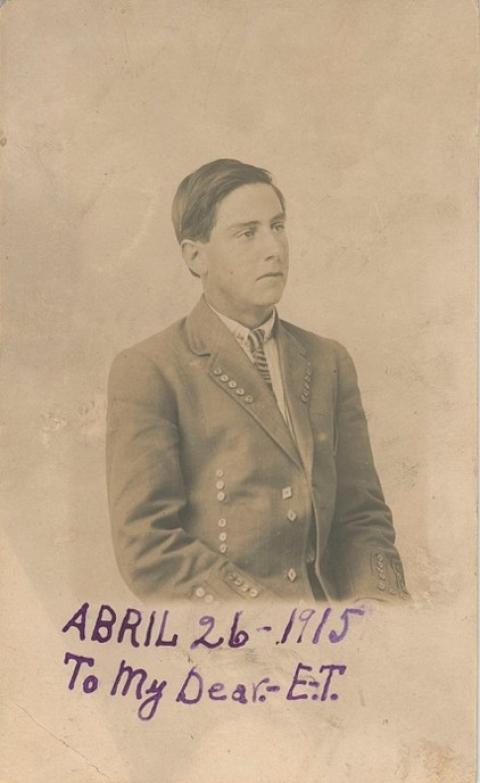
Tragedy shaped the childhood of the man who would become Wyoming’s leading voice for the Latin American community. In 1909 Tranquilino Lopez quit farming and moved his family to Las Cruces, New Mexico to take up work as a jail guard. On a cold night in February 1911, police officer Fred Higgins brought in two men he had arrested at a local saloon, when one of them yelled to Tranquilino to watch out, he had a gun! Mistakenly believing that the arresting officer was one of the prisoners, Tranquilino attempted to disarm the man and in the scuffle a shot was fired, killing Tranquilino. Tranquilino left behind three children he had with his wife, Celerina Carbajal Lopez. One of those children was Savino C. (aka S.C. or Sam) Lopez. Born on December 30, 1898, Savino was only thirteen years old when he lost father. Savino went on to become a major voice and leader for Latinos in the state of Wyoming within the span of thirty years, from 1948 to 1978, but not before years of hard-won experience.
Life on the Farm
Savino’s life as a farmer began in Salem in New Mexico Territory as he and his brothers Florencio Lopez and Felipe Lopez farmed their late mother and father’s irrigated homestead. Savino, along with his wife Estanislada and their family, would leave New Mexico, making their home in Greeley, Colorado, from 1920 to 1932. There Savino worked for the U.S. Department of the Census gathering data from farmers and ranchers. However, his primary employment came from the Great Western Sugar Company. His jobs encompassed: factory helper, factory foreman, laboratory analyst testing sugar beet purity and content, labor agent recruiting beet workers from Texas, construction supervisor for the newly established Spanish Colony, and as a supervisor and representative for a labor services company encompassing Southern Colorado, New Mexico and Texas.
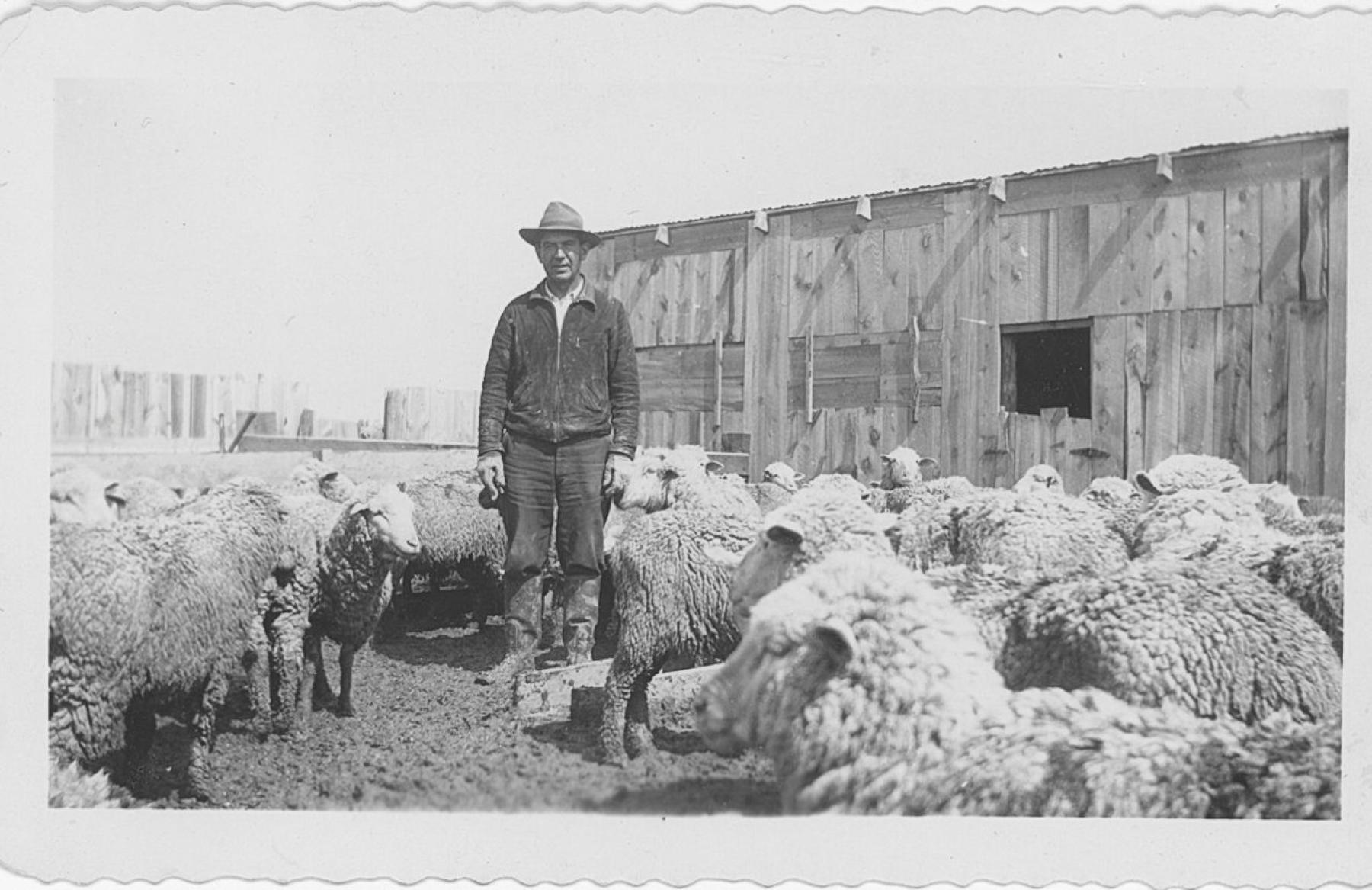
In 1933, Savino and Estanislada left Greeley to work their own 80-acre irrigated farm in Newell, South Dakota, raising hay, grain, and sugar beets. Although farming was his primary vocation, Lopez was elected to the Board of Directors of the Black Hills Beet Association, becoming vice president. He served as the beet growers’ representative to speak before the U.S. Secretary of Agriculture in gaining better prices for farmers. Savino was elected to the board of directors of the Belle Fourche Irrigation District. He was also selected as the Beet Growers Association representative who would protest the proposal to increase freight rates on sugar and sugar beets before the Public Service Commission at Pierre, South Dakota. Savino’s argument gained a decision rendered in favor of the beet growers.
Selling the Farm and Moving to Wyoming
In 1943, Savino sold the farm, and he and his family would move to and develop roots in Cheyenne, Wyoming, where his life as a farmer shifted into that of a civil rights activist, a voice and a leader for Wyoming Latinos. Lopez was much like the American author Jack London; he held and was good at a variety of jobs like London, but both weren’t shy about packing up and moving on to seek out better jobs and opportunity. Cheyenne offered Savino Lopez steady employment from 1943 to the time of his death in 1978. He worked as an aircraft mechanic for United Airlines for three years, but the airlines left Cheyenne, so he ventured into owning and operating the Victory Billiards Parlor and Café until 1959. From 1959 to 1962, he worked as the head custodian at the Wyoming Supreme Court building. His last job from 1962 to 1978 was as a salesman for the National Press Company and for the Singleton Corporation, specializing in promotional products.
Savino’s employment experience likely sharpened both his skills and his drive to speak and represent individuals and communities who had marginalized voices in American society. Living during the turbulent times of unjust segregation laws and discrimination, Savino, his family, and the Latino community in Wyoming, as well as the entire nation, experienced the impact of discrimination and segregation during this era and beyond. Lopez’s social justice activism took place long before, during, and after the Civil Rights Movement of the 1960s. With just a tenth-grade education, he was aware that the tide toward civil rights and equality for all people was happening, but that it could only succeed through bipartisan communication and agreement among Latino communities, other minority groups, and the white community in America.
Creating a Community
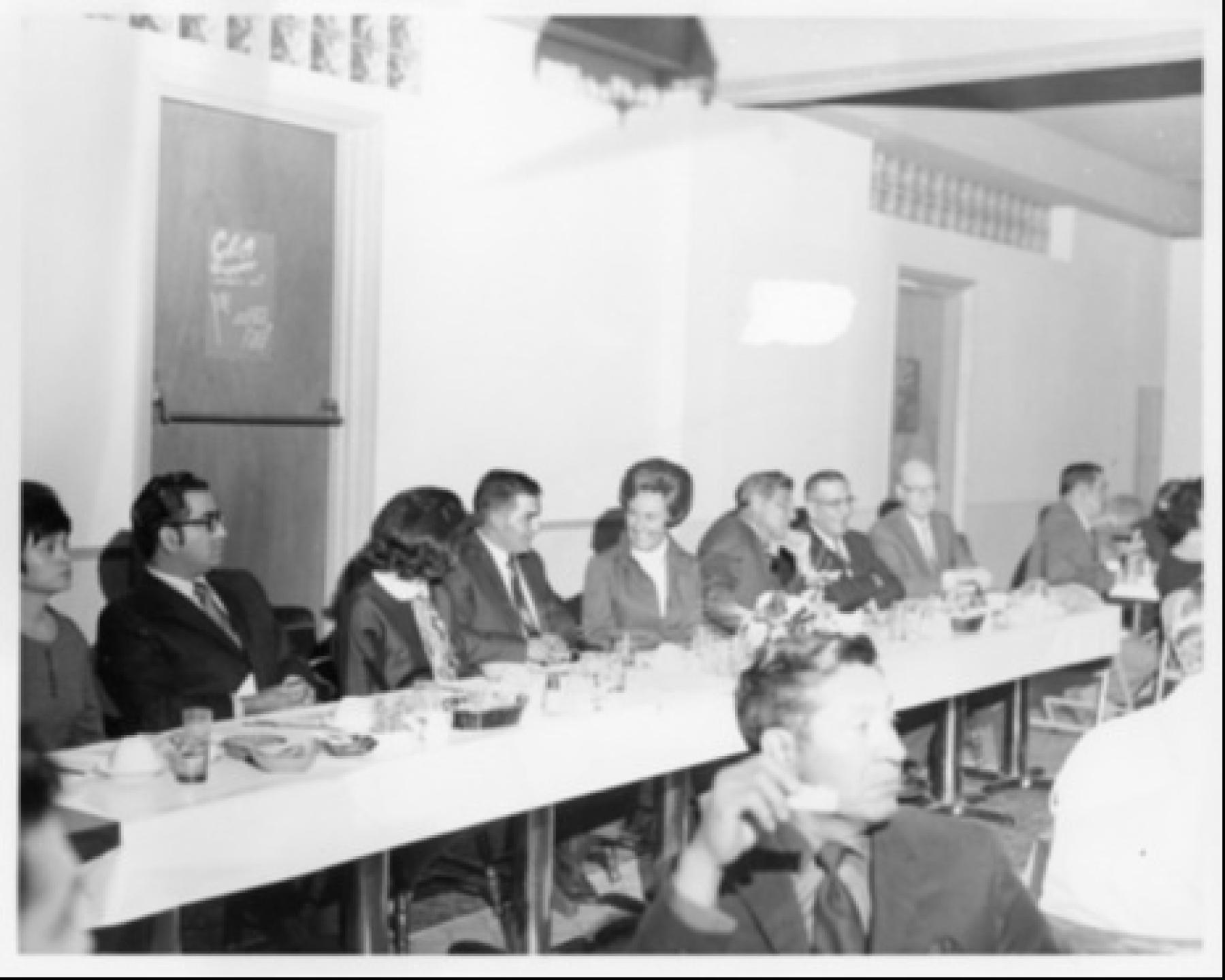
Within just five years of becoming a Wyoming transplant, Savino went public as a defining voice for the state’s Latinos. He established and served as president and later advisor for 30 years, from 1948 to 1978, for the Latin American Association, Inc., in Cheyenne. In 1956, he founded the Laramie Latin American Club with Benny Lujan as president. In 1960, he created the Wyoming Federation of Latin American Groups, and presided as president from 1960 to 1965. In 1963, he helped establish the Junior Latin American Club in Laramie, and in 1965, he founded the National Latin American Federation, Inc. in Wyoming. This federation would include chapters in Ogden, Utah; Burley, Idaho; Seattle, Washington; Fort Morgan, Colorado; LaSalle, Colorado; and the Wyoming cities of Cheyenne; Laramie; and Torrington. Lopez served as president and from 1965 to 1970, and he remained as advisor, organizer, and board member from 1970 to his death.
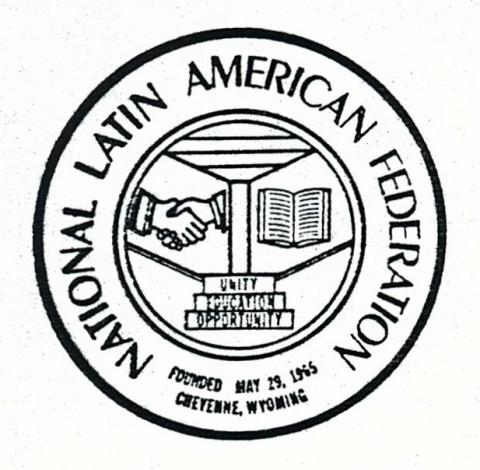
Lopez began with his local Latino community and, in his own words, explained why he established the Latin American Association, Inc., in Cheyenne: “Back in 1948, when I saw that we were an ignored group of Latinos who were pushed around without any recognition, I made up my mind that we needed an organization to overcome the gap that existed between us and the rest of the community, and I knew that it was only a matter of communication. So, our Cheyenne people realized it and we organized our first Club in Cheyenne… For 26 years, it has taken a lot of hard work, sacrifices, money, headaches and good planning. So every living soul should be grateful to all those involved in search for better recognition of us Latin Americans. Now that road is paved, let’s walk that road together.”
Individual homes became the meeting places for fellow Latin Americans to organize, strategize, and create fellowship within these organizations. Savino and Estanislada’s home at 515 East 26th Street in Cheyenne was the headquarters for the Latin American Association. There was hardly a time when their dining room table wasn’t flooded with research materials, newspaper articles, Latin American convention brochures, and an ashtray filled with spent Lucky Strike cigarettes. An old-school pink wall phone linked with a stretched cord was often attached to Savino’s hand as he worked tirelessly making connections with city, county, and state officials to help advance the cause of equality. Centered at the head of the table sat Savino’s treasured, worn, black manual typewriter; this trusty typewriter traveled with Lopez to every town, city, and state where he worked to enrich and enlarge the National Latin American Federation. Savino Lopez was truly creating strength in numbers—no one would stand alone in the fight for civil rights, nor in defending the constitutional rights they had won.
Advocating for Civil Rights
In 1954, amid segregation laws and without a Civil Rights Act, Lopez ran for the state House of Representatives as a Democrat in Wyoming. He lost that bid in the primary election, but stayed vigilant and active in voicing the need for a national civil rights bill. In a 1957 letter to Wyoming state legislators, Lopez wrote: “Our President, Mr. Eisenhower with his utmost sincerity requested from Congress and the House for the passage of the ‘Civil Bill of Rights’ and so did our Governor Simpson in his message to both Houses last week... We all know that as people, we (the Latino community) have contributed our share in the economy and progress in our state, and today we represent one-tenth of our state’s population; thereupon we can not [sic] help but feel that we should have our civil rights protected by law... In requesting your support in the passage of the ‘Civil Rights Bill’ it is due to the fact of the many abuses that our people have been subject to through all years; and if we are to represent and live the very ideals of what makes a democracy, then we must protect the rights of every individual in our communities, our state, and our nation.”
On February 10, 1957, The Denver Post in Denver, Colorado, ran a story stating Charlotte Rush of the Denver DAR (Daughters of the American Revolution) barred Mexican boys from being flag bearers at the Colorado Industrial School of Golden during a DAR pageant that she directed. Rush said that she “presumes most of the Mexicans were born in the U.S., but of parents who came here from Mexico—they are Mexican boys, not American boys.” Rush continued, “My committee advised me to let the Mexicans carry the U.S. flag, but I said ‘no’... I wouldn’t let a Mexican carry Old Glory—would you?” Savino Lopez, as president of the Latin American Association Inc., “condemned” and “strongly protested” those actions and words in a February 14, 1957, public letter sent to The Denver Post. Lopez stated: “…[H]er unamerican statement, together with her unscrupulous philosophy of Americanism, would indeed change the fundamental structure of our democracy... History proves that all our ancestors came from somewhere beyond the south, north, east, or west borders with no bearing in the minds of true Americans. But we all have one purpose; united we stand, divided we fall. And so together, we salute, we carry, and die for our good American flag.”
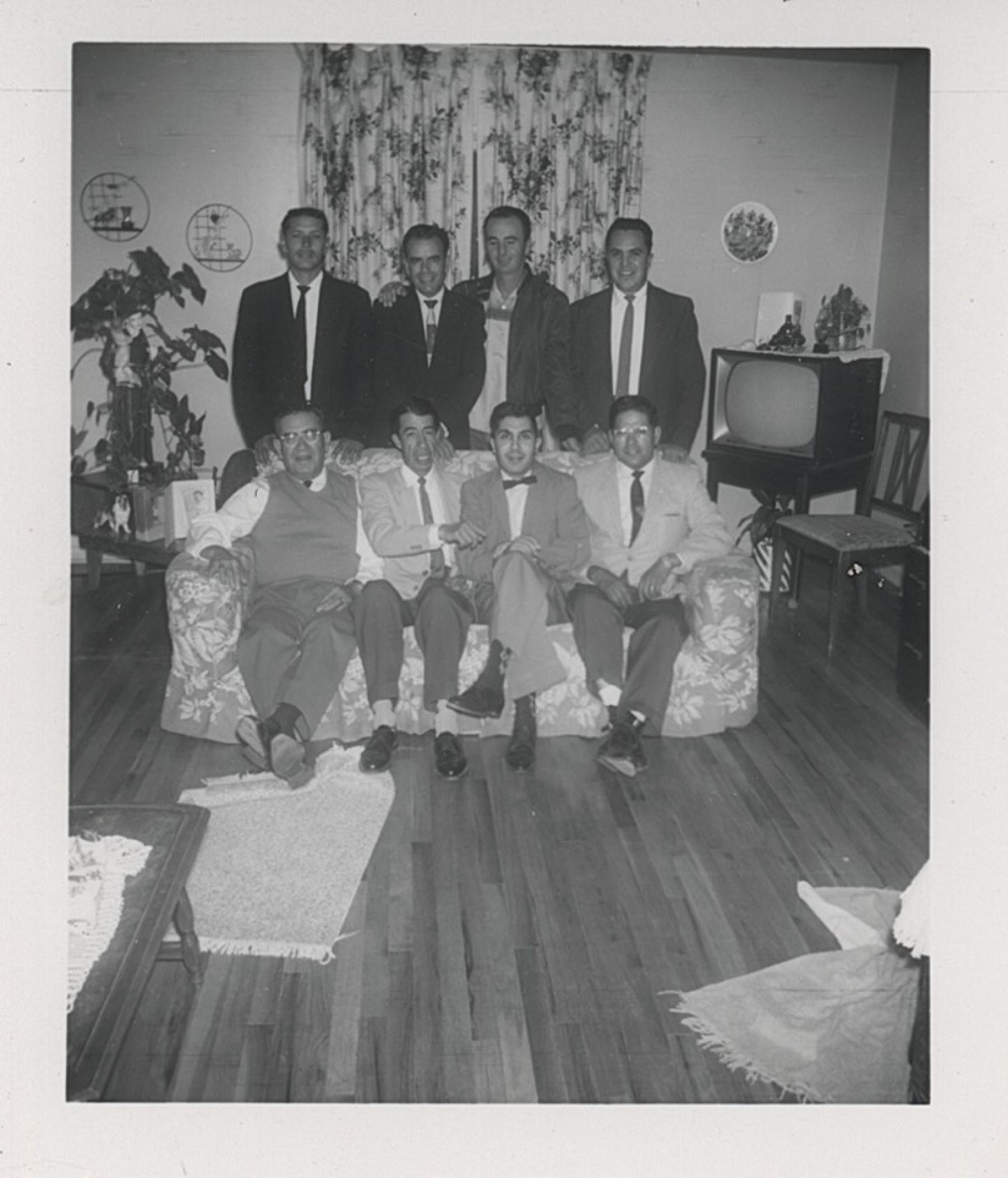
Lopez believed in the philosophy that every vote is important and that each vote counts, especially during the national push to pass civil rights legislation in 1964. Savino would utilize the Latin American Association in Wyoming as a springboard to connect and create a larger network to educate Latin Americans and Democrats to register to vote. This grassroots push to get out the vote was carried out through mail, phone and small meetings with fellow Latinos and non-Latinos alike. Lopez gained the attention of President Lyndon B. Johnson as he would send him a letter on White House letterhead, postmarked October 22, 1964, that read: “I am aware of the fine work you are doing for the Democratic ticket this year. This letter is to express to you my personal gratitude… Our charts and maps make it plain where your constituents tend to be concentrated, and we are looking directly to you to insure a massive turn-out on November 3rd.”
Bridging the Gap
Even though Lopez was a staunch Democrat, he was an expert in bridging the gap among Republican officials at the state and local levels and between the non-Latino and the Latino communities. Through the Latin American Association Inc. and the Latin American Federation, Lopez was able to engage in open, consistent, and productive dialogue with politicians and voters of both political parties. Lopez believed in the concept of “united we stand.” In 1962, Republican Wyoming Governor Jack Gage welcomed the 2nd National Latin American convention goers with, “[T]he work of the Federation can do great good in the building of our democracy and the strengthening of our country, and we all join in wishing you a very successful state convention.” Notably, Wyoming State Superintendent of Public Instruction Velma Linford, a Republican, said in 1962, “The Wyoming Federation of Latin American Groups has great promise for education and progress…. I hope you will join our office in recruiting teachers of Spanish for our schools. Only with your help can Wyoming become a bilingual state. Urge your child to become a teacher.”
In 1971, at age 73, Lopez remained vocal about the need for Latino representation, bringing a delegation from the National Latin American Federation to the office of Republican Wyoming Governor Stanley Hathaway. Lopez posed the idea to form a Governor’s Advisory Committee on Spanish-American affairs. In a convention report titled “Meeting With Governor,” it was noted that Hathaway agreed with the formation of this committee and that it could serve to advise the governor and other agency directors on the current problems encountered by the Latino populace. Savino, serving as advisor for the National Latin American Federation, was assigned the task of assisting the governor’s office in forming it.
Family and Personal Life
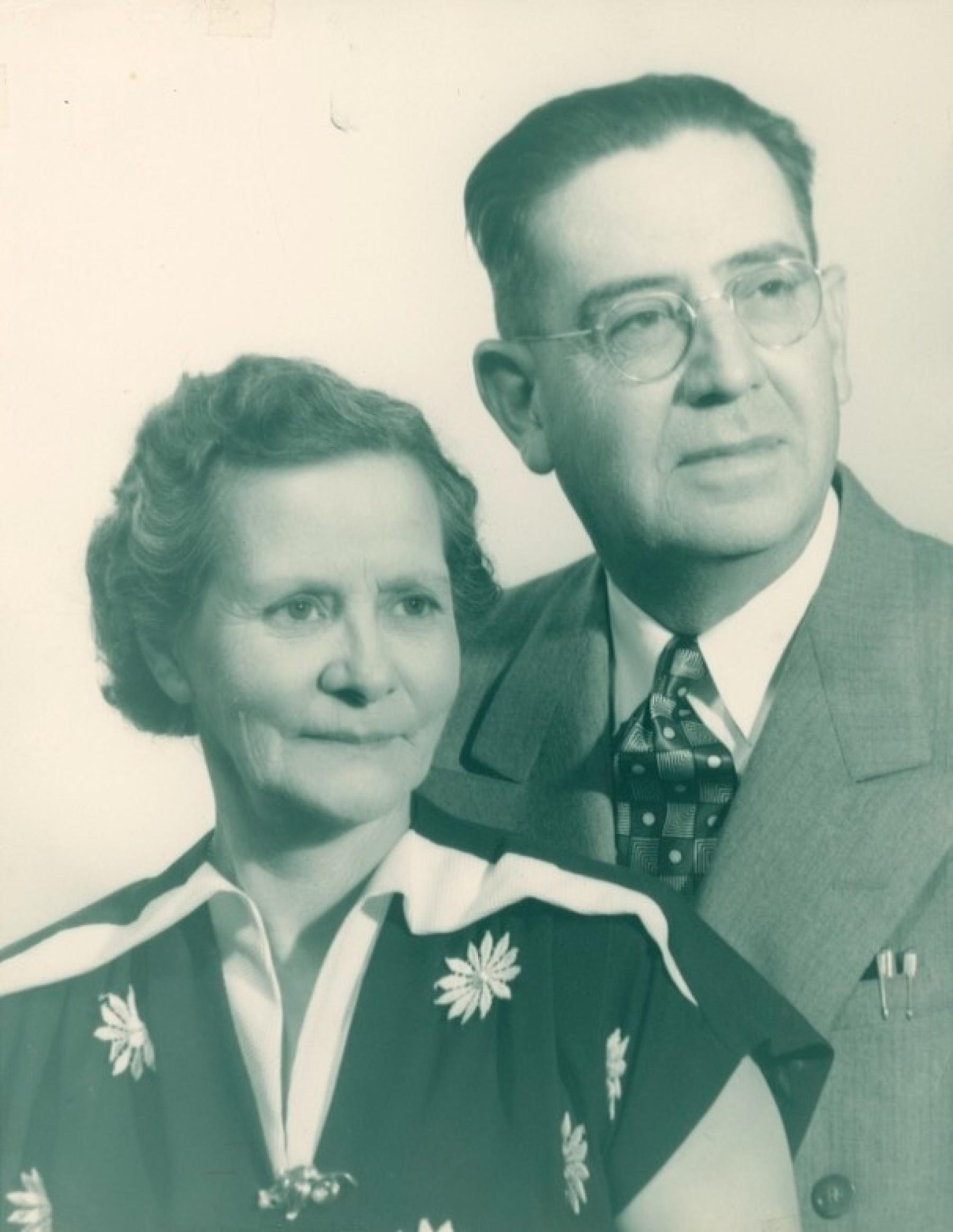
Among the most notable qualities of Savino and Estanislada was their constant and enriching love for each other, for family, and for others. Together, they had a family of five sons and three daughters. During the late 1920s, and within a two-year span, the couple experienced two great losses—the tragic deaths of their son George, age 1 year and 9 months, and their son William, age 9.
Savino recognized the importance of involving youth in the Latin American organizations, and he was successful in doing so—young Latinos became heavily engaged in the movement. Aside from social justice endeavors, they participated in dances with royalty elections and earned educational scholarships for collegiate pursuits. In 1962, the Wyoming Federation of Latin American Groups initiated the Wyoming Latin American Educational Foundation to support Latino students pursuing higher education.
A Lasting Legacy
Savino Lopez, who at age 13 chose to rise above the unexpected and tragic death of his father, brought that same tenacity and duty to building and mentoring the 1948 Latin American Association, Inc., the 1956 Laramie Latin American Club, the 1963 Junior Latin American Club in Laramie, the 1960 Wyoming Federation of Latin American Groups in Cheyenne, Laramie and Torrington, and the 1965 National Latin American Federation Inc. with chapters in Utah, Idaho, Washington, Colorado and Wyoming. In 1968, Lopez referred to these organizations as “A Crusade Full of Hope… This year of ‘68 we celebrate our 20th anniversary of our first Latin American Club… Our purpose is two-fold: To improve better relations in every community of these states, in order to solve the problems of employment, education and the social life of our people, to eliminate discrimination, so they may improve their standards of living.”
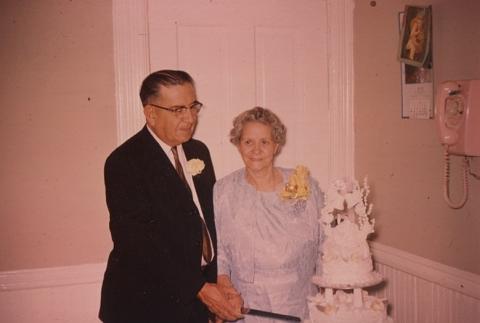
The mid-1970s brought life-changing events for Savino. After 59 years of marriage, Estanislada died in 1975 from serious illness, and Savino’s type 2 diabetes made his overall health more of a struggle. Through it all, Savino remained steadfast in his desire to uplift his community and success in remaining a major voice for Wyoming’s Latin American people. In 1977, Savino C. Lopez wrote to the 12th Annual National Latin American Federation convention delegates, “It has been a pleasure that my dreams of yesteryear have become a reality and I am grateful to every one of you that have dedicated yourselves in creating better relations and more friendly understanding in the communities where we live. Unity has been the key to our progress and the corner stone of brighter horizons in our days ahead.”
Savino C. Lopez died on August 9, 1978, at age 80, and was laid to rest on August 11, 1978, next to his wife, Estanislada Tellez Lopez, in Olivet Cemetery in Cheyenne, Wyoming.
Often when one witnesses history unfold, the immensity of another’s actions can seem ordinary. Savino continually built upon the previous day’s successes within the Latin American organizations that he envisioned and built. Only in retrospect does the profound legacy Savino Lopez left for his family, the city of Cheyenne, the state of Wyoming and for Latin Americans and non-Latin Americans alike become fully apparent. Savino lived by his own key philosophy: “Don’t let anyone or anything stop you from accomplishing a worthwhile life and always bring others with you.”
Works Cited
- Byers, Robert. 1957. "Mexican Boys Barred as DAR Flag Bearers." Denver Post. Denver: Denver Post, February 10.
- —. 1957. "Mexican Boys Barred as DAR Flag Bearers." Denver Post. Denver: Denver Post, February 10.
- Gage, Jack. 1962. "Your State Officials Welcome You of the Wyoming Federation of Latin American Groups and Wish You a Successful Convention." Our Second Convention Wyoming Federation of Latin American Groups. Torrington: Wyoming Federation of Latin American Groups, September 8.
- Johnson, Lyndon B. 1964. "Letter to Sam Lopez." Washington D.C., October 22.
- Jr., John Ybarra. 1971. "Meeting With Governor." National Latin American Federation Welcomes You To The Sixth Annual Convention. Fort Morgan: National Latin American Federation, September 25.
- Linford, Velma. 1962. "Your State Officials Welcome You of the Wyoming Federation of Latin American Groups And Wish You a Successful Convention." Our Second Convention Wyoming Federation of Latin American Groups. Torrington : Wyoming Federation of Latin American Groups, September 8.
- Lopez, J.E. 1981. The Frontier Days of Old Mesilla, N.M. San Bernandino , December 6.
- Lopez, S. C. 1957. "Letter to Legislators." Dear Legislator. Cheyenne, January 18.
- Lopez, S.C. 1974. "A History of Progress." National Latin American Federation ... Ninth Annual Convention . Cheyenne: National Latin American Federation, August 10.
- —. 1977. "A Word From Mr. Lopez." National Latin American Federation Welcomes You To The Twelfth Annual Convention. Fort Morgan: National Latin American Federation, August 27.
- —. 1957. "Letter to The Denver Post." Cheyenne, February 14.
- —. 1968. "The Ponderosa Inn." Third Convention National Latin American Federation. Burley: National Latin American Federation, June 22.
- Lopez, Savino C. 1974. "A History of Progress." National Latin American Federation ... Ninth Annual Convention. Cheyenne: National Latin American Federation, August 10.
- —. 1968. "Application For Employment." Cheyenne.
- —. 1957. "Letter to Legislators." Cheyenne, January 18.
- —. 1967. "Typed Resume ." Cheyenne.
- 1962. "Wyoming Latin American Educational Foundation." Our Second Convention Wyoming Federation of Latin American Groups. Torrington: Wyoming Federation of Latin American Groups, September 8.