Bissonette’s LaBonte Creek Post
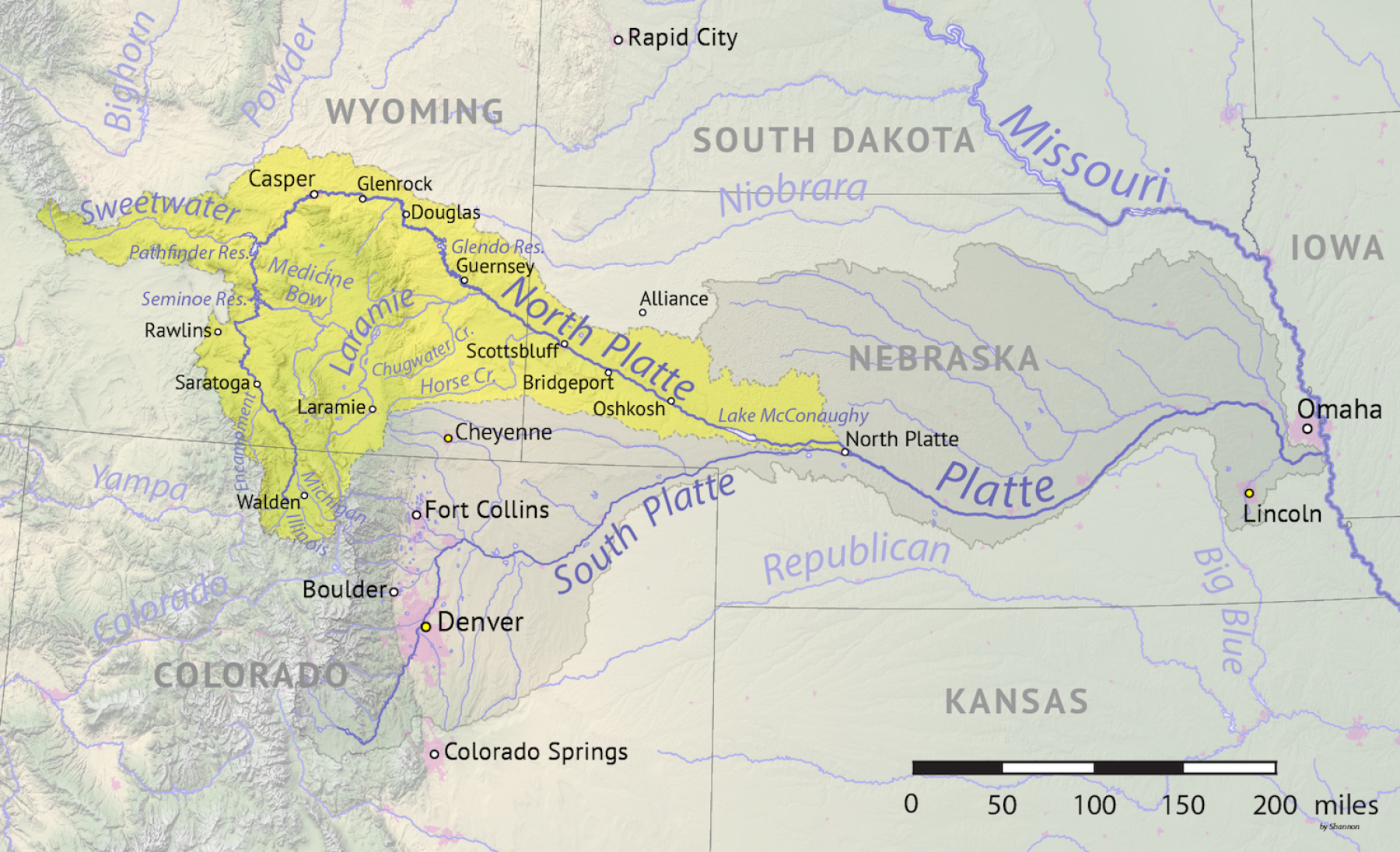
Bissonette’s LaBonte Creek Post was a small trading establishment operated by Joseph Bissonette at the mouth of LaBonte Creek on the North Platte River in what is now Converse County, Wyoming, from 1854 until sometime between 1855 and 1857. It was the third in a sequence of posts Bissonette operated along the North Platte corridor and was his least commercially successful, operating through the most violent and disruptive years of the First Sioux War and the accompanying military restrictions on trade. The post left almost no documentary record of its physical form or operations. Its significance lies not in what it achieved commercially, but in what it reveals about the conditions independent traders faced in the immediate aftermath of the Grattan Fight of August 1854, conditions that effectively ended the independent trading era along the North Platte within a decade.1
Joseph Bissonette and the Move to LaBonte Creek
By 1854, Joseph Bissonette had spent more than a decade as one of the most active and connected traders on the North Platte. He had managed Fort Platte for Sybille and Adams in the early 1840s, co-founded Fort Bernard with John Baptiste Richard and Bernard Pratte in 1845, partnered briefly with James Bordeaux at Sarpy’s Point after Fort Bernard’s destruction, and operated his own North Platte post near Sarpy’s Point from 1850 to 1854. During 1852–1854 he also held a partnership interest in Reshaw’s Bridge, the toll bridge across the North Platte near present-day Casper that Richard and several partners had built in the fall of 1852. In 1854, for reasons not documented in surviving records, Bissonette sold his share in the bridge enterprise to Richard and relocated his trading operations approximately fifty miles downriver, to the mouth of LaBonte Creek south of present-day Douglas.2
The timing of the move placed Bissonette at LaBonte Creek just as the political and military environment along the North Platte collapsed. On August 19, 1854—only weeks after Bissonette had likely established himself at his new location—Brevet Second Lieutenant John Grattan, an interpreter, and twenty-nine enlisted men were killed by Brulé and Minneconjou Lakota warriors near Fort Laramie in what became known as the Grattan Fight. The incident, which arose from a dispute over a stray Mormon emigrant cow, was the first major engagement of the First Sioux War and fundamentally changed the commercial landscape that Bissonette and his contemporaries depended on.3
Operations Under Duress, 1854–1855
The consequences of the Grattan Fight reached Bissonette almost immediately. Brulé warriors, angered by the military’s response to the incident, raided his post at LaBonte Creek and made off with most of his trade goods, a catastrophic loss for an independent trader operating on thin margins without the capital reserves of a company post. The following year brought a second disaster: in 1855, a party of Minneconjou Lakota seized one of Bissonette’s wagon trains headed toward the Powder River, destroying the goods and taking the livestock. Bissonette later documented both incidents in legal statements submitted to the U.S. Court of Claims in the 1890s, seeking compensation for property lost to Native raids, testimony given nearly forty years after the events but providing the most detailed record available of the specific losses he suffered.4
By the summer of 1855, the military had ordered all traders in the region to cease commerce with Native groups until the Lakota could be punished for the violence following the Grattan Fight. The formal trade hiatus effectively shut down Bissonette’s remaining operations at LaBonte Creek. General William S. Harney’s campaign against the Brulé reached its bloody culmination at Blue Water Creek in present Nebraska in September 1855, where Harney’s forces killed at least eighty-six Lakota—most of them women and children—and scattered the survivors. Harney then pressed westward to Fort Laramie, calling in the North Platte traders and effectively placing civilian commerce under military supervision.5
Bissonette spent the winter of 1855–1856 at Fort Laramie, where he met and befriended Indian Agent Thomas Twiss, who had arrived at the post in August 1855. In July 1856, Colonel William Hoffman ordered all traders remaining in the region to relocate to Fort Laramie in response to continued Lakota hostility.6 When Bissonette’s friendship with Twiss resulted in his appointment as government interpreter in September 1856, his identity as an independent post trader began to give way to his later role as an interpreter and agency employee, a transition that would define the remaining decades of his working life.7
Abandonment and Succession
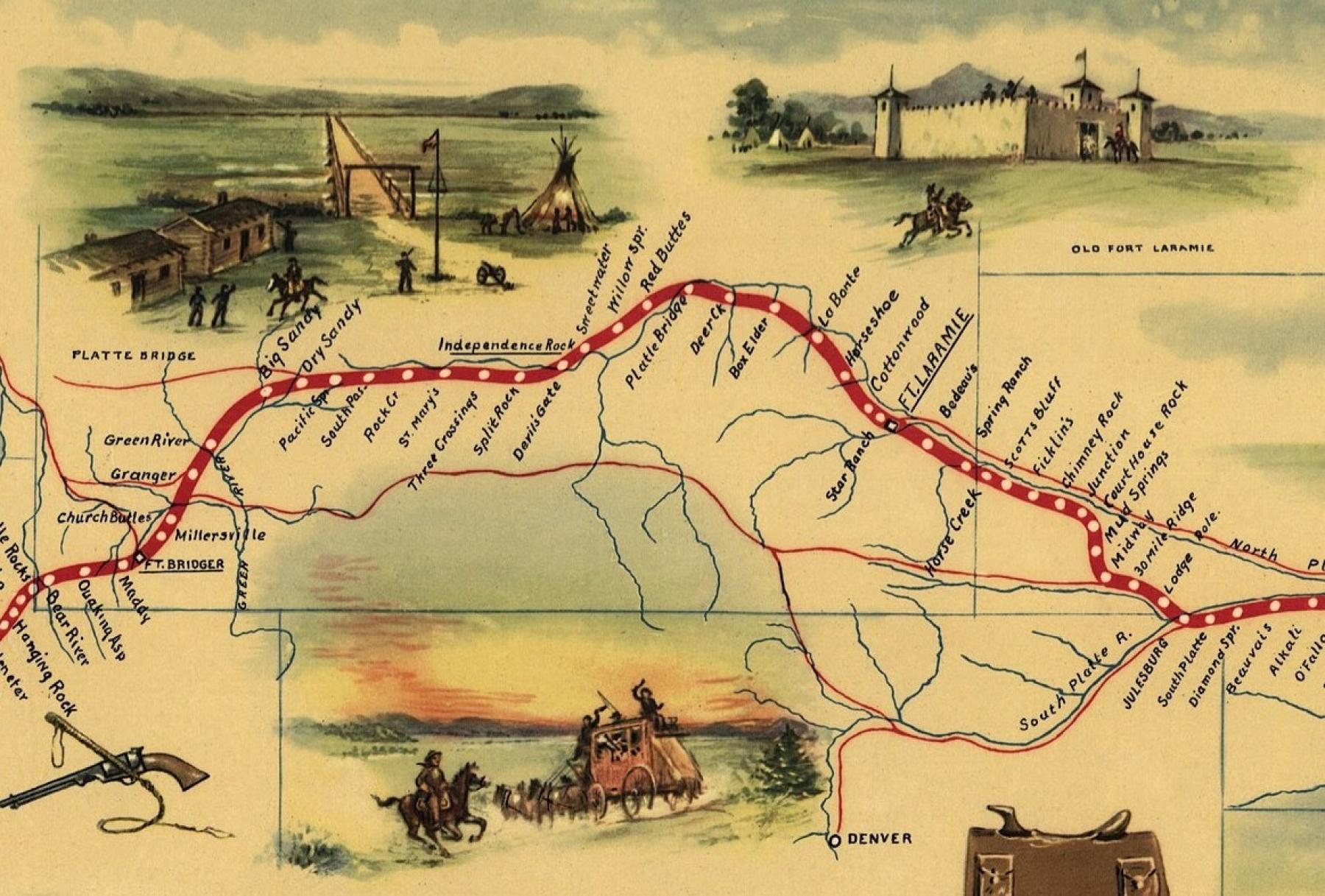
The precise date of LaBonte Creek Post’s abandonment is uncertain. Trading activities may have effectively ceased in 1855 when the military proclaimed the regional trade hiatus. Bissonette may, however, have continued to occupy the post in some limited capacity until 1857, when he followed Twiss to Deer Creek, in present-day Glenrock, and established a new trading post there in association with the relocated Upper Platte Indian Agency.8 Whatever remained of the LaBonte Creek Post after Bissonette’s departure was absorbed into a different commercial enterprise: in 1858, the site was occupied by LaBonte Creek Stage Station, which served the growing overland stage traffic along the North Platte corridor.9 The station’s arrival at a location that had been a trading post only a year or two earlier reflects the rapid transformation of the North Platte commercial landscape in the late 1850s, as stage lines, telegraph companies, and eventually the military displaced the independent traders who had defined the region’s economy since the 1840s.
Bissonette’s Later Career at Deer Creek
The Deer Creek post that Bissonette built in 1857, near present Glenrock, was a more substantial enterprise than LaBonte Creek and left a far richer documentary and archaeological record. Its six buildings, three corrals, trading house, blacksmith shop, hotel-saloon, and post office were mapped by Lieutenant Caspar Collins in the winter of 1863–1864; the site, now identified at a location on the west bank of Deer Creek half a mile south of its confluence with the North Platte, encompasses both Bissonette’s post and associated telegraph, mail, Pony Express, and military sub-post facilities. Bissonette operated at Deer Creek until 1865, when mounting Native hostility and the revocation and restoration of his trading license by successive Indian agents made the enterprise untenable. His time at Deer Creek was also marked by recurring accusations of trading liquor to Native groups and misappropriating annuity goods intended for the agency, charges that were investigated but never prosecuted, apparently because of his close relationship with Twiss.10
Significance
Bissonette’s LaBonte Creek Post is significant primarily as a casualty of the crisis that ended the independent trading era on the North Platte. It was established at the worst possible moment, just as the Grattan Fight unleashed a cycle of raid, military retaliation, and governmental restriction that stripped the independent traders of their commercial environment within a few years. The two raids Bissonette suffered at LaBonte Creek, and the military trade hiatus that followed, compressed what might have been a productive new post into a period of almost unbroken loss. The post’s brief and troubled existence encapsulates the vulnerability of small independent traders who operated without the institutional backing of a fur company or the protection of a military post in a period of rapid political and military change.
The post’s successor at the same site, LaBonte Creek Stage Station, itself became a significant landmark in Converse County history, and the name LaBonte has persisted in the region’s nomenclature into the twenty-first century. For Bissonette personally, the LaBonte Creek years represent the pivot between his career as a post trader and his later identity as government interpreter, a transition that ultimately carried him from the North Platte trading world into the Lakota reservation system, where he spent the final decades of his life.
Footnotes
-
Greg Pierce, Trading Posts in Wyoming, Multiple Property Documentation Form, National Register of Historic Places, Wyoming State Historic Preservation Office, State Parks and Cultural Resources, Cheyenne, Wyoming, 2012, Section E, 63–65.
-
Charles E. Hanson Jr. and Sue Walters, “The Early Fur Trade in Northwestern Nebraska,” Nebraska History 53, no. 7 (1976), 306; R. G. Roberson, Competitive Struggle: America’s Western Fur Trading Posts 1764–1865 (Boise, Idaho: Tamarack Books, 1999), 71; John D. McDermott, “Joseph Bissonette,” in The Mountain Men and the Fur Trade of the Far West, ed. LeRoy R. Hafen, vol. 4 (Glendale, California: Arthur H. Clark, 2001), 54–55; Jefferson Glass, “Reshaw’s Bridge,” WyoHistory.org, https://www.wyohistory.org/encyclopedia/reshaws-bridge.
-
Douglas R. Cubbison, “The Grattan Fight: Prelude to a Generation of War,” WyoHistory.org, https://www.wyohistory.org/encyclopedia/grattan-fight-prelude-generation-war.
-
Statement of Joseph Bissonette, October 6, 1892, Claim no. 1442, Records of the United States Court of Claims, Record Group 123, National Archives, Washington, D.C.; McDermott, “Joseph Bissonette,” 55; Pierce, Trading Posts in Wyoming, Section E, 63.
-
Thomas Twiss, letter to Superintendent of Indian Affairs, August 13, 1855, Upper Platte Agency Records, Record Group 75, National Archives, Washington, D.C.; Cubbison, “The Grattan Fight.”
-
Colonel William Hoffman, letter to Joseph Bissonette, July 25, 1856, Records of the U.S. Army Commands, Letters Sent, Fort Laramie, Record Group 98, National Archives, Washington, D.C.
-
James H. Nottage, “Indian Agent Thomas Twiss, Man of Two Worlds,” WyoHistory.org, https://www.wyohistory.org/encyclopedia/indian-agent-thomas-twiss-man-two-worlds.
-
Hoffman to Bissonette, July 25, 1856; McDermott, “Joseph Bissonette,” 55–56; Nottage, “Indian Agent Thomas Twiss.”
-
Pierce, Trading Posts in Wyoming, Section E, 65.
-
Bill Bryans, Deer Creek: Frontiers Crossroad in Pre-territorial Wyoming (Glenrock, Wyoming: Glenrock Historical Commission, 1990), 43; McDermott, “Joseph Bissonette,” 56–58; Pierce, Trading Posts in Wyoming, Section E, 63–65.