Meet Wyoming’s Founding Figures
By WyoHistory.org Team
Most of us learned about America’s founders in school—the leaders who declared independence and fought a revolution. But nation-building didn’t stop in 1776. New territories were settled, new state governments were built, and people arrived from every corner of the world to make something of themselves and their communities. Wyoming’s story is part of that longer American story.
This year, as the country marks its 250th anniversary, WyoHistory.org is introducing a new project: “Founding Figures.” It’s our way of honoring the people whose vision, grit, and determination helped shape Wyoming—and, in many cases, left a mark well beyond state lines.
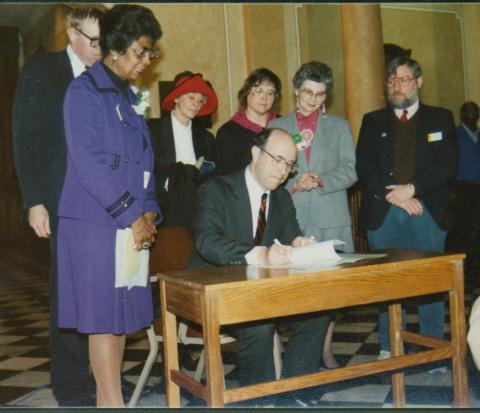
Some of these figures you may already know. Nellie Tayloe Ross became the first female governor in U.S. history. Esther Hobart Morris served as America’s first female justice of the peace. Chief Washakie led his people through one of the most difficult periods in Shoshone history with remarkable skill and dignity. But many of these stories are less familiar, and that’s exactly why we want to tell them. Kenny Sailors, a Wyoming basketball player, popularized the modern jump shot. Liz Byrd broke the color barrier in the state legislature. Elwood Mead designed a water law system so ahead of its time that other western states adopted it as their own.
The project covers six areas of Wyoming life: Exploration, Politics, Education, Arts and Culture, Industry and Business, and Agriculture. Each section gathers profiles written by historians and researchers who know these subjects well—carefully researched and accessible to any reader. They’re honest about the times these people lived in, the genuine achievements alongside the real hardships, the doors that opened and the ones that stayed closed. That full picture, we think, is what makes history worth reading.
Wyoming entered the Union in 1890 as the “Equality State,” a name it earned by being the first government in the world to recognize women’s full citizenship rights, including the right to vote and the right to hold office. But Wyoming’s history, like America’s, is more complicated than any single nickname suggests. These stories reflect that complexity—the pioneering spirit and the contradictions, the progress and the unfinished work. We hope you’ll find the stories as compelling as we do.
New articles will be added throughout 2026. Come back often—there are a lot of remarkable people to meet.