“Little Switzerland:” Star Valley and its Dairies
A long, slender valley lies in western Wyoming along the Idaho border. Four to six miles wide and twenty-one miles long, Star Valley was attractive to settlers for two reasons: It was inaccessible—very difficult to get to—and it was in Wyoming. Those qualities became important to Mormons in neighboring Idaho, members of the Church of Jesus Christ of Latter-day Saints (LDS).
The U.S. first outlawed polygamy in 1862—just five years after the Utah War—and enforcement became stricter with the Edmunds Act (1882) and the Edmunds-Tucker Act (1887). During this time, polygamy was still practiced in the LDS Church, until the church began to change its stance with the 1890 manifesto. Polygamy persisted in the church until a second manifesto was issued in 1904, with enforcement such as ex-communication starting in 1909. Before the church ended practicing polygamy, officials in Idaho began vigorous prosecution, prompting the church to send explorers into the valley as early as 1878 and 1879. They reported positively, and colonization by the church began.
In the early 1880s, however, almost as many people who went to Star Valley promptly left. In some winters, there were only two or three families remaining. But in 1885 the LDS Church aggressively mobilized and reinvigorated the colonization with a call to settlement. At that point, more people moved into the valley. There were only two ways into the valley—over a high mountain pass from the railroad in Montpelier, Idaho or south along the Snake River from Jackson Hole and then up the Salt River through a narrow canyon to the northern end of the flat, fertile valley. Star Valley towns eventually included, from south to north, Smoot, Fairview, Afton, Grover, Auburn, Turnerville, Bedford, Thayne, Freedom and Etna.
Early settlement
Previously the valley had been used by the Mormons as a summer range for church cattle under the management of the Bear Lake (Idaho) Stake. The son of Stake President Budge herded them. In the cash-poor Mormon society, tithing, an important element of participation in the church and community, was often done in the form of cattle, and the church developed substantial herds. Those herds, and other church properties, however, were in jeopardy once the federal Edmunds-Tucker Act became law in 1887. The new law outlawed polygamy and mandated the confiscation of church properties valued at more than $50,000. As a result, as historian Leonard Arrington wrote, “most of the livestock on the church ranches at Star Valley, Wyoming; Oxford, Idaho; and Pipe Springs, Arizona, was sold to Mormon capitalists and semipublic livestock associations.” He also noted, however, that some of the livestock sold was sold “in such a way as to suggest that the ‘sale’ was merely the assignment of a trust.”1
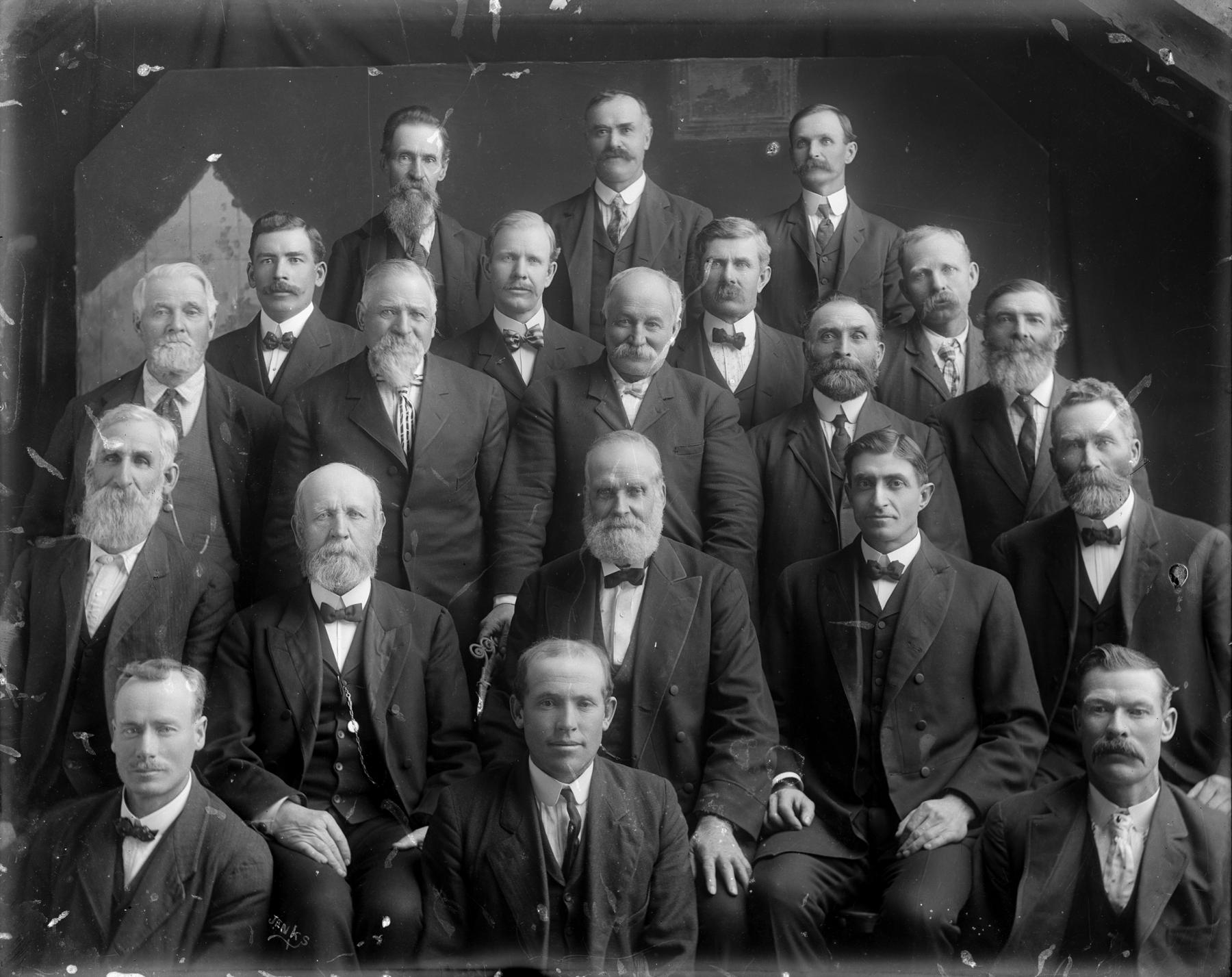
That this was in fact the case is borne out by one statement in the Bedford Ward record book, written by Andrew Jenson of that ward, “As early as the year 1888, that part of Salt River Valley now embraced in the Bedford Ward was used as a herd ground for church cattle.”2 Likewise in Freedom Ward: there the records indicate, “Stock raising was the principle [sic] occupation of these first settlers. And no attempt at farming to any extent until 1885.”3
Towns platted on a grid
As with other Mormon rural villages, the impact of religion on the landscape was substantial in Star Valley with the settlers’ communal emphasis, with their orientation on the church as central location, with their similar architecture, and in one important way that bears on homesteading and stock-raising. The Mormon villages strung along the river were more rural and more agricultural than other villages and towns in Wyoming; in this regard they resembled Mormon towns elsewhere, with a similar layout to that employed elsewhere in the LDS society.
The towns were platted on a grid with city blocks generally containing ten acres each. These large blocks, moreover, were often divided into four lots of two and one-half acre each. There were, in other words, on each city block four miniature farms.4 On their lots the residents had not only their houses but usually also barns, granaries, sheds, gardens, corrals, wells, and other farm-associated structures.
The house itself would be located at the corner so that the intersection of streets would bring the four houses close together—for sociability purposes, the church would often explain, while those outside and critical of the church would suggest the proximity was more for control. In classic nineteenth-century LDS fashion that stressed the well-being of the community over any individual, it appears that they would often draw lots for their location rather than jockey for competitive advantage.
Outside the villages, Andrew Jenson wrote in 1891, “the majority of the settlers still live where they first located in a scattered condition on their ranches and farms.”5 In this, the Star Valley experience seems to have deviated slightly from the pattern that Richard Francaviglia found characteristic of Mormon settlements. Francaviglia, whose studies of the Mormon landscape are essential reading, describes the usual combination of village and field, saying “The open fields, semi-arid mountainous setting, irrigation ditches, and occasional rows of poplars and primitive fences lining fields give the rural landscape an almost biblical quality. Mormon farmers live in town and travel out to their fields during the daytime.”6 It appears that in Star Valley, both patterns can be found. One 1986 observer noted about one of the communities in Star Valley, “Today Bedford is still a collection of meadows and small, scattered farmsteads more than a town.”7
In the rural villages and out on the farms, the buildings tended to be log, similar to those elsewhere. One account describes them as log chinked with split poles and then daubed with mud for sealant. “These cabins were low, dirt roofed, one or two room structures. They were brown color outside and inside until time and material were available for white-washing. Some had rough board floors which was almost a luxury, to say nothing of a rag carpet; but if a ceiling of unbleached muslin could be secured, they were ‘super-deluxe.’ They were frost proof in winter but when spring thaws melted the tall snow caps, it rained in the cabin while the sun shone overhead . . . . These cabins were built on the homesteads previously staked out by the settlers.”8 Even at that, there was a housing shortage, and the daughter-in-law of stake president Osmond recalled of one of his wives (evidently her mother-in-law), “there were very few good houses in the valley and none vacant that were livable, so he moved Amelia and her three young sons into a one-room cabin with a dirt roof . . . In this one room were beds, chairs, table and cook stove and a stand for dishes and some room left to work in.”9
Farms and dairy farms
In many respects, the Star Valley community—and it often considered itself a single community with separate neighborhoods, thanks to church organization, common beliefs, shared circumstances, and communal spirit—was self-sufficient and modestly able to meet its own needs. Stock raising was dominant, although it is not clear how marketable the livestock was and reports are mixed as to the adaptability of beef cattle to the rigorous winter conditions of the area. While farming was successful, though not much more so than the livestock, the farms produced small grains in sufficient quantity that Archibald Gardner was able to establish a mill to grind the grain. His grist mill “provided some flour for the destitute Saints during the severe winter of 1889–90.”10
The first wheat was planted in 1886 and the first potatoes too with Fred Brown planting the potatoes while his wife drove the team. The frost— early and late—jeopardized the vegetable crops and the threat of freezing always hung over them, increasing their awareness of their isolation from outside provisions. And even when all went well, they were essentially growing the same crops and stock as everybody else in the valley and thus were unable to generate cash for purchases of necessary goods from outside the valley. What would work, though, was dairy cattle.
Quite separate from the herds of beef cattle that had previously ranged in the valley during the summers, the settler families brought a few head with them to take care of their own domestic needs. The milk they produced generated a surplus and somehow this surplus was sold as butter and cheese, usually in exchange for other goods available at the Wyoming mining towns to the south—Kemmerer, Evanston, Almy and Rock Springs. Using only household utensils—laundry tubs, hoops and cheese cloth—families made their own butter and cheese and sold it in the slightly burgeoning market. But the system gave way to one in which the cream was gathered to a central point for the making of butter and cheese.
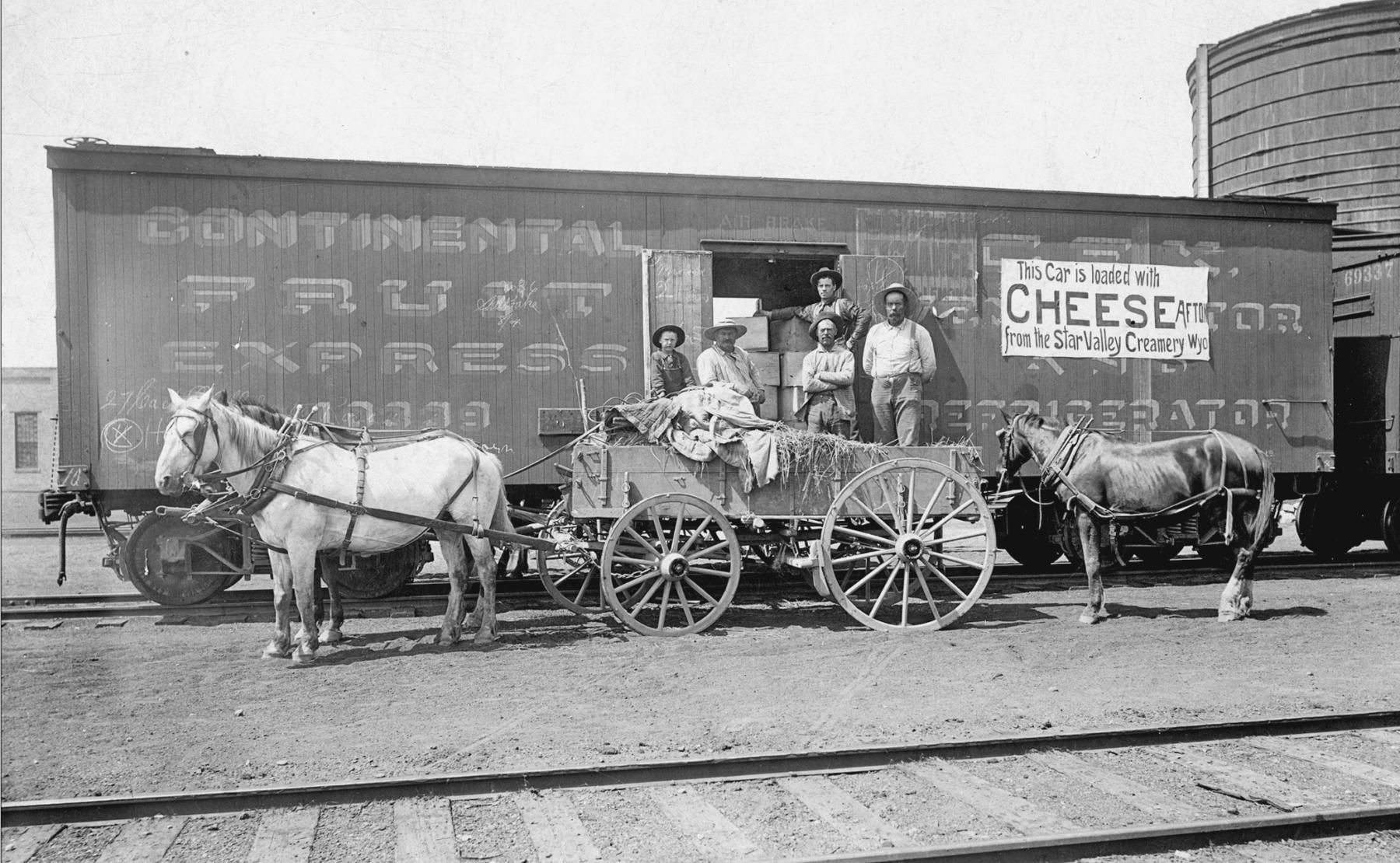
The next step in the process was the establishment of actual dairies whereby the operators milked their own cows and rented cows from others, paying the rent in cheese. As it turned out, butter would not do well as a marketable product because of the distance to be traveled, nor would eggs for the same reason. But the cheese tolerated the travel quite well. By 1900 the farmers focused their resources on this product and creameries emerged in several of the villages, including a cooperative “union creamery” west of Afton. As Ray Hall articulated the impact of the change, “Large herds of dairy cows soon became the mainstay in the economy of this growing district.”11
Mechanization
With the growing dairy business, mechanization, too, came to Star Valley in the early 20th century. Steam tractors caused a sensation when they were introduced to an area and plowed many acres of farmland all over Wyoming. Probably every area had at least one farmer or independent operator who had a steam tractor and used it in the neighboring properties. As one resident recalled, “in 1912 Eugene Weber bought the first tractor to come to the valley. It was a huge steam outfit with power enough to pull six plows at one time and for a few years did much of the plowing in the Etna area. There were no roads or bridges capable of carrying such a heavy load at that time so the company which delivered the tractor shipped it to Soda Springs, Idaho, and brought it down Tin Cup Canyon. Where the roads would not carry the load they would pull into the bottom of the canyon and make a temporary road and ford the streams. This outfit was fired with wood and proved to be so slow and expensive that it was finally used to run a sawmill instead of plowing.”12 But tractors did not became an integral element until innovations in the 1920s made them lighter and cheaper; even then it was not until the 1930s and 1940s that they really replaced the horse.

Meanwhile, the dairy business kept growing in Star Valley, thanks to two developments. One was the technology of separating cream. Traditionally cream had been separated from the milk by allowing it to set overnight, usually in some kind of shallow pan; in the morning the cream would be skimmed off leaving the skim milk. The mechanical cream separators of the 1910s brought some efficiencies to the process and, according to the experts at the University of Wyoming experiment station, the cream separator was “one of the wisest investments a farmer who keeps four or more cows can make.”13 In fact, most of the advantages to the cream separator applied only if the dairy products were being actively marketed. The separator allowed the farmer to keep the skim milk to feed to other animals on the farm, especially the pigs, and retaining that part of the nutrients on the farm where they would ultimately be absorbed back into the soil. The alternative was to send the whole milk off to the creamery where the skim milk would be lost as waste.
The second development involved the expansion of the sugar beet industry. Because alfalfa rotated with beets, the alfalfa needed to be used and it, and the meal it provided, worked well as cattle feed. For that matter, the tops and crowns of the beets themselves also provided excellent forage for dairy cattle.14 Unlike beef cattle which might range distant pastures, the necessity of keeping milk cows close to the barn and house implied a system of feeding. And silage—a mixture of fermented grains—was an important element of their feed. In the 1910s concrete silos began to emerge on the farms of Wyoming, especially where dairy operations were substantial.15
Dairy operations of various sizes, from the small farm with its one or two milk cows, to the larger commercial dairies with rows of stanchions in big dairy barns and with nearby silos, were spread all across the state, and just about every community had some kind of commercial dairy farm nearby. But some areas showed special concentrations.
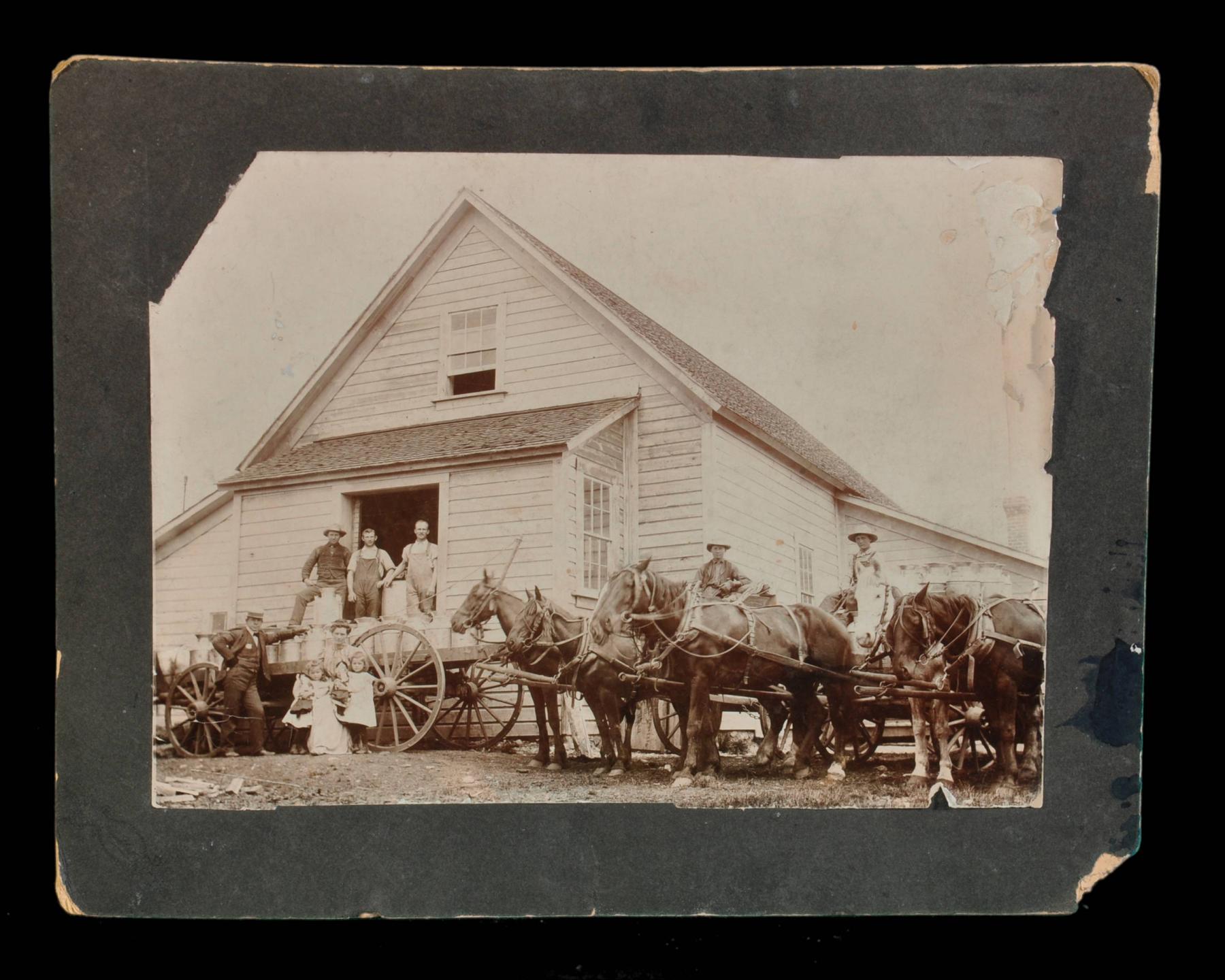
In Star Valley, dairies were well established by the 1910s and creameries emerged at communities throughout the valley. The Thatcher brothers operated a creamery at Thayne and the Burtons ran creameries at Afton, Smoot, Auburn, and Freedom. Jensen creameries were located at Grover, Thayne, Fairview, and Etna.16 The dairy promoters at the University of Wyoming hoped these dairies would expand to the north. In 1911 a letter from California indicated an interest in moving to Jackson’s Hole (as it was then known) and inquired about the possibility of planting crops there. The response of the Farm Bulletin noted that the valley there was “one of the best farming and stock raising parts of the state,” and added, “Just south of the Jackson’s Hole in the Star Valley, is one of the best dairy regions of the state, and there is no reason why the Jackson country should not be just as good for dairying and mixed farming.”17 That would turn out not to be the case, but the fact that the Bulletin held up Star Valley as the dairying success story is telling.
Dominance of the dairy industry
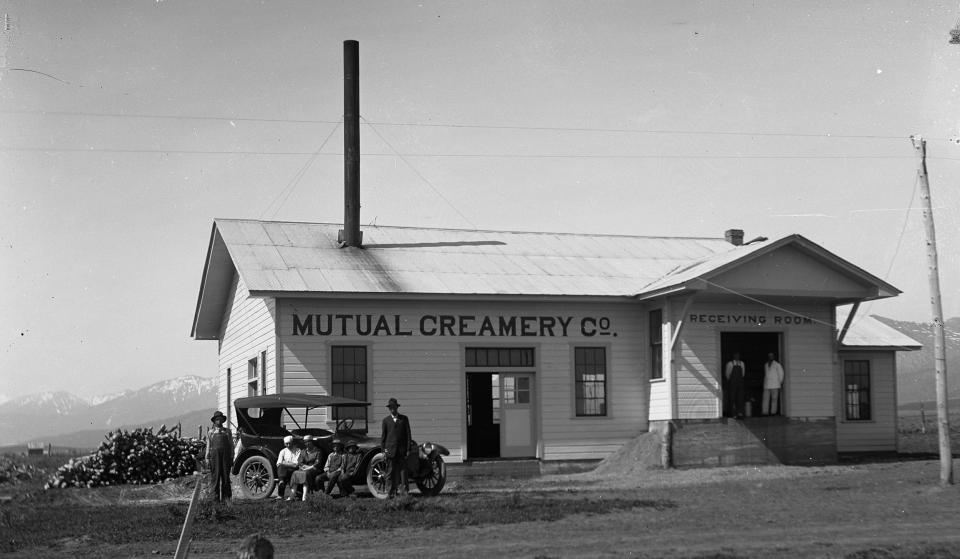
Over time, the dairy operations took on a life of their own quite apart from the beef livestock operations. Star Valley and the Big Horn Basin by the 1920s were known for their dairy cow herds and also for the processing plants that emerged locally to serve them. In the 1920s dairy operations in those two areas grew even more. Dairy cattle increased, and it appears that the number of farms declined while also growing larger, suggesting some consolidation.
The related development in Star Valley was the continued growth and expansion of the dairy industry in the towns. By 1927 nine of the state’s ten cheese factories were located in Star Valley communities. As they grew, so too did the importance of milk production locally. In addition, another dairy center started to emerge in Uinta County, with cheese factories starting in Mountain View and Lyman in the Bridger Valley, also a predominantly Mormon community. Wyoming creameries, on the other hand, were broadly distributed, often in towns and thus closer to the consumption of milk than to its production.18
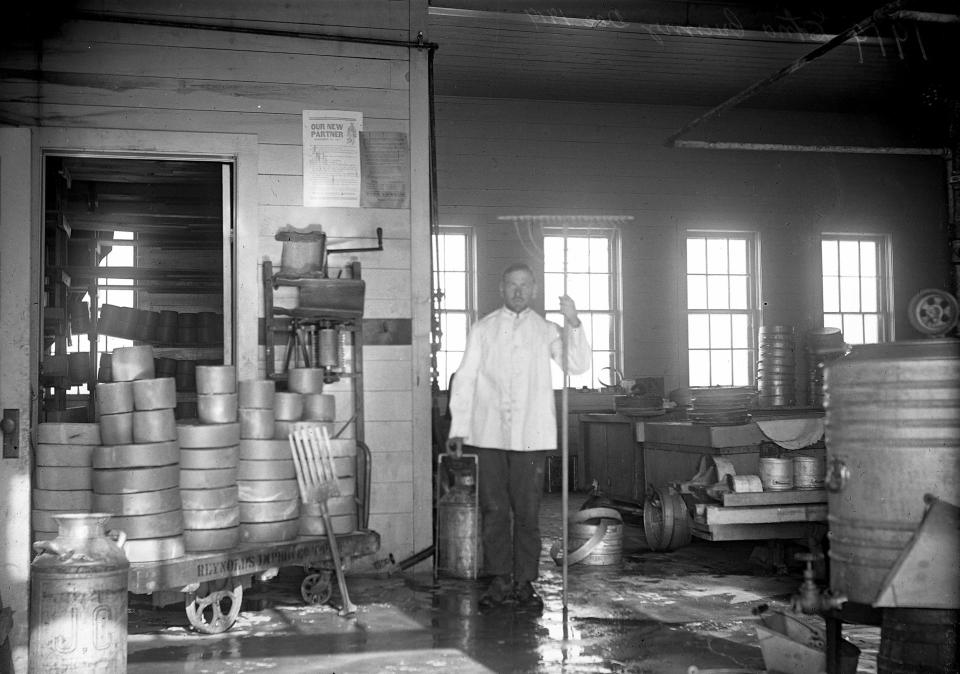
In the 1930s, the Depression in Wyoming was hard on agriculture as it was on everything else. In the second half of that decade, the number of farms increased only in four counties—in Park and Fremont, where new irrigation projects continued to attract settlers, in Sheridan, where hobby ranches and “ranchettes” were starting to catch on as Sheridan became a trendy tourist vacation area, and in northern Lincoln County. There, the many small farms of Star Valley, somewhat protected by relative isolation, appear to have offset declines in other parts of the county.19
For five or six generations the dairy business dominated the valley; it’s been called “Little Switzerland.” But by the beginning of the 21st century, dairying in Star Valley had become economically unsustainable; the cheese factory in Thayne, last in the valley, closed in 2005. As of 2025 only one dairy remains in the valley, a boutique operation offering yogurt and ice cream for tourists. Greco-Roman heavyweight wrestler Rulon Gardner, Olympic gold medalist in 2000, gained his great strength and good nature growing up on a Star Valley dairy farm; Gardners were among the valley’s earliest Mormon settlers.
[Editor’s Note: Special thanks to the author and to the Wyoming State Historic Preservation Office for making this article available and to the Wyoming Cultural Trust Fund for its ongoing support for this project. Michael Cassity’s historical monograph, Wyoming Will Be Your New Home, from which this article is adapted and excerpted, is one of many historic contexts published by the Wyoming State Historic Preservation Office. These documents are meant to offer a broad background against which historic developments can be better understood as the agency works to preserve properties and places important to an understanding of Wyoming’s past. The contexts also, however, are based on sound research and are full of well-told, vivid stories. With this in mind, WyoHistory.org is collaborating with the SHPO office to bring more of this history to a wider readership. The Cultural Trust has provided the funds to make this collaboration possible. We offer our thanks to all.]
Sources
- Arrington, Leonard J. Great Basin Kingdom: An Economic History of the Latter-day Saints, 1830–1900 (Salt Lake City: University of Utah Press, 1958; reprint of the 1958 Harvard University Press edition), 362–364.
- Cassity, Michael. Wyoming Will Be Your New Home: Ranching, Farming and Homesteading in Wyoming, 1860-1960. Cheyenne: Wyoming State Historic Preservation Office, 2011, 43, 101-106, 124, 136, 166, 174, 183, 221, 277.
- “The Cream Separator on the Farm,” Wyoming Farm Bulletin, (July 1911): 12-13.
- Francaviglia, Richard V. The Mormon Landscape: Existence, Creation, and Perception of a Unique Image in the American West (New York: AMS Press, Inc., 1978), 7.
- Hall, Ray M. “A History of the Latter-day Saint Settlement of Star Valley, Wyoming,” M.S. Thesis, Brigham Young University, 1962, 51–52, 73-79.
- Jenson, Andrew. Bedford Ward records in a scrapbook for the Wyoming National Forest which was transcribed in the Federal Writers’ Project Collection at Wyoming State Archives, (hereafter WPA Collections,) subject file 408.
- Jenson, Andrew. Letter on the platting of Freedom, Wyoming, to the Deseret Weekly, January 2, 1891.
- Lindsay, Charles. “The Big Horn Basin.” University Studies of the University of Nebraska, XXVIII-XXIX (1932): 230.
- Star Valley Historical Society history page at http://svhs.us/svhs_v5_home_ page_6_jan_09_044.htm.
- U.S. Department of Commerce, Bureau of the Census, county statistics in Sixteenth Census of the United States: 1940 Agriculture, Volume I, Part 6, 186–191.
- Sandoval, Judith Hancock. Historic Ranches of Wyoming (Casper: Nicolaysen Art Museum and Mountain States Lithographing Company, 1986), 66.
- “Silage and Concrete Silos,” Wyoming Farm Bulletin, I (November 1911).
- “Silos and Silage,” Wyoming Farm Bulletin, I (July 1911): 4–6.
- Wyoming Farm Bulletin, I (January 1911): 101.
- Wyoming State Department of Agriculture (in conjunction with U.S. Department of Agriculture, Bureau of Agriculture and Economics), Wyoming Agriculture Statistics, 1927 (Cheyenne, Wyoming: Wyoming State Department of Agriculture, 1927), 73–74.
Illustrations
All the photos are from the thousands available for downloading from the online collections of the Star Valley Historical Society in Afton, Wyo. Used with special thanks.
Author
Michael Cassity, author of seven books, numerous historical articles and government studies, and a retired history professor is also a past president of the Wyoming Historical Society. He worked as a history professor at the University of Missouri – Columbia, the University of Kansas and the University of Georgia. At the University of Wyoming he was associate professor and then professor and exercised administrative responsibilities as assistant dean and coordinator in the School of Extended Studies and Public Service.
The Wyoming Council for the Humanities presented him its 1993 Wyoming Humanities Award for fostering the public humanities in Wyoming. The State Historical Society of Wyoming recognized his efforts to preserve an important feature on the Oregon – California Trail (Red Buttes, west of Casper) with the L. C. Bishop Award.
His work in historic preservation has resulted in the successful nomination of more than thirty-five individual historic resources to the National Register of Historic Places, the designation of a National Historical Landmark (Murie Ranch Historic District), the documentation of a Historic American Engineering Record coal mine resource, and the preparation of surveys of historical resources in a variety of communities, counties, and states as well as preparing statewide Historic Context statements focusing on (1) Wyoming homesteading, ranching, and farming; (2) Depression-era work relief projects in Wyoming; and (3) U.S. Route 66 from Chicago to California. He has spoken widely to academic and public audiences, often using his photography as well as historical analysis.
See his photography, much of it related to his historical research, at www.michaelcassity.com.
Footnotes
- Leonard J. Arrington, Great Basin Kingdom: An Economic History of the Latter-day Saints, 1830–1900 (Salt Lake City: University of Utah Press, 1958; reprint of the 1958 Harvard University Press edition), 362–364.
- Jenson’s work was then placed in a scrapbook for the Wyoming National Forest which was transcribed in the Federal Writers’ Project Collection at Wyoming State Archives, (hereafter WPA Collections,) subject file 408.
- Wyoming National Forest scrapbook transcription in WPA Collections, subject file 408.
- See the letter to the Deseret Weekly, January 2, 1891, from Andrew Jenson in which he spelled out the platting of Freedom, Wyoming: “It is surveyed into blocks of ten acres each, with streets six rods wide, which cross each other at right angles. Each block contains four lots.”
- Jenson letter to Deseret Weekly, January 2, 1891.
- Richard V. Francaviglia, The Mormon Landscape: Existence, Creation, and Perception of a Unique Image in the American West (New York: AMS Press, Inc., 1978), 7. An example of precisely this pattern can be found at Mormon Row in Jackson Hole, where houses were located in a cluster from which the farmers would travel to their fields.
- Judith Hancock Sandoval, Historic Ranches of Wyoming (Casper: Nicolaysen Art Museum and Mountain States Lithographing Company, 1986), 66.
- Maud C. Burton is quoted by Ray M. Hall, “A History of the Latter-day Saint Settlement of Star Valley, Wyoming,” M.S. Thesis, Brigham Young University, 1962, 51–52.
- Quoted in Ray M. Hall, “A History of the Latter-day Saint Settlement of Star Valley, Wyoming.” M.S. Thesis, Brigham Young University, 52.
- Hall, “A History of the Latter-day Saint Settlement of Star Valley, Wyoming,” 73.
- [1]Hall, “A History of the Latter-day Saint Settlement of Star Valley, Wyoming,” 74–79.
- Hilda C. White quoted by Ray Hall in “A History of the Latter-day Saint Settle- ment of Star Valley, Wyoming,” 128.
- “The Cream Separator on the Farm,” Wyoming Farm Bulletin, (July 1911): 12-13.
- See in particular, Lindsay, “The Big Horn Basin,” 230.
- A.D.F., “Silage and Concrete Silos,” Wyoming Farm Bulletin, I (November 1911): 69–72; “Silos and Silage,” Wyoming Farm Bulletin, I (July 1911): 4–6.
- Hall, “A History of the Latter-day Saint Settlement of Star Valley, Wyoming,” 78.
- Wyoming Farm Bulletin, I (January 1911): 101.
- See especially the data on dairies in Wyoming State Department of Agriculture (in conjunction with U.S. Department of Agriculture, Bureau of Agriculture and Economics), Wyoming Agriculture Statistics, 1927 (Cheyenne, Wyoming: Wyo- ming State Department of Agriculture, 1927), 73–74. I am grateful to Carl Hallberg of the Wyoming State Archives for providing me this obscure but valuable report listing agricultural production and activity in the state.
- These figures are all drawn from the county statistics provided in U.S. Department of Commerce, Bureau of the Census, Sixteenth Census of the United States: 1940 Agriculture, Volume I, Part 6, 186–191.