Simpson, Wallop, and Cheney: Wyoming’s Front Row to America’s Iran Crisis
By Leslie Waggener
In 1979, Wyoming sent three men to Washington just as the world was about to change. What they witnessed over the next decade—a revolution, a bombing, a hostage crisis, a constitutional scandal—set in motion a chain of events that would end in open war. On February 28, 2026, the United States and Israel launched airstrikes on Iran, targeting military and government sites and killing Supreme Leader Ali Khamenei. Iran responded with missile and drone strikes against Israel, U.S. bases, and U.S. allies across the Middle East, and closed the Strait of Hormuz, disrupting global trade. For many Americans, the conflict feels sudden. It isn’t.
The “Most Powerful Delegation” in Washington
Alan K. Simpson and Malcolm Wallop served together in the United States Senate for eighteen years. Dick Cheney was Wyoming’s lone voice in the House of Representatives for a decade before leaving to become Secretary of Defense. By the mid-1980s the three had become, in Simpson’s own telling, something unusual for a state with fewer people than most American cities.
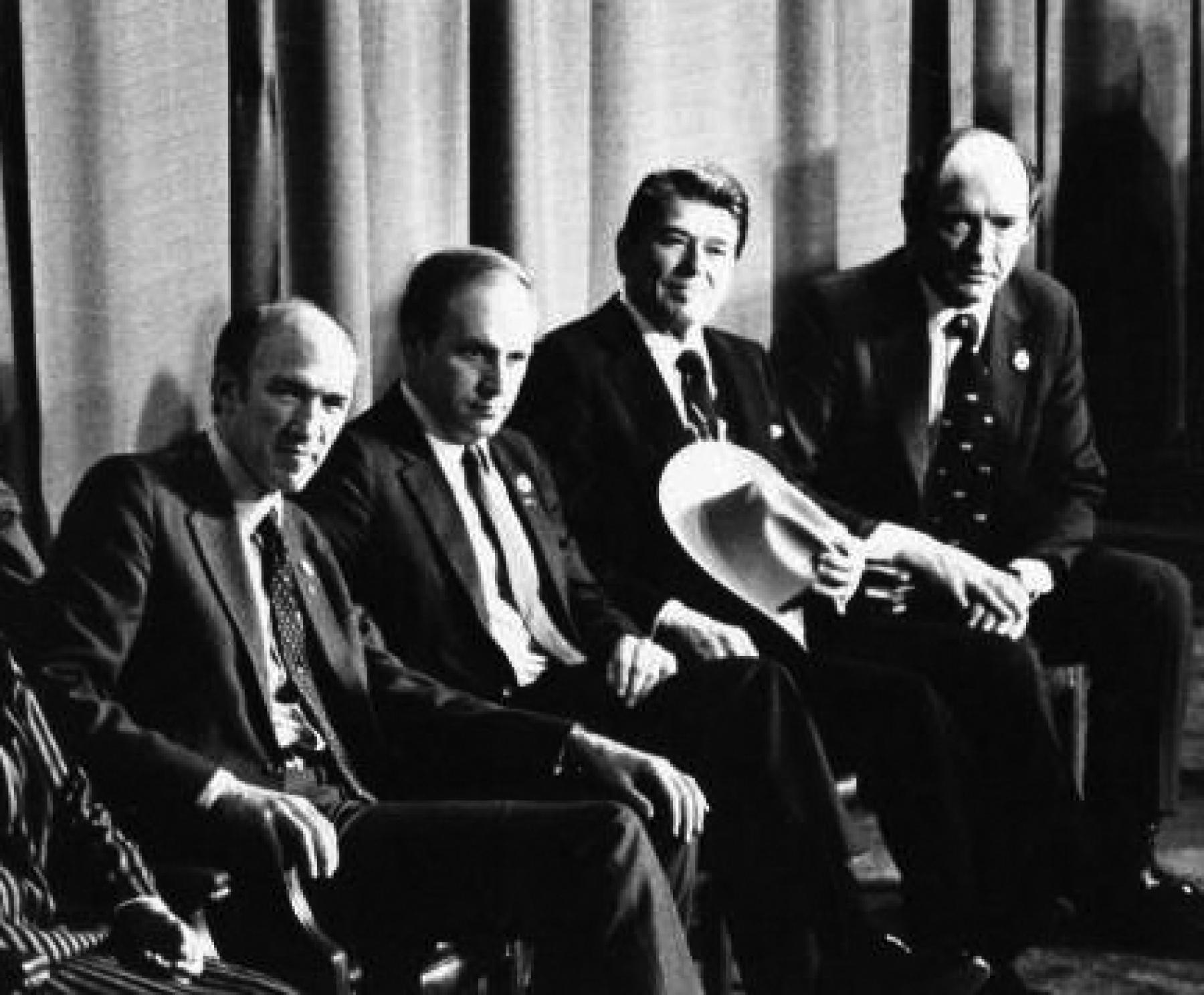
“It was said that was the most powerful delegation pound for pound in Washington," Simpson told the Associated Press in September 2011, “And I’m sure we didn’t let it go to our heads.”
Simpson was a 6-foot-7 Cody lawyer, state legislator—son of a Wyoming governor and senator—with a gift for profanity, storytelling, and getting things done across the aisle. He became Senate Republican Whip in 1985, the second-highest position in Senate Republican leadership.
Wallop was something rarer in Wyoming politics: a Yale-educated rancher from a Big Horn family with English aristocratic roots, who nonetheless spoke the language of the range and became the Senate’s most uncompromising voice on national security. He was the first elected official to call for missile defense, which Reagan adopted in 1983, and became one of the most articulate and aggressive promoters of Reagan’s hawkish foreign policy. Cheney later described him simply as “sort of the spark plug—the senior guy.”
Cheney was the quietest and most methodical of the three, a Casper man who had worked in Washington since the Nixon era before serving in the Ford White House, then won Wyoming’s House seat and rose swiftly in Republican leadership.
Three very different Wyoming men. One very turbulent decade.
In January 1979, Simpson and Cheney joined Wallop in Washington. They arrived in the middle of a revolution already underway—one with roots stretching back to 1953, when a CIA-backed coup had overthrown Iran’s democratically elected prime minister and installed the Shah. Mass protests had been shaking the country since 1978, and on January 16, just thirteen days after they were sworn in, the Shah fled. By February the monarchy had collapsed and Khomeini had taken power. By November of that same year, sixty-six Americans were taken hostage in Tehran. The crisis that would define the Carter presidency—and set the Middle East on a different course—had begun.
Three and a half years later, the crisis came home to Americans in Beirut.
On October 12, 1983, President Reagan signed a resolution authorizing the Marines already deployed to Beirut as peacekeepers to stay for eighteen more months. The Senate passed it 54 to 46. But Lebanon was in the middle of a civil war, and when U.S. naval gunfire supported the Lebanese Army against rival factions weeks earlier, the Marines ceased to be seen as neutral by those factions.
Eleven days later, at 6:22 in the morning Beirut time, a truck bomb demolished their barracks.
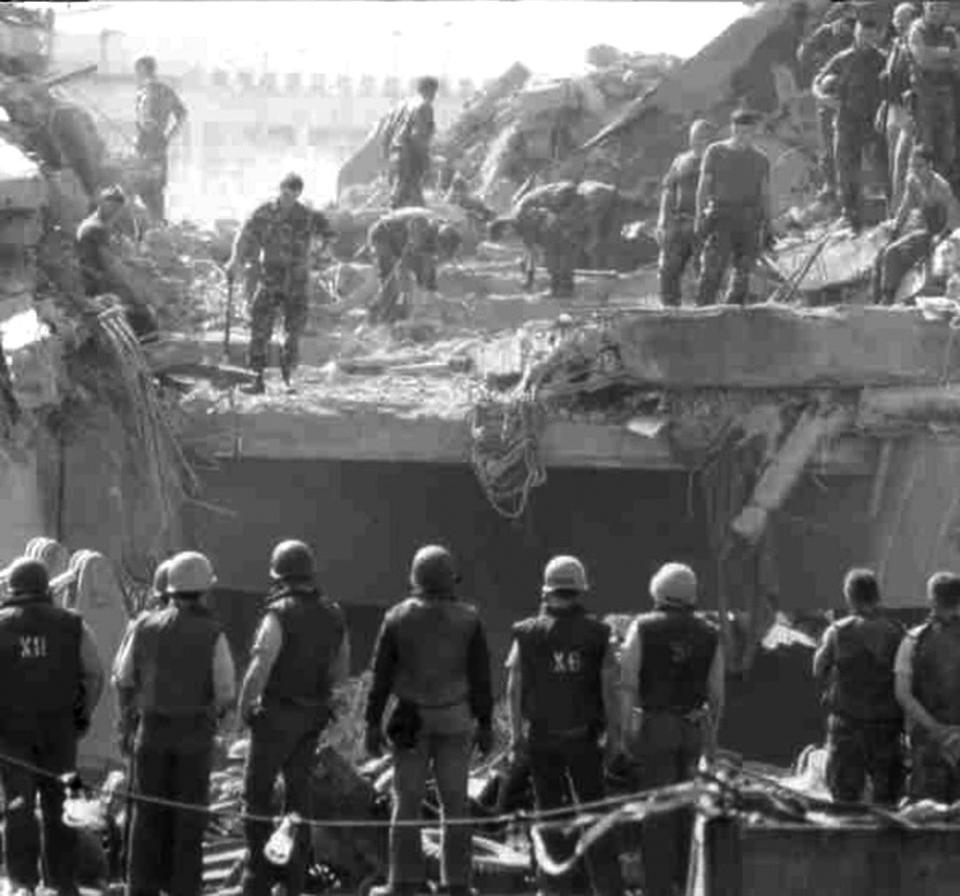
The attack killed 220 marines, 18 sailors, and 3 soldiers—the deadliest single-day toll for the Marine Corps since the Battle of Iwo Jima. A simultaneous bombing killed 58 French paratroopers nearby. A group calling itself Islamic Jihad claimed responsibility—later investigations by U.S. intelligence and a 2003 federal court ruling concluded the attack was carried out by operatives affiliated with what became Hezbollah, acting at Iran’s direction.
Two days after the bombing, Wyoming’s House member was in the room where the next moves were being discussed. General John Vessey briefed a bipartisan group of congressional members including Trent Lott and Dick Cheney in the Cabinet Room. The briefing was the beginning of a months-long reckoning in Washington. Congressional support for keeping the Marines in Beirut eroded steadily, and Reagan ordered the Marines to begin withdrawing in February 1984. Hezbollah had achieved its objective. But it wasn’t finished.
The Line That Didn’t Hold
Washington drew a formal response. The Secretary of State designated Iran a state sponsor of terrorism following the October 1983 bombing, perpetrated by elements that later became Hezbollah. Iran was added to the list on January 19, 1984. Every American president since has governed with that designation in place. It remains in force today.
But the designation didn’t stop Hezbollah from seizing Americans off Beirut streets throughout the mid-1980s. The kidnappings were not random—according to former hostages and investigators, the motive was to deter the United States from retaliating against Hezbollah for the 1983 bombings. CIA station chief William Buckley was kidnapped in March 1984 and later killed. AP correspondent Terry Anderson was taken in 1985 and held for nearly seven years. Iran used the hostages as leverage to extract secret arms sales from the Reagan administration—in defiance of its own stated policy of never negotiating with terrorists. When that arrangement came to light in late 1986, the Iran-Contra affair was born.
Wyoming in the Crossfire
Iran-Contra was not a single event but a web of covert decisions made over several years—secret arms sales to Iran, illegal diversion of funds to Nicaraguan rebels, and a systematic effort to keep Congress in the dark. When it unraveled, the congressional investigation that followed put all three Wyoming officials in uncomfortable positions, and the way each responded says something about who they were.
Simpson was by then the Senate Republican Whip, caught between loyalty to a president he had supported and the constitutional questions the investigation raised. It was precisely the kind of rough terrain his reputation was built on—a Cody lawyer known for straight talk and bipartisan relationships in an increasingly partisan moment. His floor speeches and constituent correspondence from these years are held at the American Heritage Center, a record of how one of the Senate’s most distinctive voices navigated the worst scandal of the Reagan era.
Wallop’s response was shaped by his lifelong conviction that American presidents needed maximum freedom to confront the nation’s enemies. He served on the Select Committee on Intelligence throughout this period, giving him access to the classified dimensions of the covert arms operation that the public televised hearings only partially revealed. His Iran files from 1985 to 1988 are at the AHC. His influence, though less visible in the hearings themselves, ran deeper in the ideological currents shaping how Republicans defended executive power in national security matters—a significance that would outlast the scandal itself.
Cheney’s position placed him at the heart of the investigation as ranking Republican on the House Select Committee investigating the affair. He defended the administration throughout, praising Oliver North, the National Security Council aide at the center of the scandal, as “the most effective and impressive witness certainly this committee has heard.” When the hearings ended, he didn’t sign the bipartisan majority report, which found that senior officials had violated the law and deliberately misled Congress. Instead, Cheney and seven other Republicans issued a minority report arguing there had been no constitutional crisis—just mistakes in judgment.
That report turned out to have a long afterlife. It argued that Congress had overreached by passing laws restricting presidential action in foreign policy, and that the Constitution gave the president the authority to work around those laws in national security matters. When the Bush administration’s controversial wiretapping program came under fire, Cheney told reporters to look up his minority report for a better understanding of his views about the limits of Congress’s ability to regulate executive power. The quiet congressman from Casper had staked out a position on presidential power in 1987 that he would spend the next two decades, as Secretary of Defense and then as Vice President, acting on.
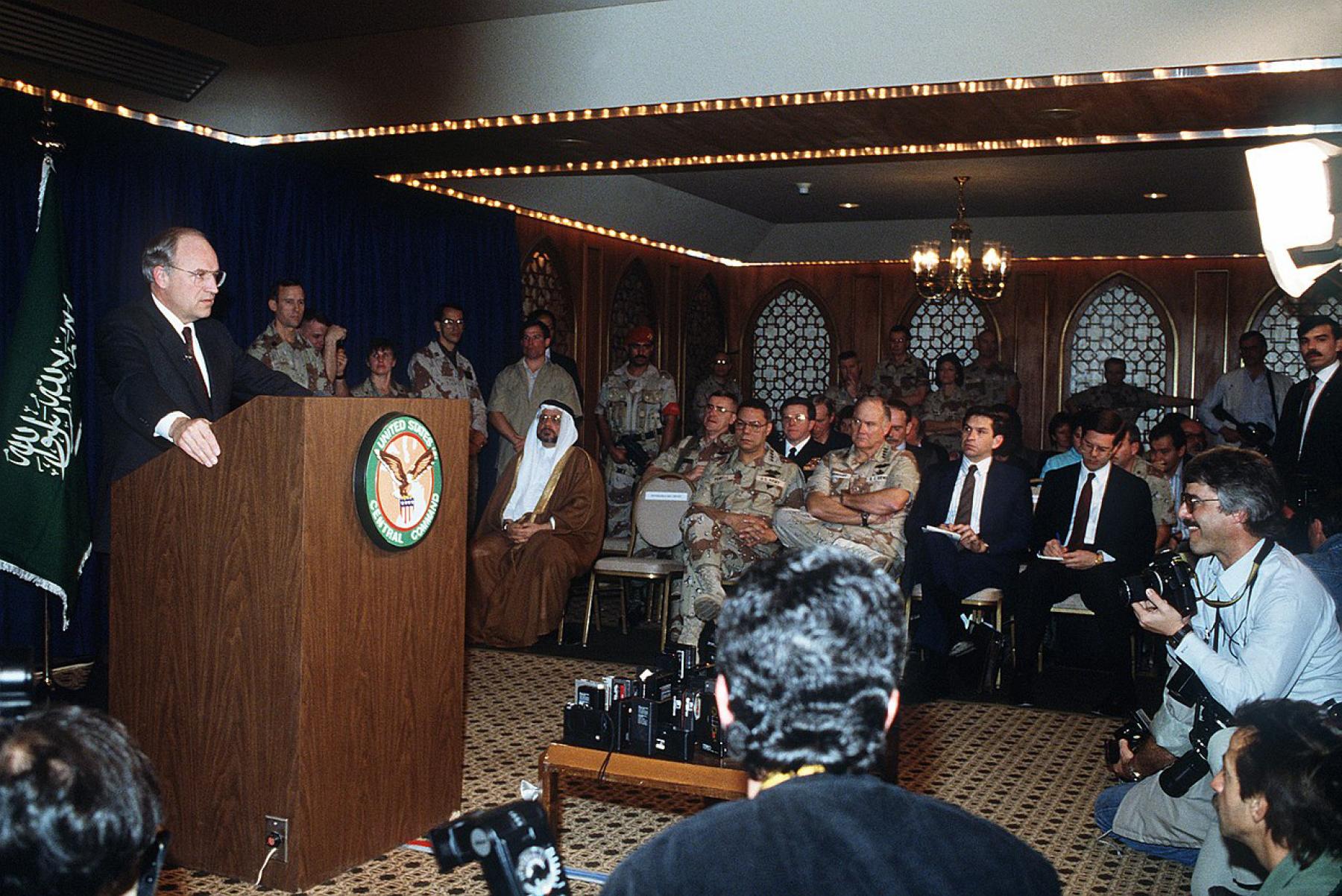
The 1983 bombing left a lasting impression on Cheney. Two decades later, as Vice President, he repeatedly cited the Lebanon withdrawal as evidence that appearing to retreat in the face of terrorism only invited further attacks—a conviction that helped shape the Bush administration’s approach to the War on Terror.
Why It Still Matters
The chain that runs from the 1953 coup to the 1979 revolution, from the 1983 barracks bombing to the hostage crisis, from Iran-Contra to Cheney’s minority report, did not end in the 1980s. The IRGC that helped build Hezbollah in Lebanon’s Beqaa Valley is the same IRGC that American forces are targeting today. Iran has been on the U.S. state sponsor of terrorism list continuously since January 19, 1984—a direct consequence of the 1983 barracks bombing. The crisis Wyoming’s delegation witnessed did not resolve—it metastasized.
None of this started in 2026. For anyone trying to understand how the United States arrived at this moment, the road runs back through the 1980s—and through Wyoming’s own front-row seat to the crisis that never really ended.