Revisiting Buffalo Bill’s Wild West: A Wyoming History Day Journey
By Lilla Beaulier
I didn’t know my Wyoming History Day project would start at a museum I’d already visited, but that’s exactly what happened.
If you’ve never been to the Buffalo Bill Center of the West (BBCW), it’s worth a visit. With five museums displaying Wyoming’s history, art, and biology, there’s something for everyone. My favorite is the Buffalo Bill Museum, which I explored during a visit to Cody, Wyoming. The museum was full of interesting exhibits, including a model of an arena at which the show played, some of the clothing the performers wore, and a film of the performance.
I was still thinking about that grainy footage when I learned of 2025’s History Day theme, “Rights and Responsibilities.” There is a lot of controversy surrounding Buffalo Bill’s Wild West, specifically its stereotypical portrayals of Native Americans and women. I wondered if, as the creator of the show, Buffalo Bill Cody had the right to represent people and events as he wished or if it was his responsibility to give his performers complex characters to portray.
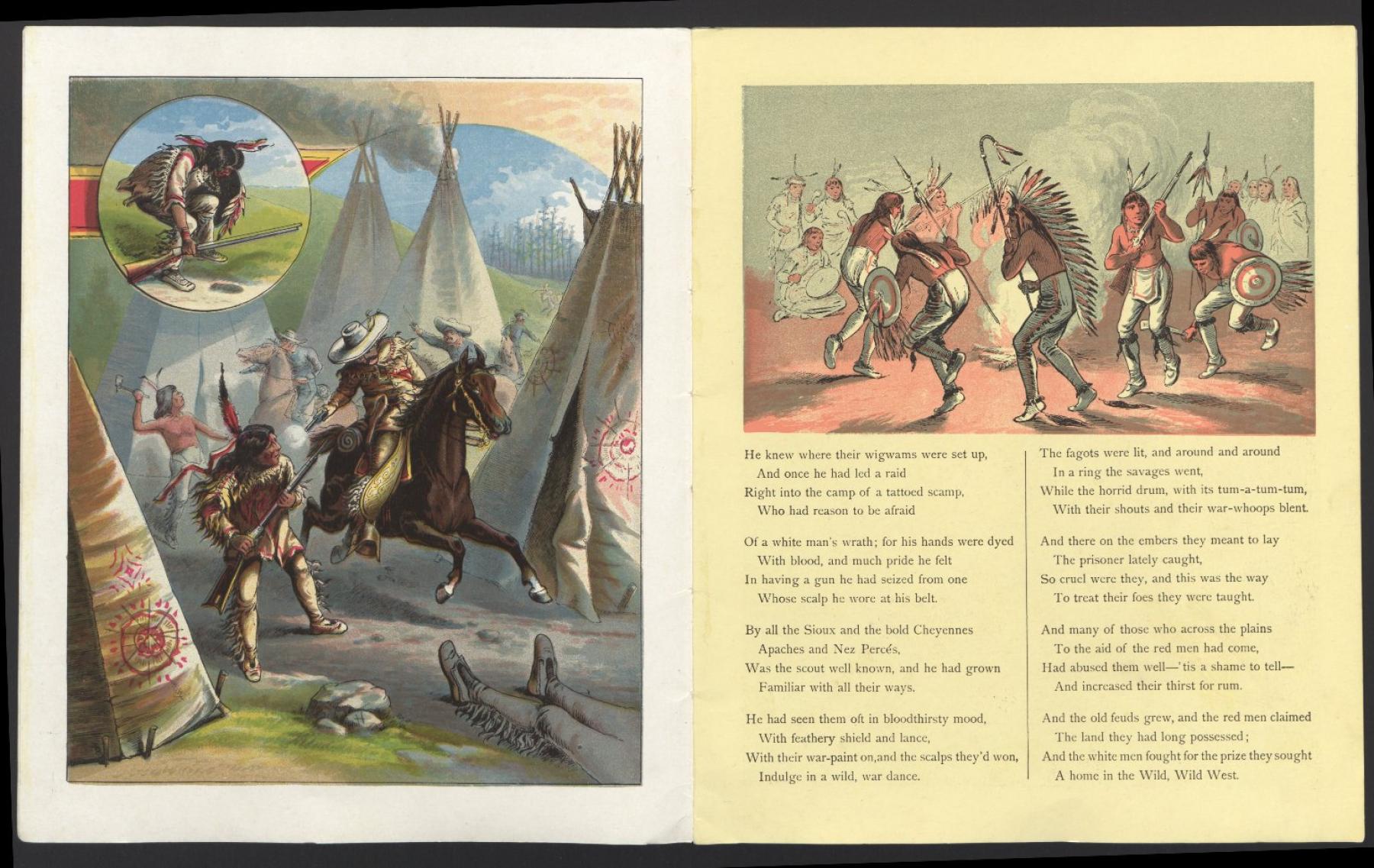
To gather more information, I read several books about Buffalo Bill’s Wild West, including Blood Brothers, which described his relationship with the Native American performer Sitting Bull, and Buffalo Gals, which told the stories of many of the women involved in his show. I also read Cody’s autobiography, which was exciting and full of romantic ideas of the Old West.
I reviewed clips of the show in BBCW’s William F. Cody Archive, including a ten-minute film that featured sharpshooting stunts, horse races, a staged Native American attack on a carriage, and the performers parading into town on horseback. Even though the footage was black and white and silent, I perceived the show’s entertainment value and used the videos to form my own conclusions about the controversies.
Buffalo Bill’s Wild West was a successful show, which capitalized on nostalgia for the Old West after westward expansion was almost over. It presented the last people saw of the frontier and, for some, all they saw. Because of this, it’s had an impact on culture, and its ideas of drama and action can still be seen in today’s media: women swooning over tough cowboys, who still engage in conflicts with Native Americans. Many of these tropes originated in or became popular because of Buffalo Bill’s show.
Even though Cody treated all of his performers well behind the scenes, he portrayed several groups in a negative light, knowing it was what his audience wanted. I think that, while the show provided a great opportunity for the actors involved to travel around the world, and Cody treated them well behind the scenes, he should have been more thoughtful and honest when creating his image of the West. The various groups portrayed should have been shown as composed of diverse and complex individuals, leaving audiences with a story that didn’t cater to harmful stereotypes.
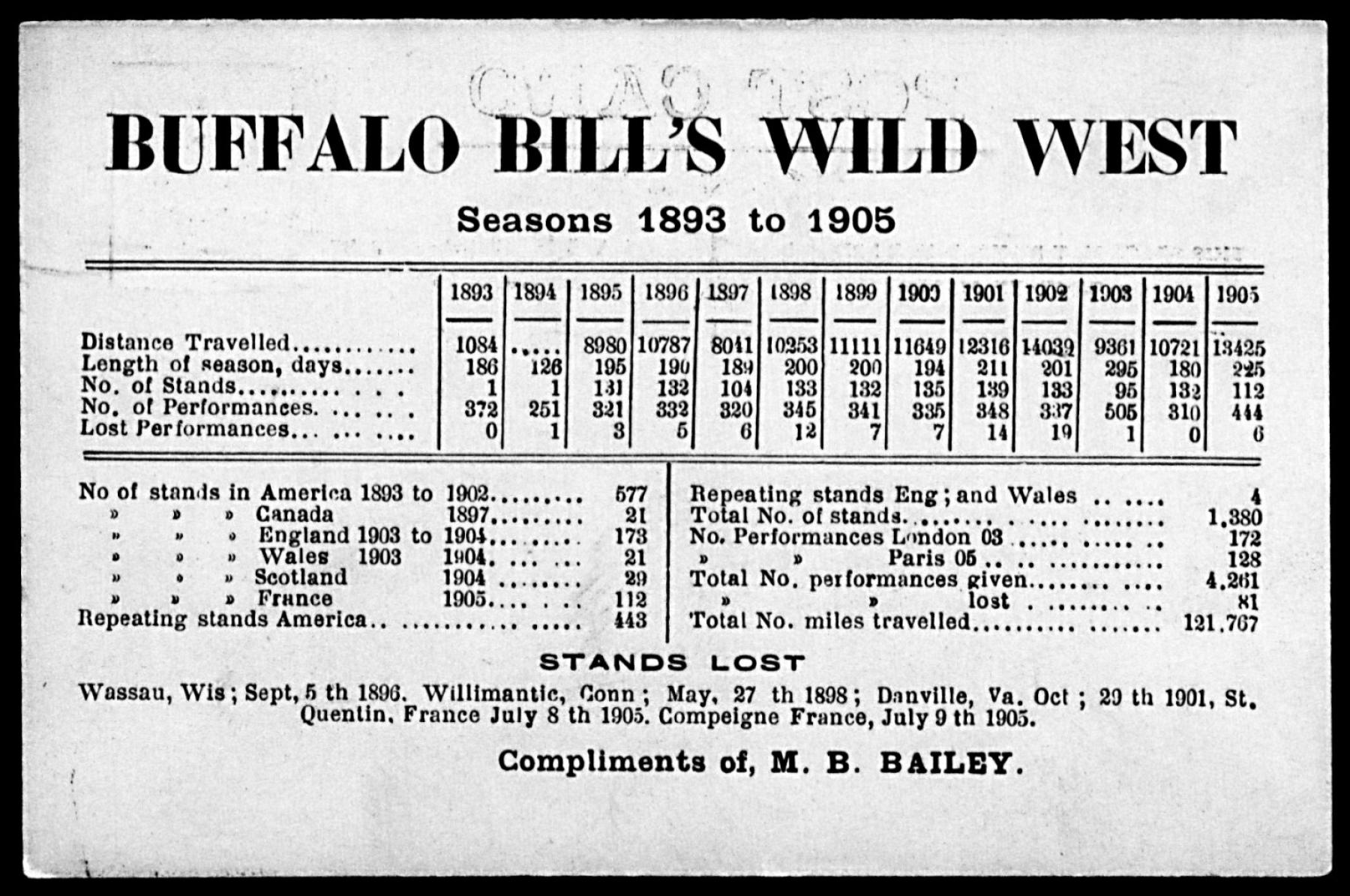
I decided to write and perform a play for my project because Buffalo Bill’s Wild West was a live show. There’s a certain level of excitement that comes from viewing a performance: it’s less predictable, and watching a real person is more engaging than reading a paper. At first, I thought about playing a performer from the show, such as Annie Oakley; however, I quickly realized pretending to be a real person from history meant I’d need to voice their opinions and ideas rather than forming my own.
Instead, I created a character who was an audience member at Buffalo Bill’s show but thinks more like a woman from our time, so I could comment on the show’s controversies. This also allowed me to get on the same level as my audience, starting out as someone who viewed the performance as just a show before thinking more about the issues with it.
With my play, which I called “Ruthless Warriors and Damsels in Distress,” finished, it was time to perform. For regionals, I went to the American Heritage Center and got to show off my play to a trio of judges—and a bunch of other kids. At first, I felt pretty nervous. Having all those eyes on me seemed like more than I’d bargained for. But after the performance, several of the other kids gathered to tell me what a great job I did. It was fun seeing their projects, too, and hearing about their experiences and processes.
Then came the state competition, which was at University of Wyoming’s campus. I met more people, read about and watched more projects, and even grabbed donuts from a breakfast buffet. Performing was more fun this time, since I got to get up on a real stage and speak to an audience of adults. I did well enough that I qualified for Nationals, earning me a trip to Washington, D. C., where I was able to tell a Wyoming story to a broader audience.
Wyoming History Day is a really fun experience, and I can’t wait to do another project next year!