The Mind of an Outlaw: Bill Carlisle’s Reflections on Honor, Crime, and the Changing West
By Leslie Waggener
The facts of Bill Carlisle’s life as Wyoming’s last train robber are well documented—but what drove him to crime? How did he justify his actions? And what did his experiences reveal about the unwritten codes of the American West? Oral history interviews recorded with Carlisle in 1960 provide interesting insights into the mind of an outlaw and the cultural world that shaped him.
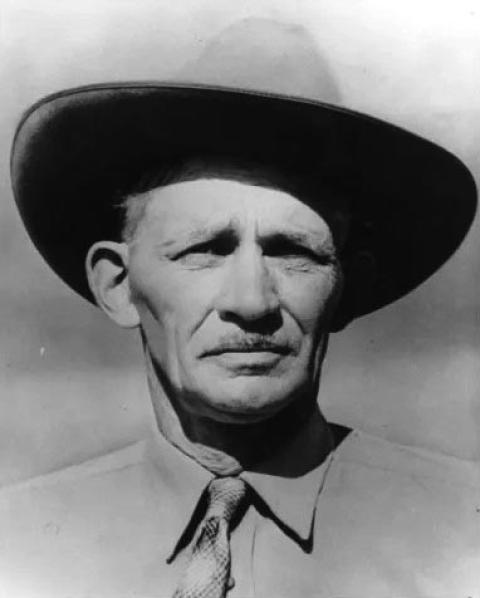
Carlisle was remarkably candid about his criminal psychology. “The question was that I absolutely had no regards for the rights of others nor the respects of the rights of others. See what I mean? I wasn’t brought up that way. I found out while I was a little kid that if I wanted something, the easiest way to get it and the quickest way for me to get it was to take it. Now, it wasn’t that there was anything malicious about it.” His motivations were deceptively simple: “My aim in life was to get all the fun out of life I could. Now, it wasn’t a question, see, of right or wrong.”
His first train robbery demonstrated this impulsive, unplanned approach. Standing at the Green River depot in Wyoming on February 9, 1916, with only a nickel, watching passengers in the observation car “having a good time, you know, chewing the rag and laughing and joking,” he made a spontaneous decision. “Never planned it,” he explained. “I just happened to get down there to the depot that night.”
A Gentleman’s Code in an Outlaw’s World
Despite his crimes, Carlisle operated within strict moral boundaries shaped by the unwritten codes of the rural West. He observed that “the ranch hands as a whole had far more respect for a woman than the ranch owners had.” This respect extended to his own behavior: “A woman could handle me easy among special friends, amongst the men.” His approach to robbery reflected this code. When a woman passenger pleaded with him not to take her ring, he responded: “I told her, I said, ‘I don’t want your ring.’” I said, “‘You haven’t got anything on me.’”
Central to his self-image was restraint regarding violence. “No, in all my holdups, no one was ever shot,” Carlisle emphasized repeatedly. This principle defined how he saw himself—as fundamentally different from violent criminals—and shaped his entire approach to crime.
Western Hospitality and Survival
Carlisle’s survival as a fugitive depended on understanding Western hospitality customs. “Most cowboys were drifters,” he explained. “Well, one of the last things that I’d do when in town, I’d hold out three or four dollars and I’d buy candy and fruit. I’d take it with me, come to some homesteaders, you know, with little kids.” He understood the reciprocity: “In those days, people wouldn’t ask you for the price of a meal. If you stayed there, they’d be glad to have you, glad to talk to you. Well, I’d always leave candy and fruit, you know...Well, people never forget it.”
The tradition of checking weapons at the door helped deflect suspicion: “The first thing you done if you went into a rancher’s house to eat, you hung those guns up or you laid them outside... Man come in, hang his guns up at the back of the stove, well, they’re not going to suspicion anything of you.”
His mobility also aided evasion: “Oh, I could cover forty-five miles a day. In rough country, I’d cover thirty, thirty-five miles easy.” The posses weren’t prepared: “The idea of it was they wasn’t looking for anyone on foot. No one dreamed that they would hold up the train and take off cross country afoot.”
The Theater of Crime
One evening perfectly captures how Carlisle viewed his exploits. At a homesteader’s house, the family unknowingly discussed the reward for his capture. “Things like that are full of humor, you know, and of course I stayed there with them that night, slept there. Of course, I couldn’t keep from laughing. They hadn’t the least idea in the world the man they were talking about was seated right in front of them.”
He even described using technology to his advantage: “When one telephone rang, why, [the ranch hand] over the ranch along the line would pick up the receiver and listen in. We followed the posse that way for two days once. Some rancher would call up and say, ‘Well, the posse was just here looking for Bill Carlisle,’ and here we’d be listening in on it.”
From Impulse to Calculation: The Prison Escape
The contrast between Carlisle’s impulsive first robbery and his meticulously planned escape from the Rawlins penitentiary in 1919 reveals how incarceration changed him. Where he once acted on spontaneous impulse, prison appeared to teach him patience and careful preparation.
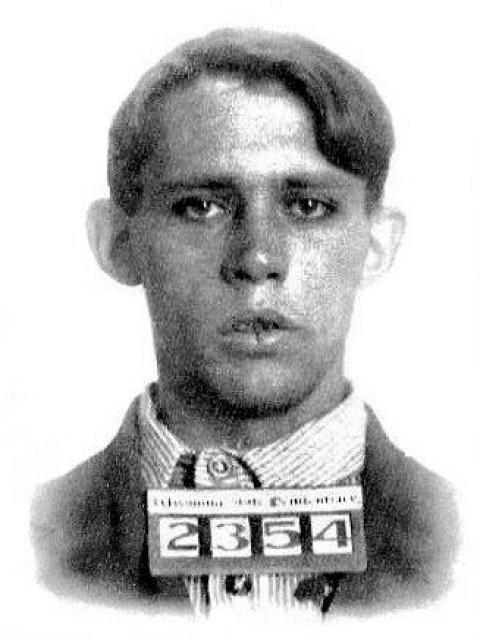
Working in the shirt factory, he recalled a childhood story about a Sing Sing prisoner who escaped in a bookbinding crate. “Well, I remembered that, see.” What followed was elaborate planning that took months. He explained his meticulous approach: “I figured how many shirts could be packed in the bottom of the box, and then I put the cleats in there and then boards, see... I found out that I could just, by doubling myself up, I had space enough to rest in there.”
Even the truck driver had to be carefully “educated” to take boxes without Carlisle being present. After climbing into the box at 3:30 on a Saturday afternoon, the wait proved longer than expected. “When I heard everybody leave, you know, the five o’clock whistle was blowing, I crawled out of the box and went outside.” That night brought snow blindness, but he eventually reached a sheep camp: “That’s where I got a change of clothes and a .25-35 rifle.”
Prison Life and Unlikely Talents
Despite his inventive escape, he was recaptured a little over two weeks later. During his next 16 years in the penitentiary, Carlisle developed unexpected skills. Contemporary accounts note that he became an expert at creating doilies, scarfs, and other fancy needlework—“articles, customarily made by women”—which he would send to friends who had helped him during his fugitive years. This incongruous image of Wyoming’s most notorious train robber delicately crafting lacework speaks to both his adaptability and the long hours of prison life.
Building a New Life in Laramie
After his 1936 release, Carlisle rebuilt his life in Laramie. Following health challenges, he explained: “I realized if I was going to regain my health, I’d have to get out in the open.” His prescription, characteristically practical, was weeks of outdoor work at a ranch killing gophers. He then “came here [Laramie] in September of that year and went to work for Oscar Hammond...in the University Filling Station.”
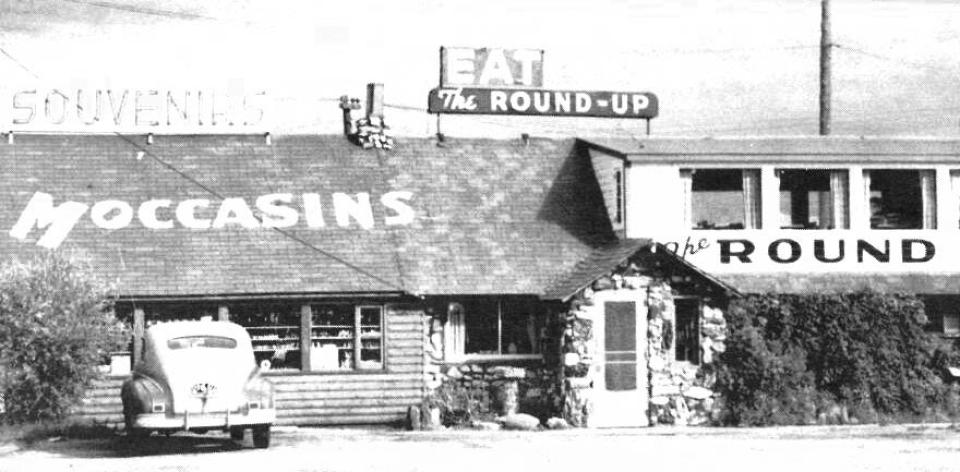
Later, he and his wife took over the Roundup Motel. “I owned that and operated [it] for 19 years,” he said, adding proudly: “We never wrote a bill here that we didn't pay in that 19 years.”
Reflection and Redemption
By 1960, Carlisle reflected on pivotal moments with clarity. Speaking of time he spent early on in Ashland, Montana: “Because there’s a look back on it, I can see perfectly well aware that I have my choice right there...the turning point in my life. I had the choice of going one way or the other.”
These oral histories with Bill Carlisle depict someone who represented the final chapter of frontier outlawry, a man whose transformation from impulsive train robber to calculating prison escapee to respected Laramie businessman demonstrates both the changing nature of the American West and the possibilities for redemption it offered.
The oral history interviews with Bill Carlisle are held in the collections of the American Heritage Center, University of Wyoming, in Laramie.