Looking for "Mormon Charlie"
By Leslie Waggener
In February 1912, someone stole a pig from a Chinese gardener’s pen on the bank of the Bear River in Evanston, killed it right outside his door, and left without a trace. The local paper ran the story as a small item among wedding announcements and railroad schedules, gone by the next edition. The gardener, known around town as “Mormon Charlie,” would live in that same spot by the river for another twenty-seven years.
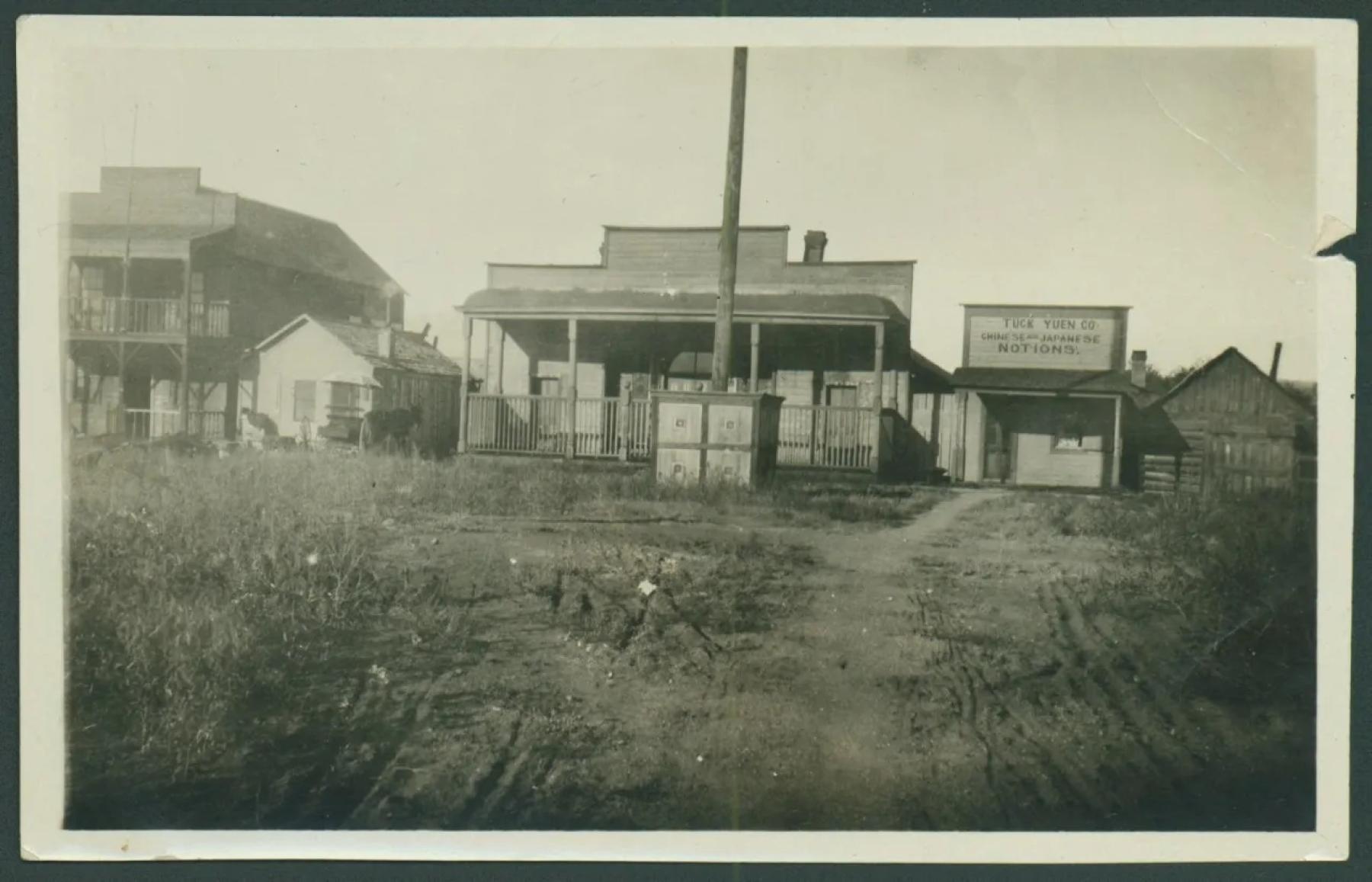
Evanston had its own Chinatown then, a cluster of homes and small businesses across the tracks from downtown, anchored by a Joss House built by subscription in 1874. The Chinese population in town was shrinking in numbers by 1912. Charlie was one of the last holdouts.
Even his name resists a single spelling. His 1939 obituaries, printed within a day of each other in the Casper Tribune-Herald and the Sheridan Press, call him Lock Chang Choong. Other places he’s listed as Lock Long Choong. His own death certificate filed nine days after he died by his son, Joe Lock, spells it differently still: Lock Chong Choong. Nobody bothered to settle it while he was alive, and there’s no settling it now.
What he did for a living depends on who you ask, too. Locals mostly remembered him as a gardener, carrying vegetables around town in two baskets slung from a shoulder pole, sometimes giving neighborhood kids a ride in one of them. His own obituaries say he managed a gift shop for years, but his death certificate lists his occupation flatly as gardening, specifically vegetable gardening, about as official an answer as this story gets. That same certificate settles another question: he was born on February 14, 1862. As for the nickname, some said it came from his fondness for children and general good nature; others said it was simply because he’s assimilated so well with the town’s Mormon families. Both explanations could be true at once.
Sometime in the late 1920s, by most accounts, he married Ah Yuen, the Chinese woman Evanston knew as “China Mary,” already an elderly town character in her own right, known for charging tourists a dime to pose for her picture. He was, depending on which newspaper profile you believe, either her third or her fourth husband. When Ah Yuen died in January 1939, her official Wyoming death certificate listed her as widowed. When Charlie died, his own certificate listed him as married, to a woman named Woo See, who would have been 75 if she was still living. It’s possible Woo See was a wife from earlier in his life, in China or elsewhere, whom he never formally divorced while he lived with Ah Yuen in Evanston.
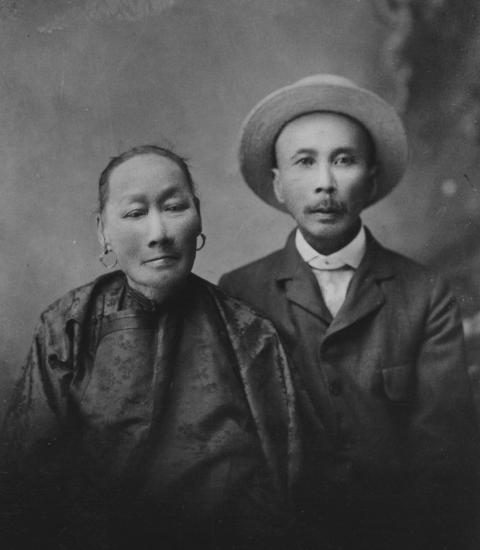
Charlie outlived Ah Yuen by nine months, though nobody would have bet on it at the time. Days after her funeral, he was found lying beside the railroad tracks in the sun, and the town feared he’d had a stroke. Evanston’s Wyoming Press guessed instead that he’d simply been resting and wondered in print whether he’d been trying to get as close as he could to the woman he’d just lost. Whatever it was, it wasn’t fatal. He died at home on October 12, 1939. His obituary called him “the last of the old Chinese residents of Evanston.”
There’s no way now to sort out which of his names was the real one, or which of the two women in his life he was actually married to. What’s left is a man who kept a garden by the river for decades, outlasted his own Chinatown, gave neighborhood kids rides in his vegetable baskets, and, according to at least one newspaper, spent his last months wondering where his wife had gone.