Contexts of Wyoming History
By Gwendolyn Kristy
Most historians, archaeologists, and others will argue that there is an indisputable connection between the past, present, and future. As former Wyoming Governor Dave Freudenthal recognized in 2004, “Our past is the foundation on which the future is built” (Wolf 2016).
Over the coming months, WyoHistory.org will be publishing “historic contexts.” So, what are they?
Historic contexts are resources that detail the known historical or archaeological background that allow us to make connections between the past and present while also allowing us to plan for the future. Historic contexts are used to understand the relative importance of historic or archaeological properties.
Put another way: before historians and preservationists can decide if an old barn or archaeological site is truly significant, they need to understand the broader historical pattern—what was typical, what was rare, and what role these places played in Wyoming’s history. That’s what a historic context provides.
Historic contexts are organized around important historic or archaeological themes and are delineated by time and place and can be incredibly varied in terms of topics. For example, in 2011, the Wyoming State Historic Preservation Office (SHPO) published the historic context by Michael Cassity, Wyoming Will Be Your New Home: Ranching, Farming, and Homesteading in Wyoming, 1860-1960.
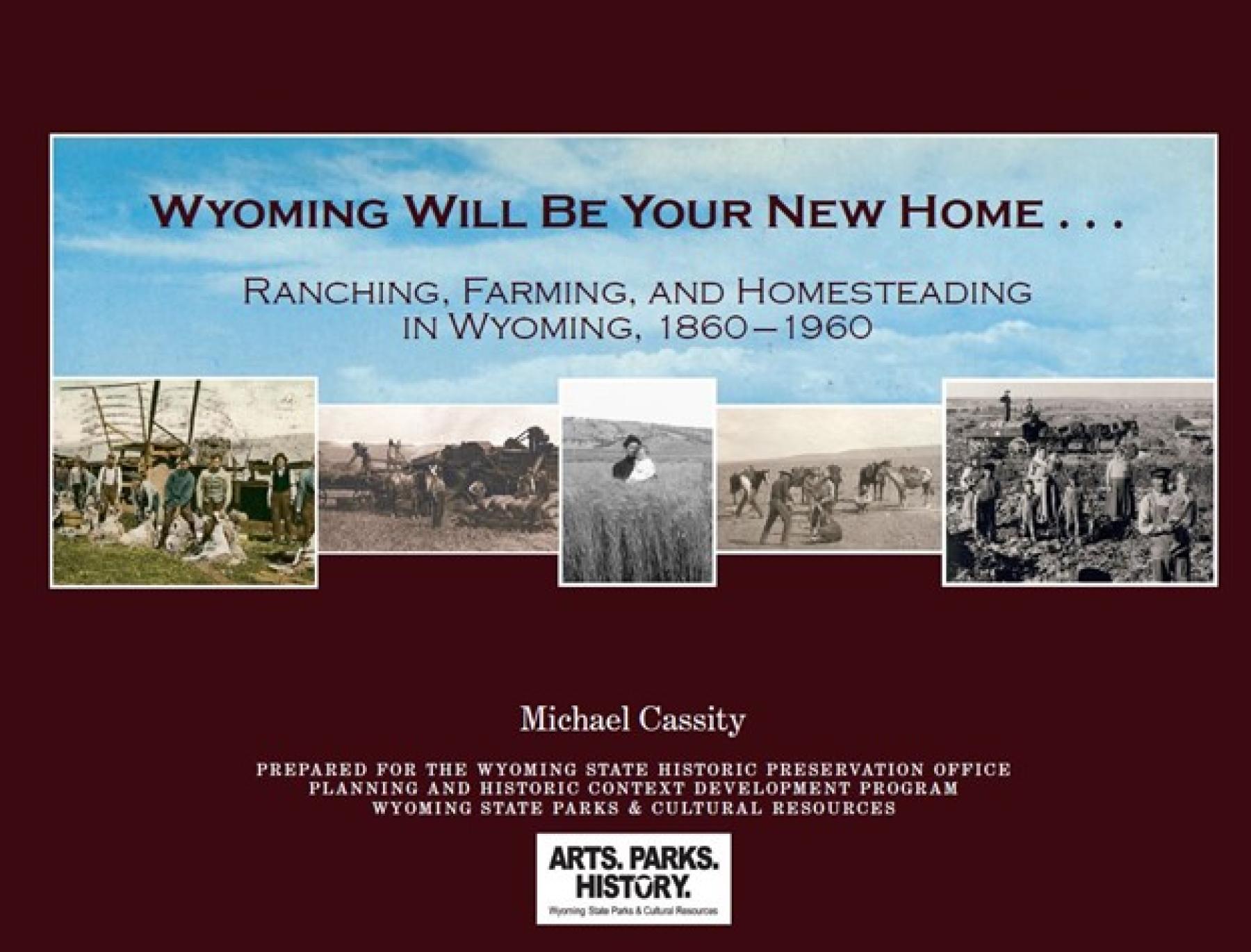
This historic context summarizes all known archaeological and historical information regarding ranching, farming, and homesteading (theme) in Wyoming (place) between 1860 and 1960 (time). Historic contexts can be developed at various resolutions: they can be national in scope, regional, state-level, or local.
Themes encompassed by an historic context can be wide ranging or incredibly specific. Examples include major events such as the development of transcontinental travel or the settlement of an entire geographic region, or the topic covered can be much more specific. For example, in 2019, several researchers published the context Dinwoody Tradition Rock Art in Central and Western Wyoming, Early Archaic Period through Present (Bovee, et al. 2019). This context is very specific geographically and temporally.
Historic contexts are developed within the framework of the National Park Service’s National Register for Historic Places. In order to effectively determine whether or not an archaeological site, historic site, historic building, structure, object, or district is worthy of being placed on the National Register, one must fully understand the site’s importance within its geographical area, historic theme, and relevant time frame. In this way, sites, etcetera, from the same time and place can be compared to determine whether or not they are significant and therefore worthy of preservation. Only when a site is placed within its larger historic context can one determine the unique or pivotal role it may have played at the community, state or national level. If you would like to learn more about the NPS’s framework for evaluating significance, check out their website!
Historic contexts are important because they establish what we currently know about a subject as well as identify what we do not know. There are many stakeholders who benefit from the development of historic contexts: communities, industry, researchers, consultants, and federal and state agencies. Often, developing a context is the first step in any preservation planning effort. They can help a community, historian, archaeologist, or governmental organization make decisions about what is worth preserving and can aid in setting priorities for how to achieve preservation.
Many State Historic Preservation Offices have robust historic context programs, and Wyoming is certainly one of them. The Wyoming SHPO’s most recently published historic context, Paleoindian Heartland: An Archaeological Synthesis of Wyoming’s First Peoples recently became available on the website in its final formatted version. This context, written by Dr. Brigid Grund, offers a comprehensive overview of Wyoming’s archaeology during the Paleoindian period, which spans approximately 13,000 to 8,000 years ago in the High Plains region.
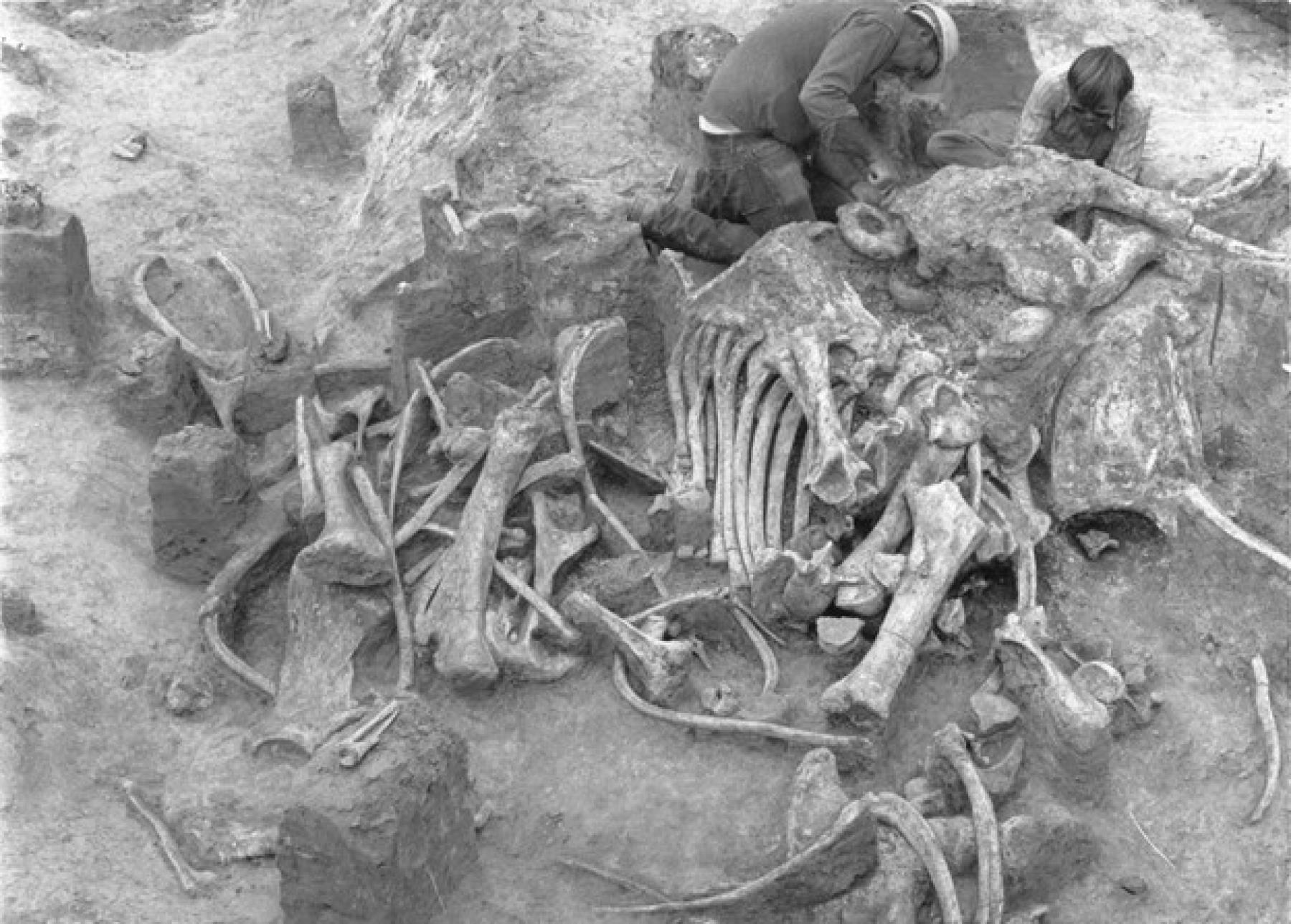
The general public may not be aware of the historic contexts that are available to them through the Wyoming SHPO as well as other SHPO’s around the country. To that end, WyoHistory.org has received a grant from the Wyoming Cultural Trust Fund to utilize information in these contexts to prepare articles that will help draw attention to the SHPO contexts through WyoHistory.org’s large and accessible online platform. As their website is intended to be an encyclopedia of Wyoming history, articles focusing on specific subject matter from the SHPO’s historic contexts will help fill in gaps in topics that are missing from this repository of information.
If you are interested in learning more about the Wyoming SHPO’s historic context development program, contact Gwendolyn Kristy, chief of SHPO’s Planning & Historic Context Development program, at gwendolyn.kristy@wyo.gov. You can also learn more about the program on the Wyoming State Historic Preservation’s Historic Context webpage.
Sources
Wolf, Judy K., ed. Historic Preservation in the Cowboy State: Wyoming’s Comprehensive Statewide Historic Preservation Plan 2016–2026. Cheyenne: Wyoming State Historic Preservation Office, Department of State Parks and Cultural Resources, 2016. https://wyoleg.gov/InterimCommittee/2016/SFR-0818APPENDIX11.pdf.
Bovée, Marit, Julie Francis, Michael Bies, and Linnea Sundstrom. Dinwoody Tradition Rock Art. Multiple Property Documentation Form. National Park Service, July 2019. https://wyoshpo.wyo.gov/index.php/programs/planning-historic-contexts.