Come On In, The Water’s Warm: Saratoga’s Hobo Hot Springs
By Justin Horn, Saratoga Museum Director
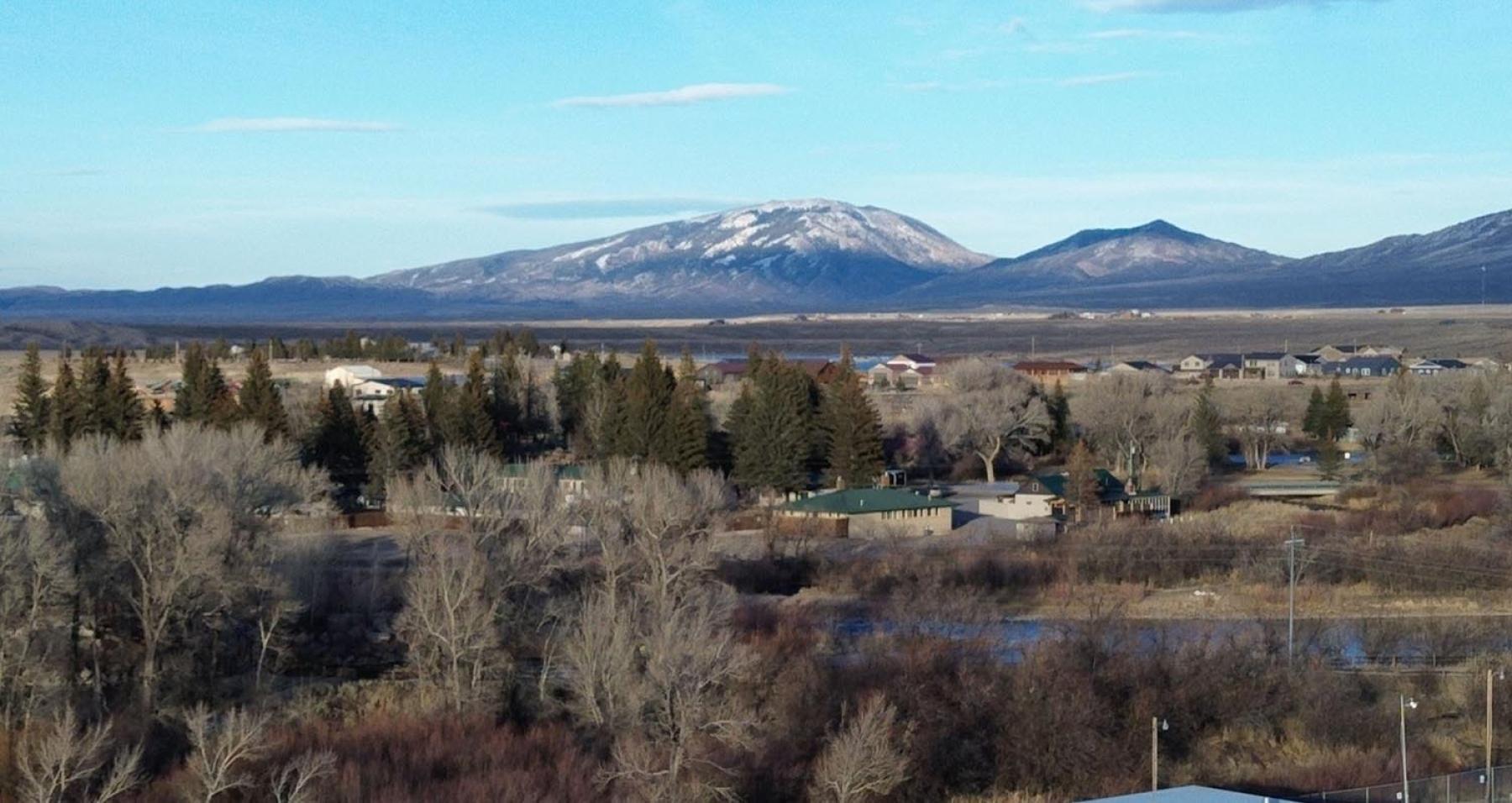
Move to Saratoga, Wyoming and the first question locals ask is, “Do you fish?” Saratoga bills itself as the town “Where the Fish Leap in Main Street,” so trout fishing is a seeming requirement for residency. The next question they will ask is, “Have you been to the hot springs yet?”
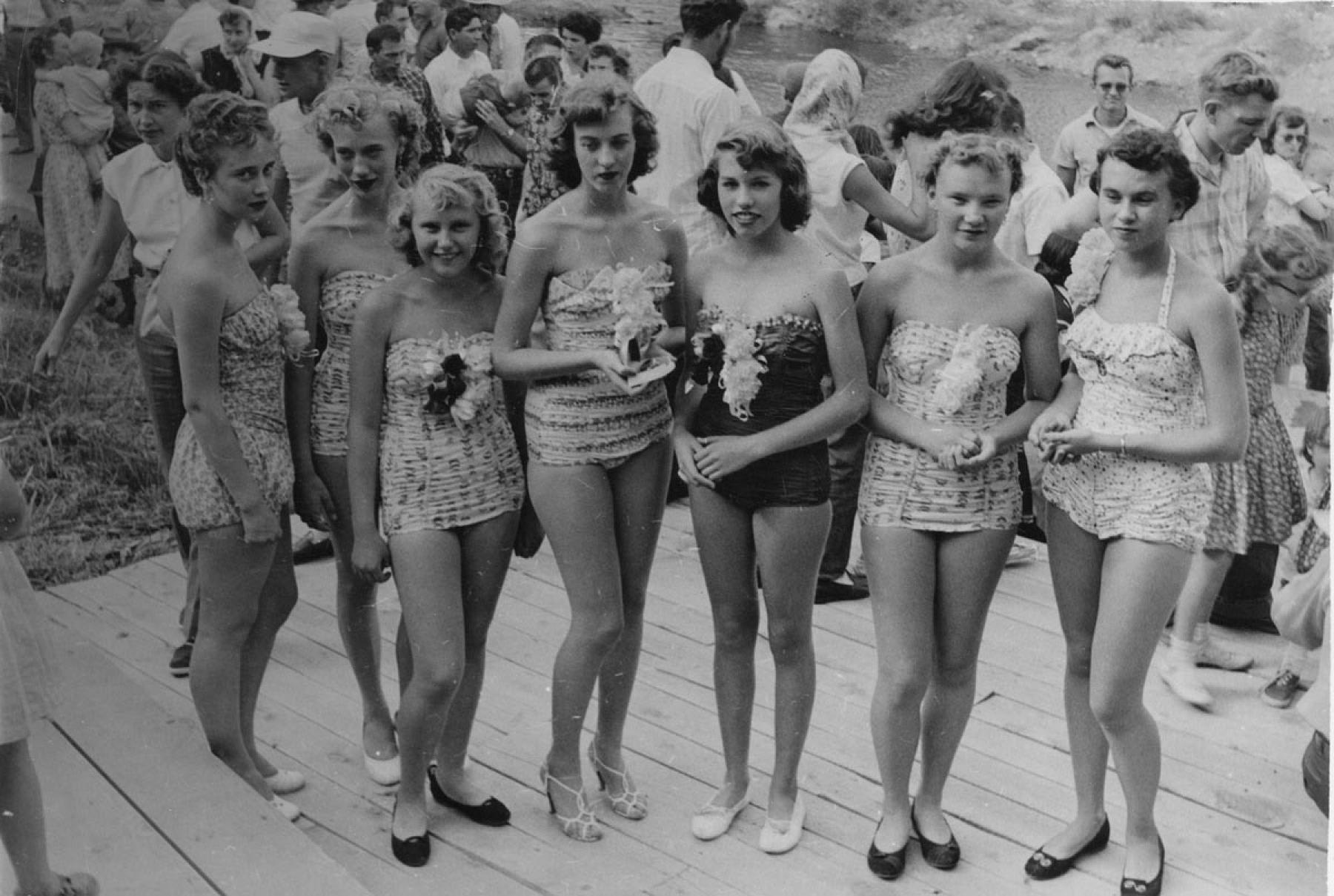
The area around what is now Saratoga was long known for its hot springs. Local lore says the Native American inhabitants of the region considered the area around the hot springs “neutral territory.” Ute, Arapaho, Lakota, and Cheyenne used the hot springs for their medicinal benefits and their “good medicine.” In 1873-74, a disease epidemic—likely smallpox or possibly cholera—wreaked havoc on Native peoples, and the medicine of the hot springs could not stop the disease. Likewise, the medicine of the hot springs could not stop the march of time, and in the second half of the nineteenth century, Anglo-Americans began inhabiting the Upper North Platte River Valley.
To accommodate soldiers from nearby Fort Steele, William Cadwell—a Civil War veteran from Elmira, New York, and a former hunter for the Overland Stage Company—built a cottonwood log structure and a bathhouse near the springs on the east side of the Platte. A post office was established in October 1878, and the settlement was named Warm Springs, Wyoming Territory.
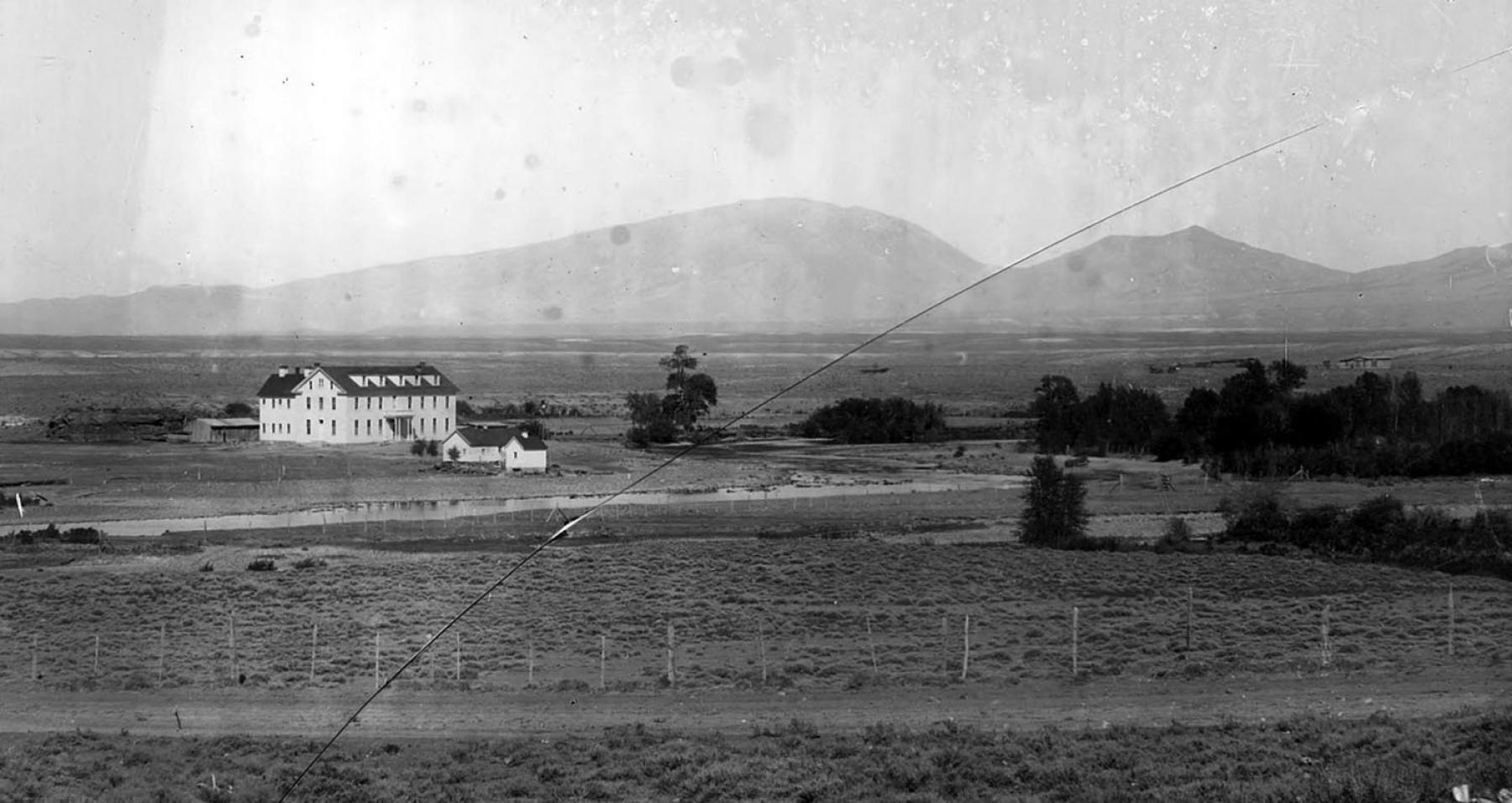
The natural flow of the hot springs in the valley was limited, leading many to wonder if a resort centered around the springs was economically viable. However, having had some success with his cottonwood structure, Cadwell was willing to give it a go. In 1884, for the cost of $24,000 ($800,000 in 2026) he constructed the Hot Springs Hotel. A multi-story structure, the hotel welcomed visitors with a lavish grand hall and a black walnut staircase. The main floor housed the parlor, barber shop, office, billiard room, dining room, and kitchen. Bedrooms upstairs could accommodate 50 guests. An adjoining bathhouse, livery stable, and barn completed the facility.
Word spread of the “Pearl on the Platte,” and “Wyoming’s Great New Health Resort.” To further boost tourism, the settlement changed its name from Warm Springs to Saratoga. They hoped potential visitors would link Saratoga, Wyoming, with the resort town Saratoga Springs, New York.
Regrettably, the Hot Springs Hotel burned to the ground in April 1902. The cause was never determined, though an overheated stove in one of the bathhouses was suspected. In the wake of the blaze, Saratoga residents established a fire brigade in hopes of preventing similar disasters. The proprietors of the Hot Springs Hotel announced plans to rebuild the resort; however, the grand hotel was never rebuilt. Instead, a much smaller bathhouse and guest cottages replaced it near the riverbank.
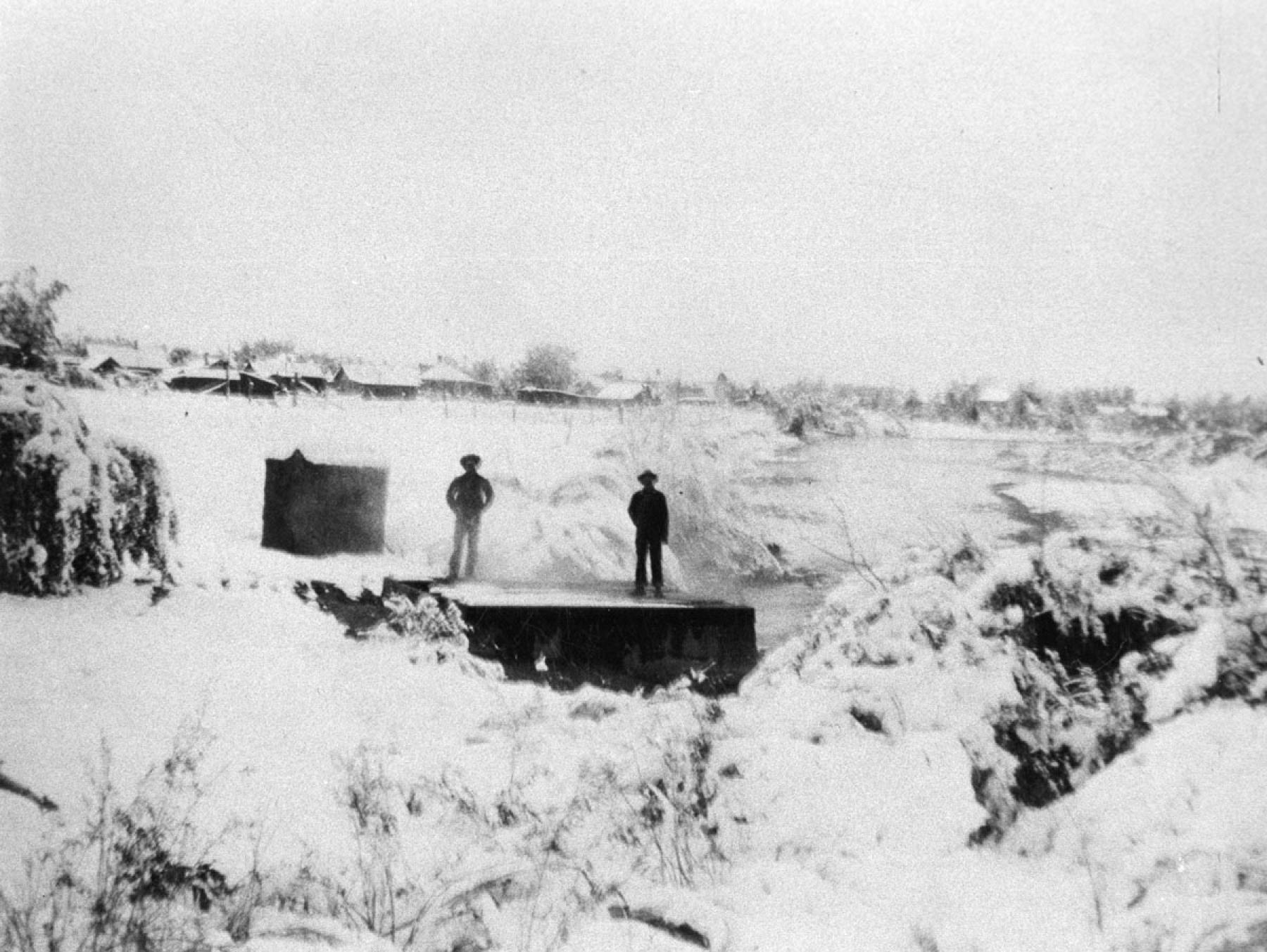
The State of Wyoming purchased 440 acres of land along the North Platte River, including the hot springs area, in 1921. In 1927, Wyoming State Engineer John A. Whiting inspected the site. He found the springs had little flow but saw their potential. Whiting recommended the state turn the east side of the river into a state park. The state had S. S. Sharp of the Civil Engineering Office design a park with bathhouses. Sharp collaborated with Wyoming State Geologist John G. Marzel and together they agreed better drainage of the springs was needed.
In June 1929, work on the east side springs began. The Saratoga Sun recorded the progress that summer:
June 5: “Excavation revealed an estimated 200,000 gallons of hot water per day flowing from the spring.”
June 20: “When three feet of heavy mud was excavated, a gusher appeared. Water doubled to half million gallons per day; its temperature was 113 degrees.”
July 11: “The problem now is a great oversupply of water making concrete work difficult. The spring water has increased to one million gallons a day.”
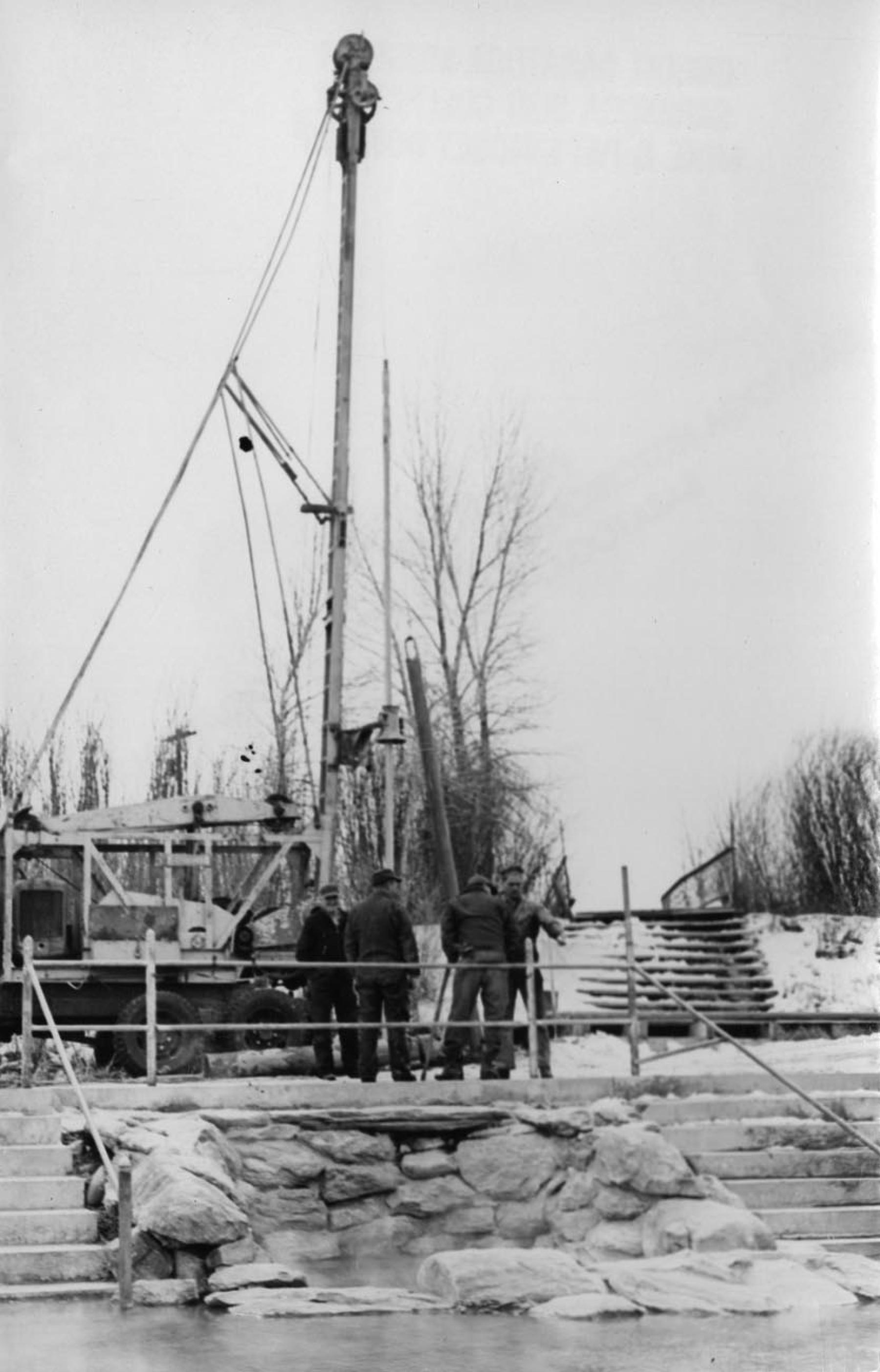
A large pump driven by a Ford tractor could not keep up with the flow, and workers attempted to divert the flow to the North Platte. After consulting with a Denver architect, workmen dynamited the springs! This successfully reduced the flow of the springs and workers were able to cap several of the east side springs regulating the flow to a manageable level. Now with a regulated flow, the State of Wyoming could operate Saratoga State Park as a resort for tourism.
Development on the west side of the Platte took longer. In 1917, the North Platte burst its banks. The flooding cleared away vegetation on the west side of the river revealing a previously unknown hot spring. While flooding revealed the springs, little was done with these west-side springs initially. The State of Wyoming owned the area, but their focus was on improvement to springs on the east side.
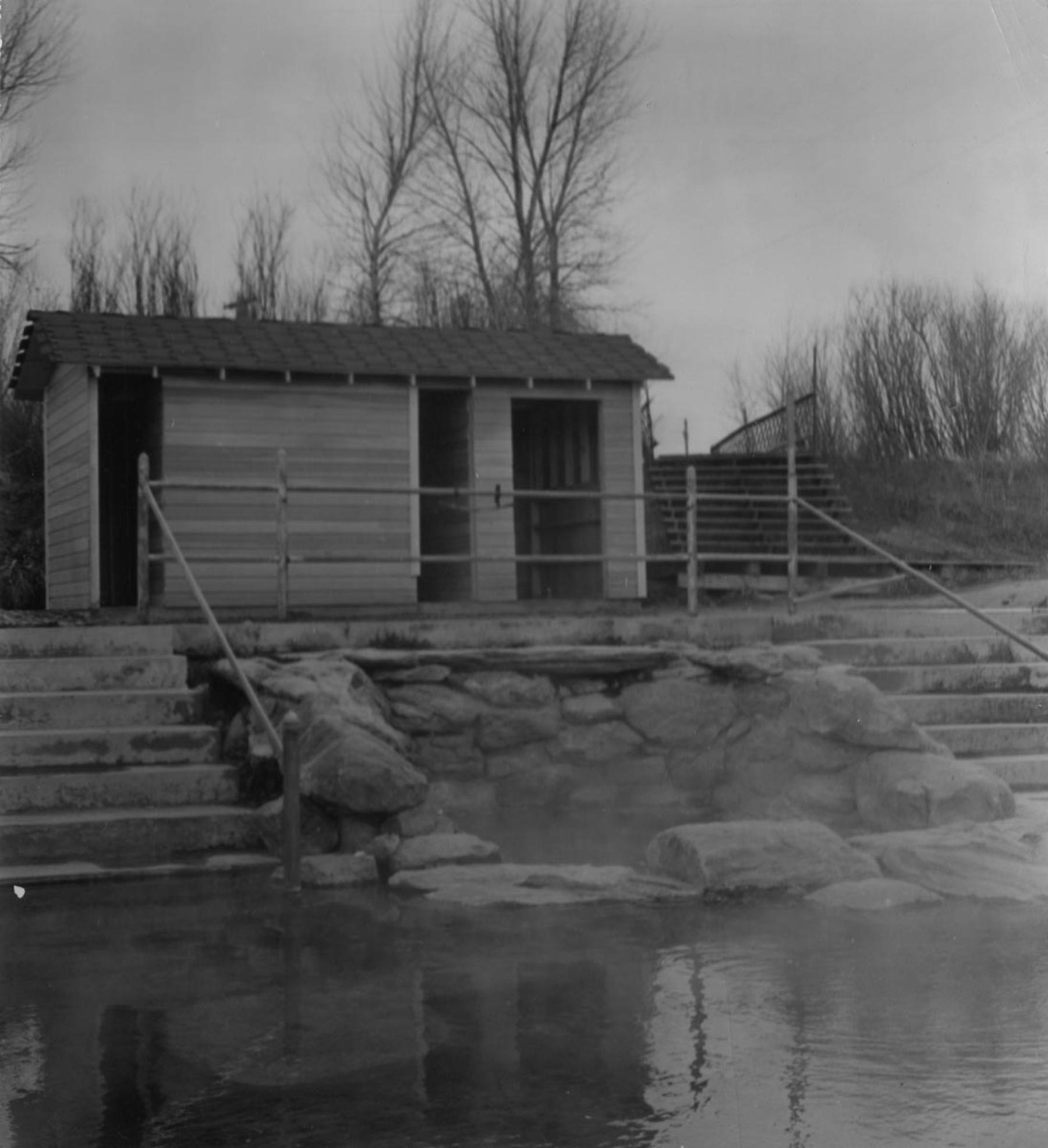
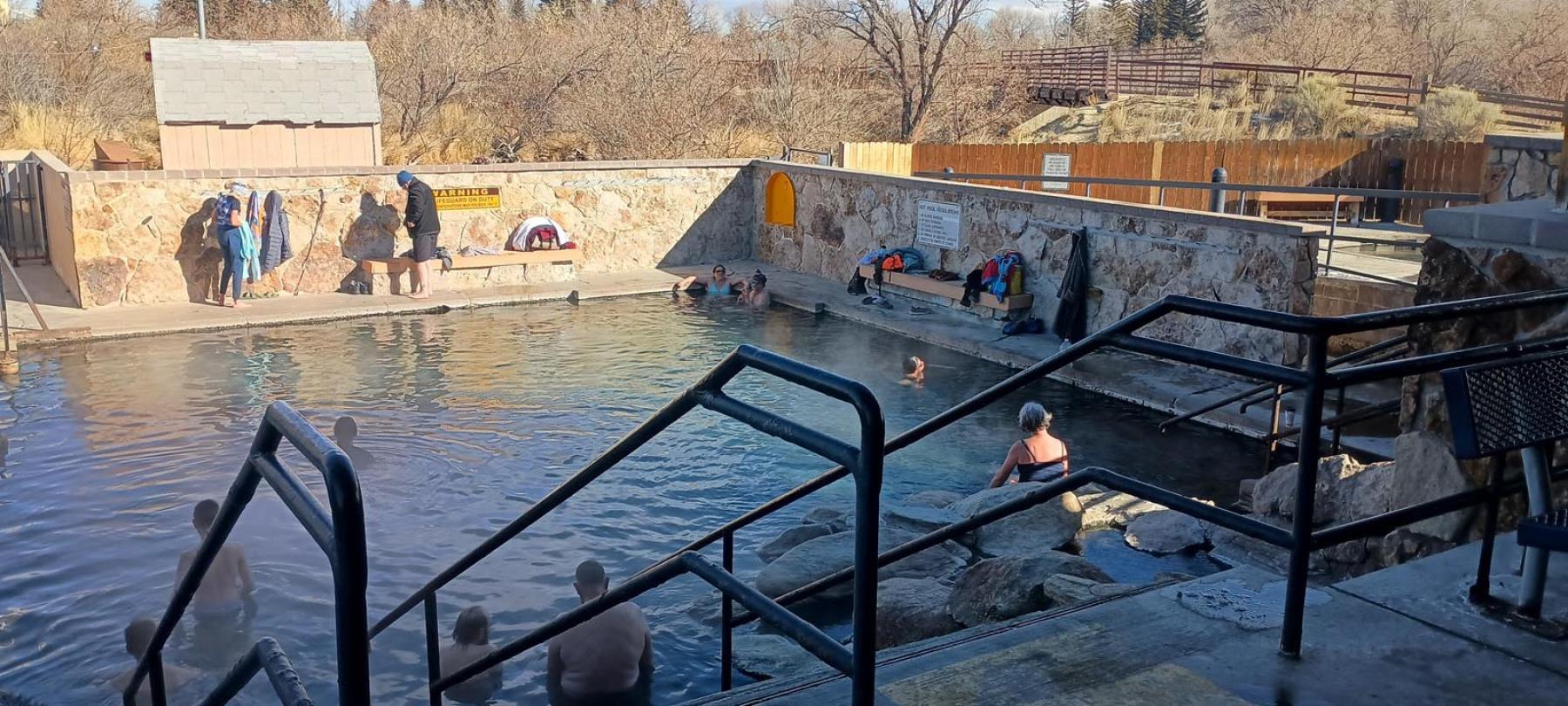
The Civilian Conservation Corps (CCC) was active in the Saratoga area throughout the 1930s and early 1940s, building roads, fighting fires, and performing conservation work in the Medicine Bow National Forest. They also left lasting structures like the Brush Creek Work Center and a stone toilet at Veterans Island Park. The state allowed the CCC to work on improving the west side hot springs as well. In 1936, the CCC added stones around the springs to create larger swimming pools, constructed steps to the pools, and added wooden log railings.
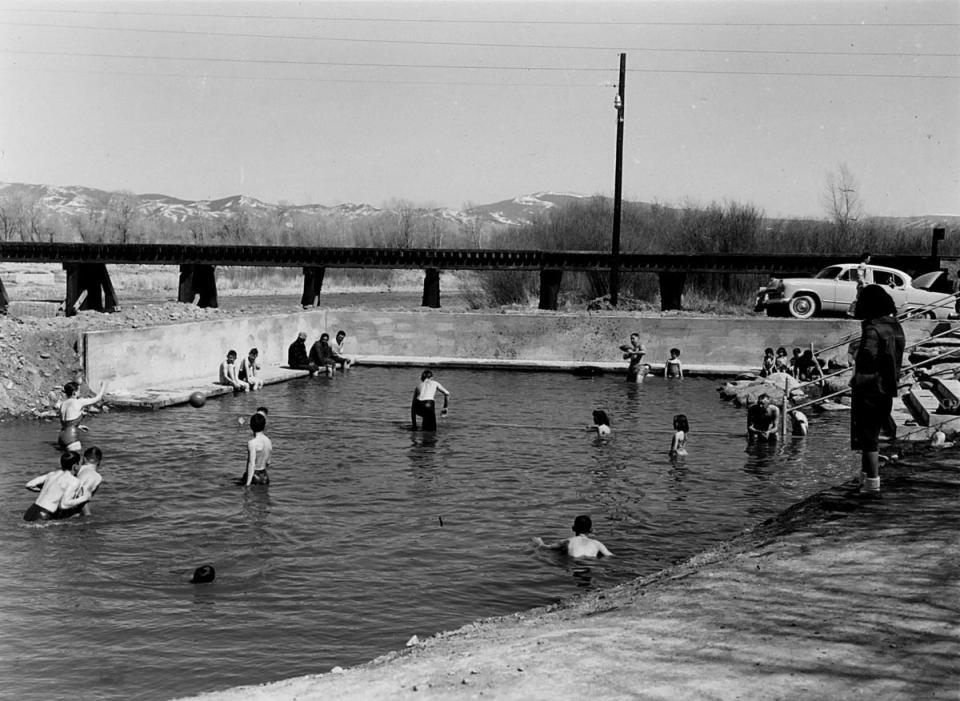
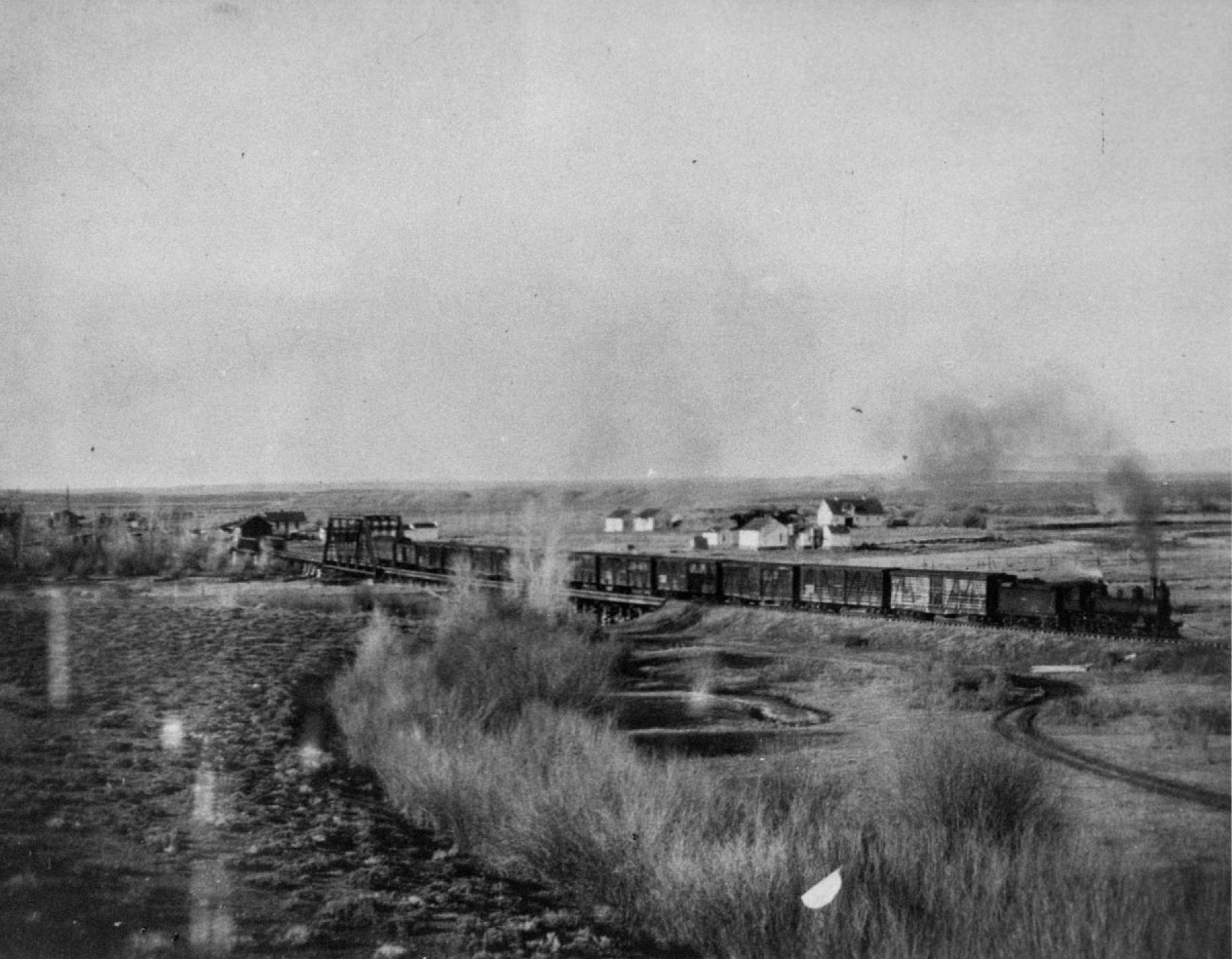
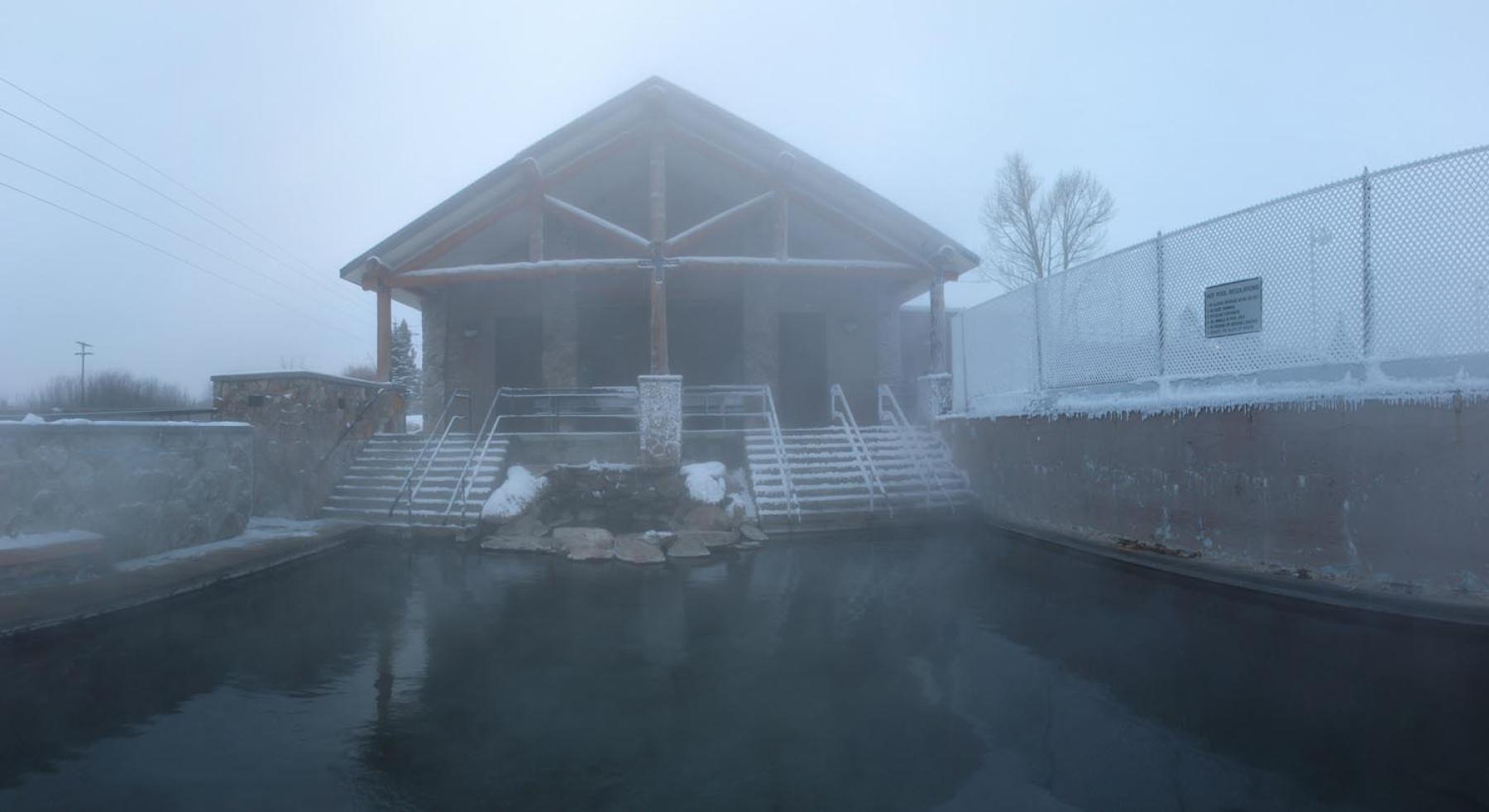
The Saratoga-Encampment Railroad passed right alongside these new CCC constructed hot pools. Legend has it that hobos during the Great Depression era would jump off the train and bathe in the pools before catching the next train in their never-ending quest to find work. Thus, the west side springs earned the name “Hobo Pools.”
After the Second World War, a wooden bathhouse was added to the Hobo Pools area. Several more have been built over the years to provide swimmers with a place to change. One local remembers growing up in Saratoga and swimming in the pools when he was in high school. There was often a strong odor emanating from the bathhouse, so the teenagers would change outside around the back of the bathhouse. When one of the girls was changing, other females would act as sentries. Woe to any boy who thought he might get a peek! The guards would come whooping and hollering and chase him away.
In 1949, the State of Wyoming leased 404 acres of land on the east side of the Platte to Cheyenne businessman Bill Walker to develop into the Saratoga Inn. Following a court dispute over taxes on improvements made to state-leased property, the state ultimately sold the 404 acres to Walker and his investors for $18,000 plus $20,000 in back taxes. The remaining 16 acres of the Hot Springs Reserve were given to the Town of Saratoga, to remain open and free to the public forever under transfer of deed. This included Veterans Island and the west side Hobo Hot Springs.
By 1958, the Town of Saratoga constructed a municipal swimming pool next to the springs to take advantage of the springs’ ability to fill the pool. This created a unique feature of the swimming pool: because of the springs, the deep end of the pool is closer to the changing rooms. By the 1980s, environmental concerns prompted the Town of Saratoga to rethink the plumbing of the pool. Dumping chlorinated water from the swimming pool into the North Platte was unacceptable. Thus, the municipal swimming pool had its plumbing reworked so it would drain into the town’s wastewater system for proper treatment.
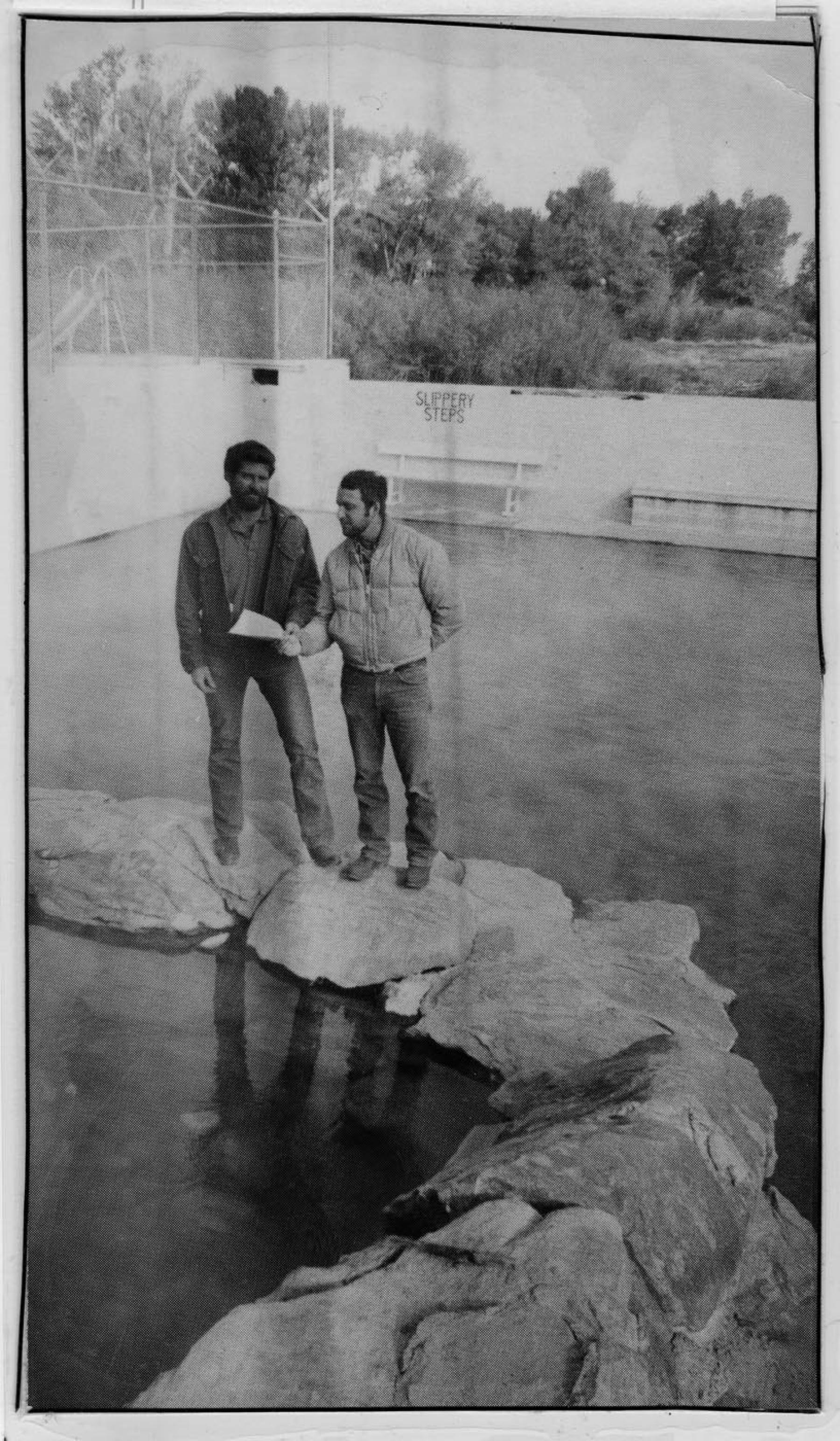
The early 1980s plumbing redesign also incorporated a “Not-so-hot” or Kiddies Pool at the springs. Saratoga Mayor Dave Pennock led the project. Sadly, Pennock was killed in a plane crash in 1983, and is the only mayor of Saratoga to die while in office. As funds permitted, the stonework around the Hobo Pools was replaced with concrete. In 1998, local mason John Neergaard volunteered to redo much of the stonework around the pools.
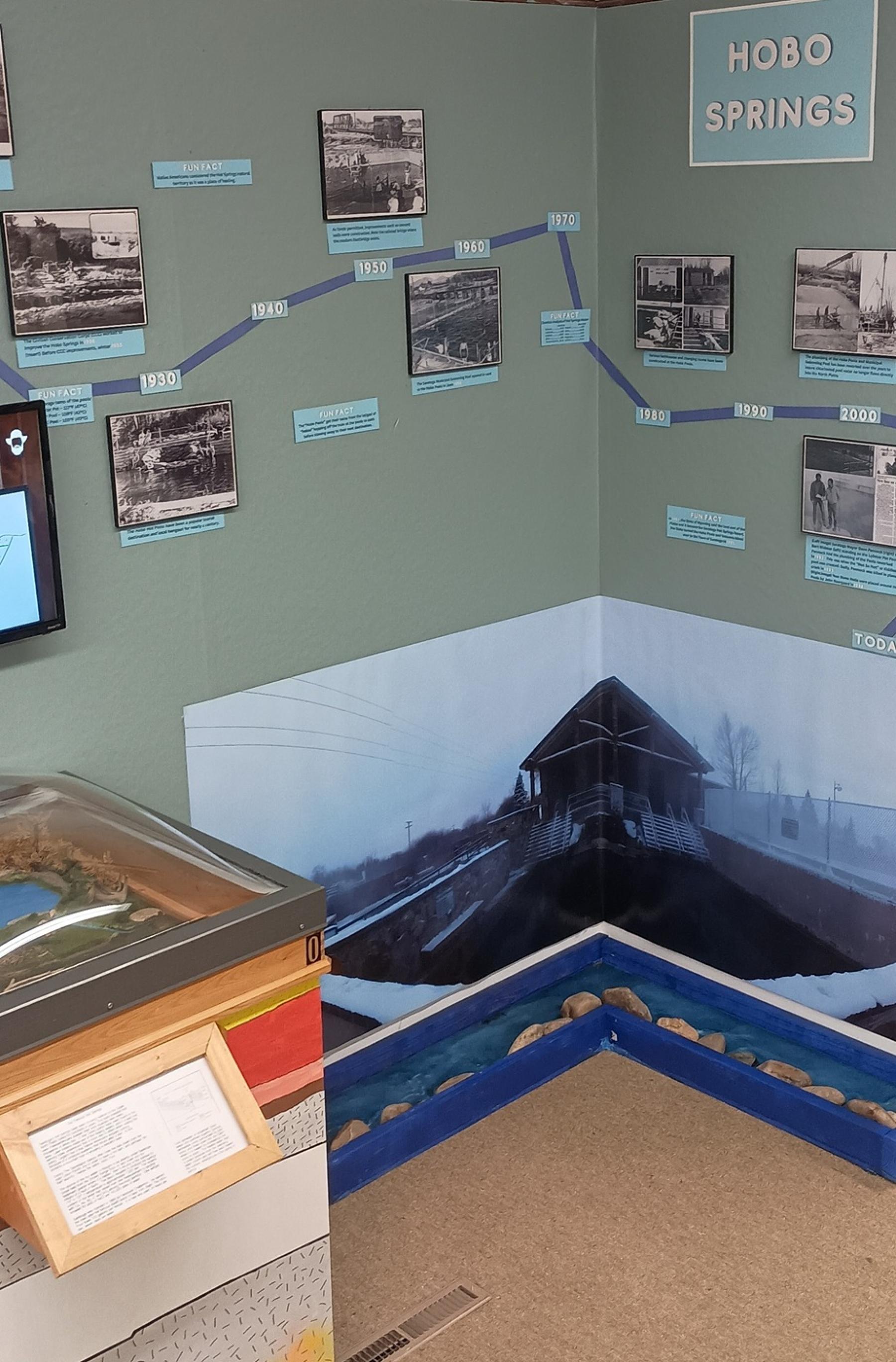
Just how warm is the water of the Hobo Hot Springs? Temperatures vary and it’s up to Mother Nature, but the “Not So Hot” Pool is around 105°F (40°C), the Main Pool hovers around 108°F (42°C), and the Lobster Pot is at 117°F (47°C).
The Saratoga Museum has constructed a new exhibit about the history of the Hobo Pools. Now, when locals ask, “Have you been to the hot springs yet?” Visitors can respond, “Why, yes, the one at the museum is pretty neat.”
Bibliography
- Evans, Elva. Saratoga: 150 Years. Saratoga, WY: Visions in Progress (V.I.P.) Marketing, LLC., 2020.
- Perue, Dick, comp. “Healing Waters at the Saratoga Hot Springs Resort.” Pamphlet. Saratoga Hot Springs Resort. Accessed April 4, 2024. saratogahotspringsresort.com/wp-content/uploads/2023/01/redbook2.pdf.
- Perue, Dick. “Saratoga Hobo Pool Mineral Hot Springs.” Pamphlet. Historical Reproductions by Perue. Saratoga Museum collection A2026.06.EC008.
- “Hot Springs Hotel Burned.” Saratoga Sun, April 10, 1902. Accessed April 26, 2026. www.wyomingnewspapers.org/?a=d&d=WYSGS19020410-01.1.1&e=-------en-20--1--img-txIN%7CtxCO%7CtxTA--------0------.
- “Organize A Fire Brigade.” Saratoga Sun, April 25, 1902. Accessed April 26, 2026. www.wyomingnewspapers.org/?a=d&d=WYSGS19020424-01&e=-------en-20--1--img-txIN%7CtxCO%7CtxTA--------0------.
Related articles
- Saratoga, Wyoming: “Where the Trout Leap in Main Street”
- Saratoga Museum
- Fort Fred Steele
- Hard Times and Conservation: the CCC in Wyoming
- The North Platte River Basin: A Natural History
- Carbon County, Wyoming
Photo gallery
Click on each image for caption information.